Angel Investors in Bangladesh: Who They Are and How to Reach Them
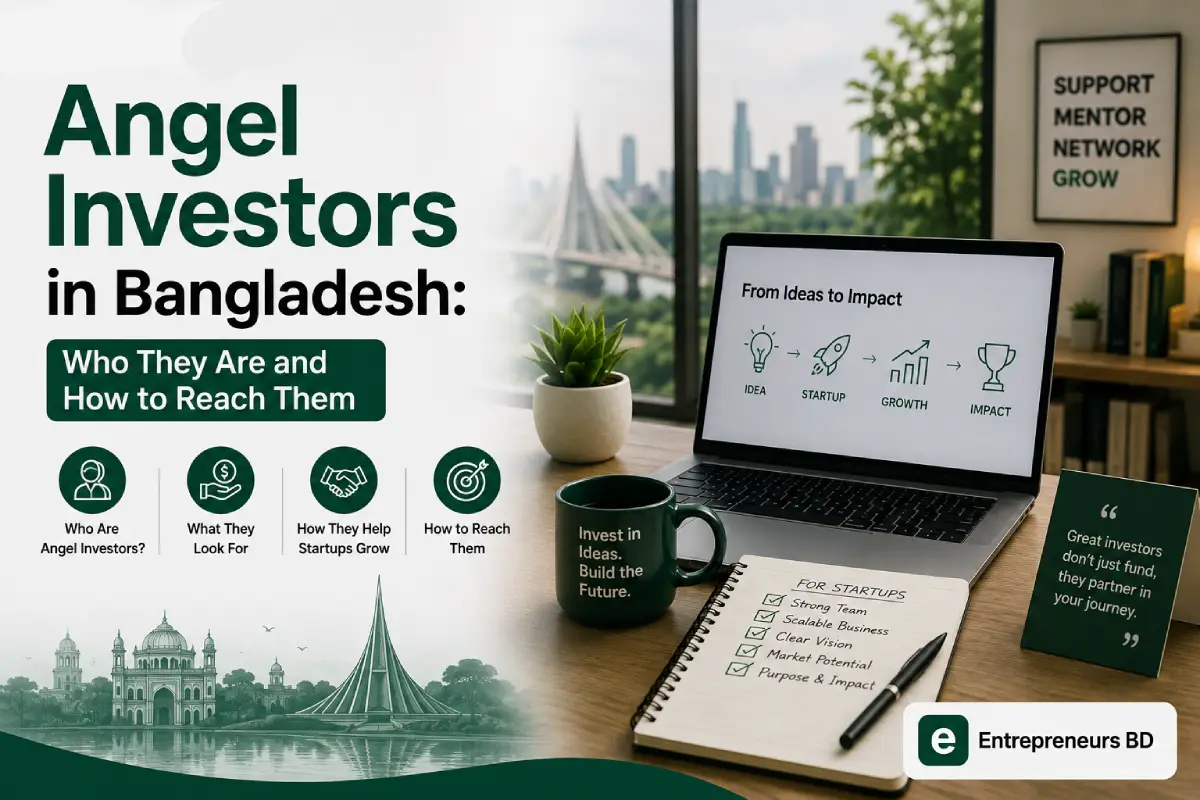
Angel investors in Bangladesh are individuals, family offices, and diaspora professionals who fund early-stage startups in exchange for equity. Most operate through organized networks like Bangladesh Angels Network (BAN) and Bangladesh Women Investors Network (BWIN), which vet founders, run pitch sessions, and syndicate deals among members.
Key Takeaways
Angel investing in Bangladesh is largely organized through networks, not scattered individuals
Bangladesh Angels Network (BAN) is the country's largest platform, with 500+ members and dozens of funded startups
Government-backed vehicles like Startup Bangladesh Limited and Bangladesh Bank's startup funds work alongside, not instead of, private angels
A clear pitch deck, a validated product, and a warm introduction matter far more than a polished cold email
Angel checks in Bangladesh typically range from a few thousand dollars to low six figures, smaller than what founders see in Singapore or Delhi
Every founder in Bangladesh eventually asks the same question. Where is the money, and who controls it?
The honest answer is that early-stage capital here does not sit with one type of investor. It moves between local angels, diaspora professionals, government-backed funds, and a handful of regional venture firms watching the market from Singapore.
This guide breaks down who these angel investors actually are, how their networks operate, and the practical steps founders in Dhaka, Chattogram, or Sylhet can take to get in front of them. It also covers the legal groundwork worth understanding before any money changes hands.
Who Counts as an Angel Investor in Bangladesh
An angel investor is a person, not an institution, who puts personal money into a young company in exchange for equity.
In Bangladesh, this usually means one of three profiles. The first is a successful local entrepreneur reinvesting proceeds from a business exit. The second is a corporate executive or senior professional building a side portfolio.
The third, and increasingly the largest, is a member of the Bangladeshi diaspora. Engineers, bankers, and founders based in the US, UK, Singapore, or the Gulf who want exposure to home-market startups without relocating.
Unlike venture capital funds, angels write personal checks and decide quickly. They also tend to bring mentorship, industry contacts, and credibility that a first-time founder cannot buy.
The Major Angel Networks to Know
Bangladesh Angels Network, often shortened to BAN or Bangels, is the country's first and largest organized angel platform. It connects more than 500 individual investors, family offices, and corporate backers, and it has helped direct capital into companies like Pathao, Chaldal, and Shajgoj.
BAN does not write checks itself. Instead, it vets startups, runs monthly pitch showcases, and lets individual members decide whether to co-invest, often pooling money into a single deal.
A sister initiative, Bangladesh Women Investors Network (BWIN), focuses specifically on gender-lens investing. It supports female founders at the pre-seed and seed stage while also growing the number of women writing angel checks.
Both networks run structured onboarding for new investors, including an academy that teaches deal evaluation and portfolio thinking to people who are new to early-stage investing.
Beyond BAN and BWIN, smaller informal angel circles exist around university alumni groups, chambers of commerce like DCCI and BASIS, and sector-specific communities in fintech and e-commerce. These rarely have a public application process, so access usually comes through referrals.
Where Angels Fit Alongside Government Capital
Founders often assume angel money and government money are separate tracks. In practice, they overlap more than people expect.
Startup Bangladesh Limited, a venture capital company owned by the government's ICT Division, invests directly in seed and growth-stage startups and increasingly co-invests alongside private angels and funds. It has backed names like Ten Minute School, ShareTrip, and Sheba Platform.
The Bangladesh Investment Development Authority has also positioned the country's digital economy, now valued at roughly 3.5 billion US dollars with full foreign direct investment allowance in most sectors, as a draw for both local angels and international investors.
On the banking side, Bangladesh Bank periodically issues circulars through its SME and Special Programmes Department covering refinancing schemes and startup financing rules that commercial banks must follow. These rarely fund angel rounds directly, but they shape the collateral-free lending options available to startups once they have already raised early equity.
Founders who understand both tracks can sequence their raise more effectively, starting with angel or friends-and-family capital before layering in government or bank-backed financing.
How Angel Deals Are Actually Structured
Most angel investments in Bangladesh happen as direct equity purchases in a private limited company, negotiated informally between the founder and investor or investor group.
Larger or pooled angel deals sometimes route through a registered investment vehicle instead of individual checks. The Bangladesh Securities and Exchange Commission's Alternative Investment Rules, first issued in 2015, set out how private equity and venture capital funds must register and operate when they pool money from multiple investors.
Founders do not need to master these rules personally. A startup lawyer familiar with early-stage deals in Dhaka can confirm whether a particular structure applies to your raise. Reviewing a startup legal checklist before you start fundraising still saves time later.
Typical angel check sizes in Bangladesh range from a few thousand dollars for pre-seed friends-and-family style rounds to low six figures for more competitive seed deals. This is smaller than comparable checks in Singapore or India, which is why many founders raise from several angels in the same round rather than relying on one.
How to Get in Front of Angel Investors
Cold outreach rarely works well in a market this relationship-driven. Warm introductions from another founder, a mentor, or a network member carry far more weight than an unsolicited email.
Start by applying to pitch at BAN or BWIN directly through their websites, since both accept founder applications year round. Startup accelerators and university entrepreneurship cells in Dhaka also run periodic demo days that angels attend specifically to scout deals.
Before any of that, your product needs to show real signals. Angels want evidence that you have already done the work of validating your startup idea with actual users, not just a concept on paper.
A working minimum viable product with early traction data matters more than a beautifully designed pitch deck. That said, once you have traction, a clear startup pitch deck still determines whether that first meeting turns into a second one.
Founders should also be ready to speak concretely about how they define product-market fit in their specific sector, since generic answers are an immediate red flag to experienced angels.
Bangladesh Context: Why the Angel Market Looks Different Here
Bangladesh's angel ecosystem is younger than India's or Vietnam's, and it still leans heavily on diaspora capital rather than domestic high-net-worth wealth.
That is starting to shift. As more local founders exit successfully, through acquisitions or profitable growth, they are recycling capital back into the ecosystem as angels themselves, which BAN's own membership growth reflects.
The broader Bangladesh startup ecosystem also benefits from a young population and rapid mobile internet adoption, both of which make consumer-facing startups particularly attractive to angels looking for scale.
Founders outside Dhaka should not assume angel capital is Dhaka-only. Several BAN members actively look for opportunities in Chattogram and other regional hubs, particularly in agritech and logistics, where local founders often have an edge that Dhaka-based teams lack.
Practical Steps Before You Approach an Angel
Get your company registration and basic compliance in order first, since serious angels will ask about this before a term sheet, not after.
Build a simple, honest financial model rather than an optimistic one. Angels who invest across dozens of startups can spot inflated projections quickly, and it damages trust for future rounds.
Map out your business model canvas before your first pitch, so you can answer questions about unit economics without hesitation.
Finally, decide your cap table and equity split with co-founders before you raise, not during. Angels are wary of founding teams still negotiating ownership mid-raise.
Frequently Asked Questions
How much equity do angel investors typically take in Bangladesh?
Is Bangladesh Angels Network the only option for founders?
Do angel investors in Bangladesh only fund tech startups?
How long does it take to close an angel round in Bangladesh?
Can foreign angel investors legally invest in a Bangladeshi startup?
What is the difference between an angel investor and Startup Bangladesh Limited?
Building the Relationship Before You Need the Money
The founders who raise angel capital successfully in Bangladesh rarely start the relationship at the moment they need cash.
They show up at BAN events, comment thoughtfully in founder communities, and ask for advice from angels months before pitching. This kind of networking does more for a raise than any single outreach email ever will.
If you are early in this process, spend the next few weeks getting your product, your numbers, and your pitch tight before you approach anyone. When you do reach out, lead with what you have already proven, not what you hope to build. That is what turns a first conversation with an angel into a signed check.

Specializing in SaaS product marketing, SEO strategy, Content marketing, TikTok advertising, PPC, and digital growth.
View Full Profile & ContributionsRelated Articles
Startup Grants for Bangladeshi Entrepreneurs: Government and NGO Programs You Can Apply For
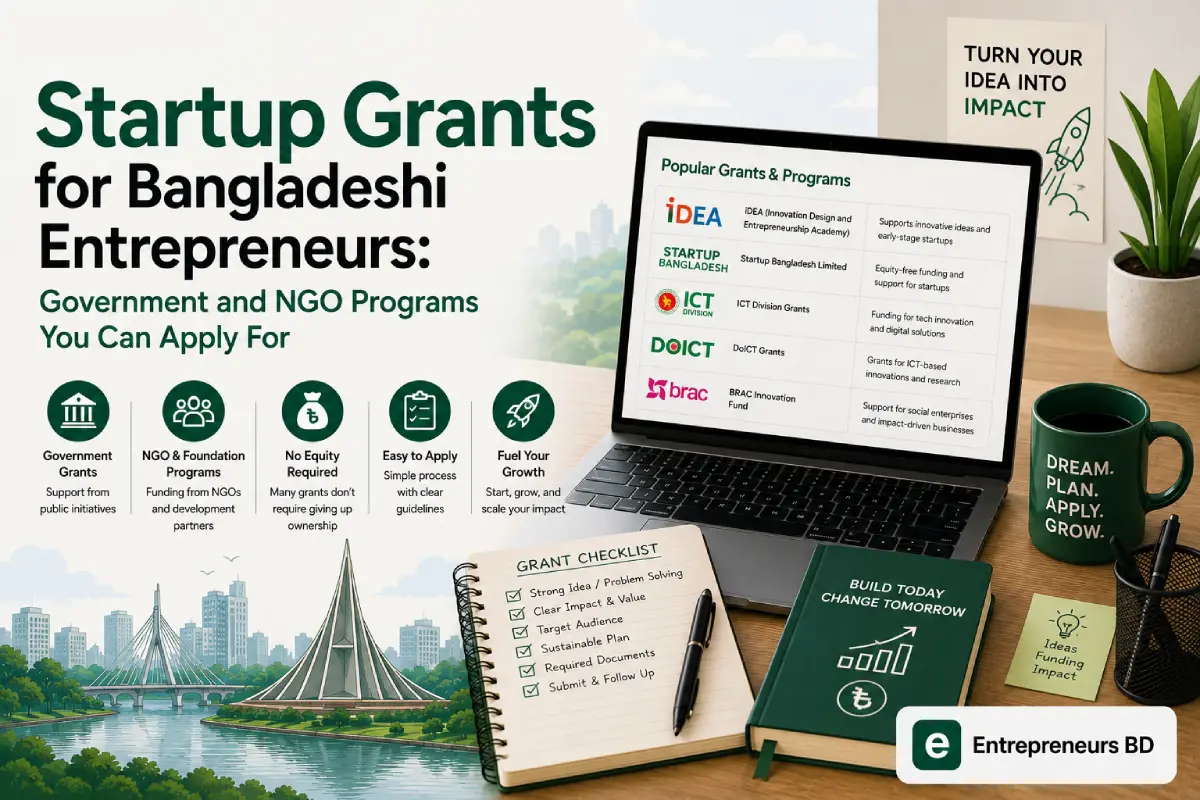
Bangladeshi entrepreneurs can apply for grants and low-cost financing through the ICT Division's iDEA project (up to BDT 10 lakh), SME Foundation's Credit Wholesaling Program, and Bangladesh Bank's refinance schemes for women and new entrepreneurs. Most require a trade license, a clear business plan, and an online application.
Fintech in Bangladesh: Key Players, Regulations, and Opportunities for Founders
For the payment and digital-finance businesses covered here, four regulated models matter most: MFS, PSP, PSO and digital banking. MFS requires a bank, financial institution or government entity to hold at least 51% of the provider and control its board. PSPs don't carry that requirement. PSOs run payment infrastructure and can't issue e-money. Digital banks are licensed under the Bank Company Act and now require Tk 300 crore in paid-up capital.
Choosing a Revenue Model for Your Bangladesh Startup: 10 Options Compared
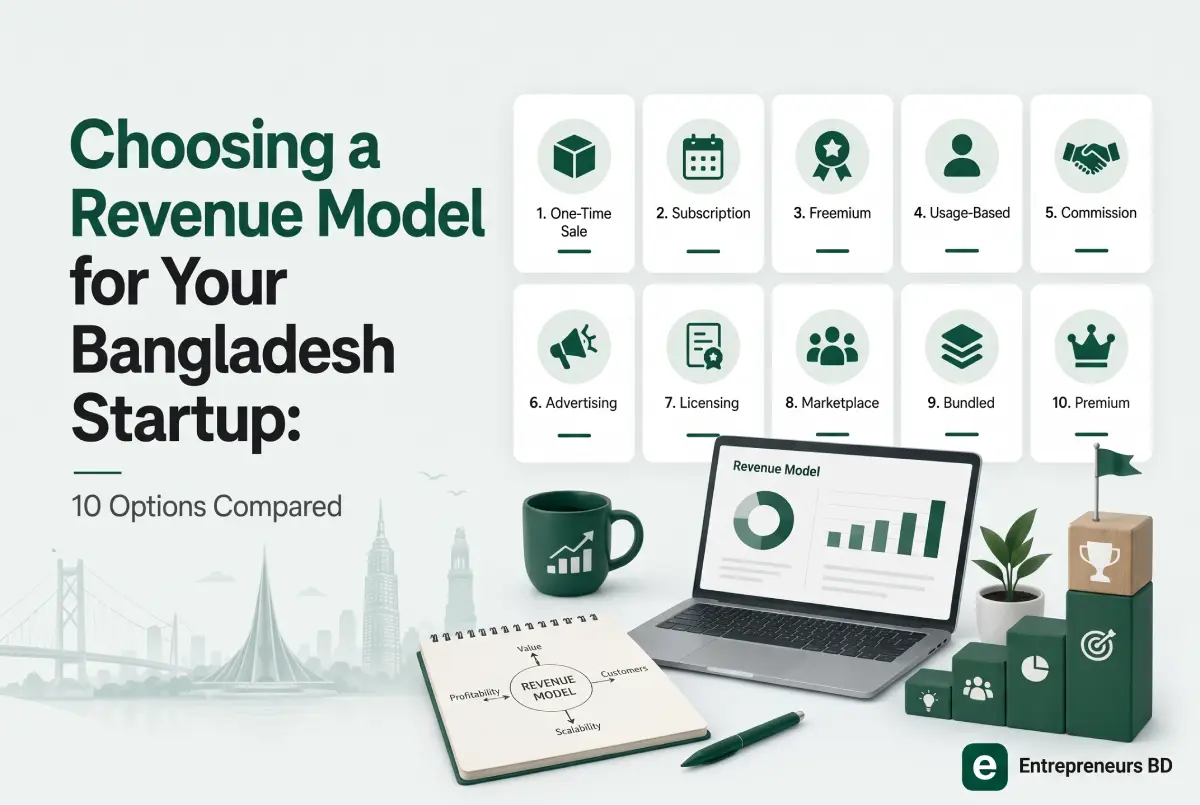
The right revenue model for a Bangladesh startup depends on your product type, your customers' willingness to pay upfront, and the payment infrastructure available (bKash, Nagad, Rocket). Subscription and commission-based models suit digital services and marketplaces. Freemium and advertising work best for high-traffic platforms. Most successful Bangladeshi startups eventually combine two or more models.
Comments (0)
No comments yet. Be the first to share your thoughts!