Insights & Stories
Discover inspiring stories, expert insights, and practical guides from Bangladesh's entrepreneur community.
SME Sector in Bangladesh: Size, Support, and the Gaps That Startups Can Fill
Bangladesh's CMSME sector covers over 11 million enterprises and roughly 80 to 85 percent of non-agricultural employment, contributing an estimated 25 to 30 percent of GDP. As of March 2026, actual CMSME lending sat at 15.87 percent of total bank loans against a 25.50 percent regulatory target, a gap that's widened rather than closed.
Freelancing as an Export Business in Bangladesh: Platforms, Payments, and Taxes
Bangladesh Bank treats freelance income as a service export under Part K of its July 2026 export circular. Qualifying tech work can be tax-exempt through June 2027, but only as a registered business with a Trade Licence, TIN, and BIN. Banks may also deduct 10 percent at source on incoming service fees.
HealthTech in Bangladesh: Opportunities, Regulations, and Early-Stage Players
HealthTech in Bangladesh covers telemedicine, e-pharmacy, diagnostics logistics, and digital health records serving a population with limited doctor access outside major cities. No single unified health-tech law exists yet; founders answer to DGDA, BMDC, and DGHS depending on the product. Early movers like Praava Health and Arogga built durable models around trust and last-mile delivery, not app polish.
EdTech in Bangladesh: Who Is Building, Who Is Buying, and What Works
Bangladesh's consumer-facing edtech market is a small group of Dhaka-based startups. 10 Minute School and Shikho are the most visible K-12 exam-prep brands, while Programming Hero and Ostad sell job skills. Most of what's public is company-reported, not independently audited, and roughly half the country still isn't online.
Agritech in Bangladesh: Startups, Government Programs, and Market Gaps
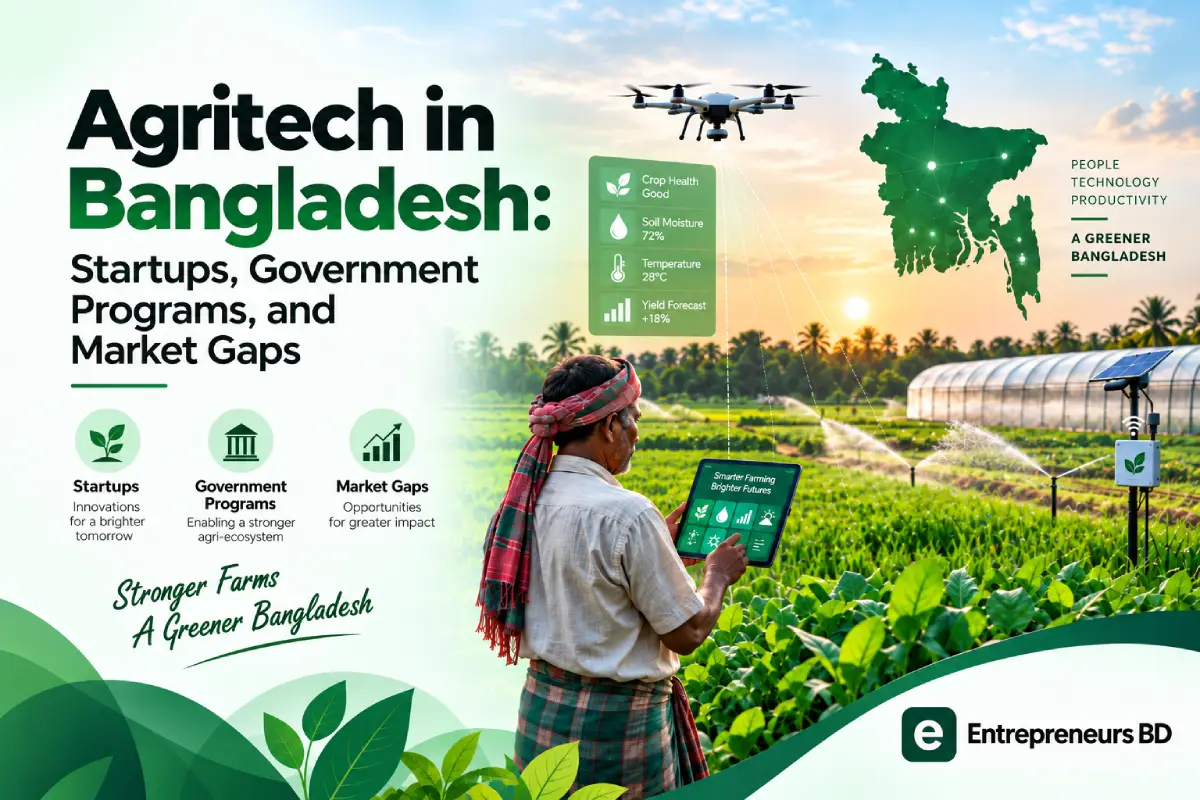
Bangladesh's agritech startups tackle farm financing, input access, and produce distribution for a country where agriculture still employs 45 percent of the workforce. iFarmer leads by reported farmer reach; Agroshift, Fashol, WeGro, Krishi Shwapno, and Agronochain fill other niches. Government backing runs through Bangladesh Bank's credit policy and Startup Bangladesh Limited. The clearest documented opportunity is produce processing, where more than 75 percent of output still leaves the field untouched.
Fintech in Bangladesh: Key Players, Regulations, and Opportunities for Founders
For the payment and digital-finance businesses covered here, four regulated models matter most: MFS, PSP, PSO and digital banking. MFS requires a bank, financial institution or government entity to hold at least 51% of the provider and control its board. PSPs don't carry that requirement. PSOs run payment infrastructure and can't issue e-money. Digital banks are licensed under the Bank Company Act and now require Tk 300 crore in paid-up capital.
Bangladesh E-Commerce Market: Size, Growth, and What Sellers Need to Know
There is no single official figure for Bangladesh's e-commerce market. Recent private estimates for online retail cluster around $6 billion to $7.5 billion, while older or broader forecasts put the figure closer to $10 billion because they include travel, OTT and unregistered social commerce. Online retail is still estimated at only 3 to 5 percent of total retail spending, so the market has room to grow regardless of which number you trust.
Youth Entrepreneurship in Bangladesh: Programs, Barriers, and Opportunities for Under-30 Founders
Youth entrepreneurship in Bangladesh runs on government programs like iDEA and Startup Bangladesh, plus accelerators like BYLC Ventures and Orange Corners. Under-30 founders still face a real financing gap and thin mentorship, even though people aged 15 to 29 make up over 30 percent of the population.
Women Entrepreneurs in Bangladesh: Challenges, Support Programs, and Success Stories
Women lead roughly 2.8 million SMEs in Bangladesh, about a quarter of the sector, yet they receive only 7.28% of CMSME bank credit as of March 2026. Programs like Bangladesh Bank's women entrepreneurs refinance scheme, the SME Foundation's SheTrades Hub, and the Joyeeta Foundation are working to close that gap.
Tech Startups in Bangladesh: Sectors That Are Growing and Why
Bangladesh's fastest growing tech sectors in 2026 are fintech, e-commerce and logistics, agritech, and healthtech. Fintech leads because mobile financial services already reach a majority of the population. The others are growing because government capital, a young workforce, and rising smartphone use are solving problems that used to block small business growth.
Startup Accelerators in Bangladesh: Programs, Equity Terms, and How to Apply
Bangladesh's startup accelerators split into three types. Government programs like the iDEA Project and Smart Bangladesh Accelerator take no equity. Startup Bangladesh Limited invests equity or convertible debt, historically capped near 49 percent combined ownership. Corporate accelerators such as Grameenphone Accelerator give equity free grants. Angel networks like Bangladesh Angels negotiate individual term sheets.
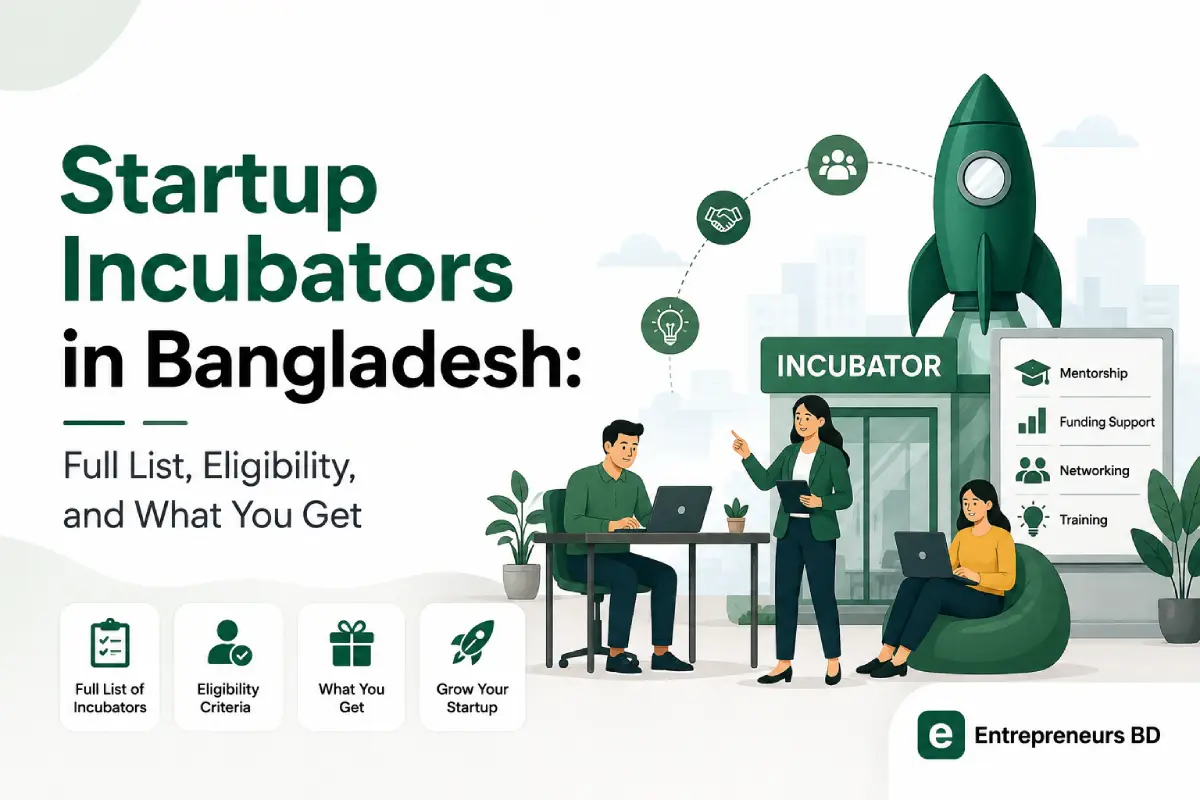
Startup Incubators in Bangladesh: Full List, Eligibility, and What You Get
Bangladesh's most active startup incubation programs in 2026 are the iDEA Project, Startup Bangladesh Limited, the Hi-Tech Park Authority's Sheikh Kamal IT Business Incubators, the Grameenphone Accelerator, NSU Startups Next, the Daffodil Business Incubator, and the private Startup Dhaka Incubator. Each targets a different startup stage and offers a different mix of funding, space, and mentorship.