Bangladesh Startup Ecosystem Overview: Growth, Trends & Opportunities in 2026
Quick Answer: Bangladesh's startup ecosystem is maturing in 2026, shifting from early experimentation to scaling companies and clearer investor theses. The next real opportunities are in "second-order" differentiation—improving unit economics, integrations, and retention across categories like fintech, ecommerce enablement, logistics, and B2B SaaS.
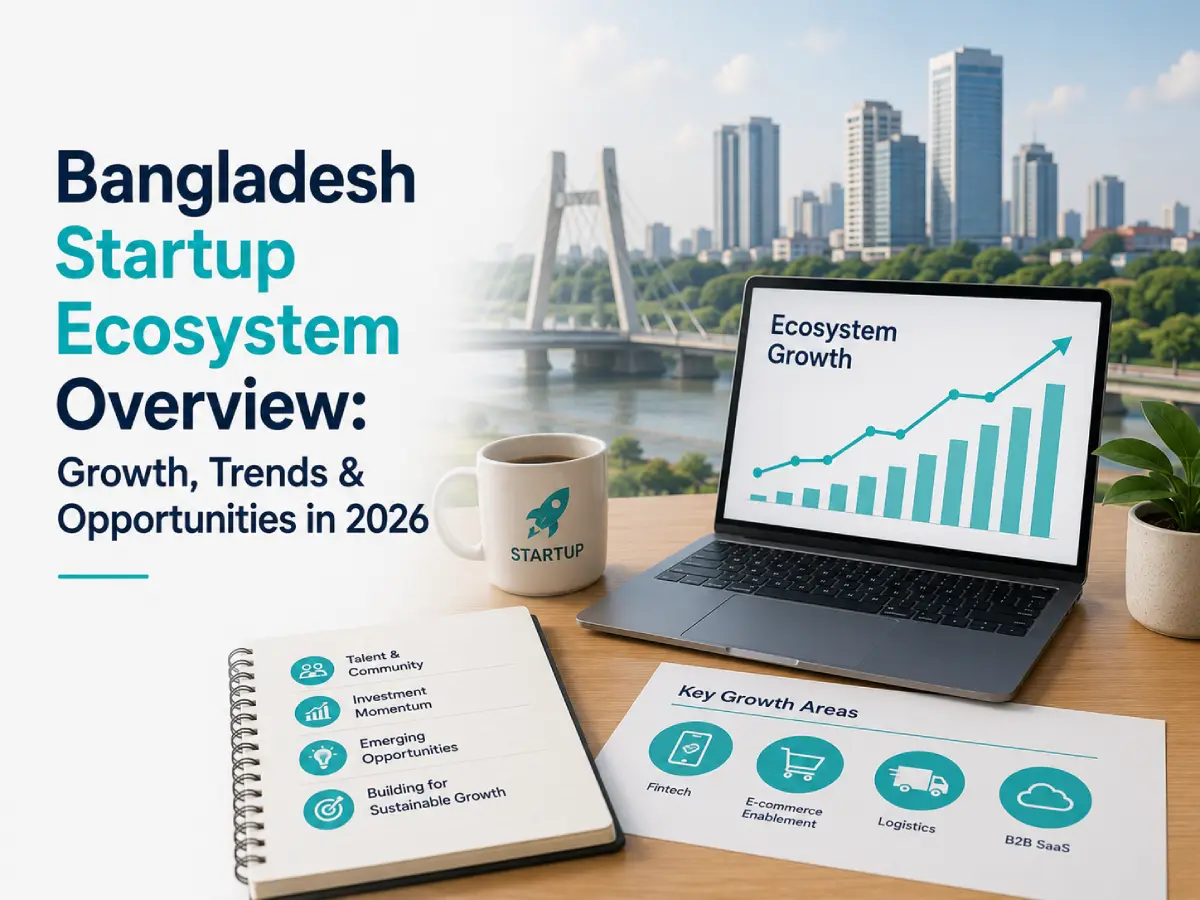
Bangladesh Startups in 2026: The Ecosystem Is Maturing—Here’s Where the Real Opportunities Are
Bangladesh’s startup ecosystem is moving fast in 2026. What used to be a story of early experimentation is now a story of scaling companies, deepening investor confidence, and building practical infrastructure—from accelerators and coworking spaces to stronger talent pipelines and more sophisticated funding models. For founders, investors, and operators, the key question is no longer “Is Bangladesh ready for startups?” It’s “Where exactly is the next wave of value going to be created—and how can you position for it?”
This guide provides a professional, action-oriented overview of Bangladesh’s startup ecosystem, including growth drivers, market trends, and the most promising opportunities in 2026—along with practical steps to take now.
1) Where Bangladesh’s Startup Ecosystem Stands Today
Over the last several years, Bangladesh has seen a measurable shift from a founder-led culture to a more ecosystem-driven environment. While challenges remain—such as regulatory complexity, liquidity constraints, and uneven access to international markets—momentum is building across multiple layers of the ecosystem.
Ecosystem components that are strengthening
- Talent and entrepreneurship: A growing number of universities, bootcamps, and tech communities are producing job-ready and startup-curious talent.
- Founders with real market focus: More teams are building products designed for local needs, then expanding outward.
- Accelerators and programs: Mentorship, investor readiness, and structured scaling support are becoming more common.
- Capital formation: Funding is still selective, but deal quality is improving, and investor theses are becoming clearer.
- Digital adoption: Mobile-first behavior, fintech penetration, and logistics digitization continue to expand addressable markets.
Why 2026 is a turning point
In 2026, Bangladesh startups increasingly benefit from a “second-order” effect: once foundational categories (payments, e-commerce enablement, logistics, and B2B SaaS) mature, entrepreneurs can focus on differentiation—better unit economics, deeper integrations, and stronger customer retention.
2) Major Growth Drivers Behind Bangladesh Startups
Bangladesh’s startup growth is being propelled by macro trends and ecosystem changes working together. Understanding these drivers helps you spot where demand is structurally rising.
Demographics and expanding digital consumer behavior
A young, digitally active population is pushing demand for online services, fintech tools, and platform-based commerce. As digital access improves, startups that reduce friction—payments, onboarding, fulfillment, and support—tend to gain traction faster.
SME-led demand for efficiency
Small and medium enterprises are the backbone of Bangladesh’s economy. Many SMEs struggle with visibility, cashflow predictability, procurement inefficiencies, and weak inventory management. Startups offering operational tooling, digitized workflows, and data-driven decision support are positioned for sustainable growth.
Fintech and payment rails as foundational infrastructure
Fintech remains one of the strongest tailwinds for the broader ecosystem. Beyond consumer payments, the ability to support merchant onboarding, collections, payouts, lending evaluation, and risk scoring opens opportunities for platforms and B2B services.
Export and services economy momentum
Bangladesh’s services and export segments increasingly rely on digital systems for sourcing, invoicing, compliance, tracking, and customer management. Startups that build tools for export readiness and global operations can tap both domestic and international demand.
3) Key Trends Shaping Bangladesh Startup Strategy in 2026
To build in 2026, you need more than a good idea—you need a strategy aligned with ecosystem and market realities. Here are the most important trends to watch.
Trend 1: “Local-first” products with scalable architectures
Startups are learning to validate quickly with local customers while designing systems that scale. This means building for Bangladesh realities—language, distribution constraints, and customer behavior—without locking into brittle processes that fail at growth stages.
Trend 2: B2B SaaS and workflow automation
While consumer apps attract attention, B2B SaaS often produces sturdier retention when the value is clear: faster invoicing, lower operational costs, better compliance, or improved revenue visibility. In Bangladesh, workflow automation for SMEs and mid-market organizations is becoming a major theme.
Trend 3: Vertical SaaS and industry-specific platforms
Generic tools are losing ground to vertical solutions. Examples include logistics management for specific lanes, compliance tooling for sectors with complex documentation, and inventory/ordering platforms tailored to particular supply chains.
Trend 4: Embedded finance and “payments + value”
In 2026, payments alone are less differentiating. The winners are platforms that embed finance into meaningful customer journeys—merchant payouts, supply chain financing signals, invoice-based credit workflows, and risk-aware collections.
Trend 5: Responsible growth and unit economics
Capital is available, but investors are focusing more on measurable traction: improving conversion rates, reducing customer acquisition costs, and demonstrating credible paths to profitability or sustainable cashflow.
4) High-Potential Startup Opportunities in Bangladesh (2026)
Below are opportunity areas with strong demand signals and increasing ecosystem support. These are not “guaranteed” categories, but they reflect where founders can build with realistic customer pull.
Opportunity A: Fintech for SMEs—collections, payouts, and credit workflows
SMEs want tools that reduce cashflow volatility. Opportunities include invoice financing enablement, smarter collections for B2B receivables, and payout orchestration for suppliers.
- Collections automation: reminders, reconciliation, and dispute handling.
- Supplier payout systems: faster settlements with transparent fees.
- Credit scoring using transaction data: explainable and compliant approaches.
Opportunity B: Logistics tech and last-mile optimization
Commerce growth depends on delivery reliability and cost efficiency. Startups can target operational improvements for fleets, route planning, warehouse coordination, and customer experience.
- Route and demand forecasting: reduce fuel and idle time.
- Warehouse workflow digitization: picking, packing, and inventory updates.
- Proof-of-delivery tooling: reducing disputes and claims.
Opportunity C: Healthtech with distribution and affordability in mind
Healthcare adoption is improving, but affordability and access remain key constraints. Startups can focus on appointment systems, patient follow-up, provider tools, and telehealth workflows that integrate with local realities.
- Clinic operations software: scheduling, billing, and patient management.
- Medication and adherence support: structured reminders and care pathways.
- Health data interoperability: secure, practical exchange between stakeholders.
Opportunity D: Education tech that measures outcomes
In 2026, the shift is from content libraries to measurable learning improvement. The most compelling models include assessments, adaptive learning, and career-aligned training pathways.
- Skill validation: certification tied to job readiness.
- Employer-linked training: cohorts designed around real hiring needs.
- Language and professional communication: measurable competency frameworks.
Opportunity E: Climate resilience and agritech enablement
Bangladesh faces climate and environmental pressures that affect livelihoods. Startups can support farmers and local businesses with better forecasting, input supply chains, and market access tools.
- Weather and crop planning: practical recommendations delivered at the right time.
- Input distribution systems: ensuring quality and availability.
- Market linkage platforms: reducing middlemen friction.
Opportunity F: Cybersecurity and compliance tooling for SMBs
As more businesses digitize, security and compliance become urgent. Startups can offer accessible security monitoring, awareness training, and compliance workflow automation.
5) Funding Landscape: What Investors Look for in 2026
Bangladesh funding has become more selective, and that’s beneficial for serious operators. If you want to raise, align your story with what investors are evaluating.
Signals of a strong startup pitch
- Clear traction: revenue, retention, usage growth, or verifiable pilots.
- Unit economics discipline: understanding customer acquisition cost and payback period.
- Market expansion logic: why the product can grow beyond early adopters.
- Operational readiness: delivery, support, and go-to-market execution.
- Regulatory awareness: especially in fintech, health, and education.
Funding strategy for founders
Rather than chasing valuation, founders should plan fundraising around milestones: product maturity, repeatable sales, compliance readiness, or geographic scaling. In 2026, “rounds” work best when tied to specific measurable outcomes.
6) Go-to-Market Playbook: How to Win in Bangladesh
Bangladesh is not a copy-paste market. Successful go-to-market strategies blend local distribution realities with modern digital execution.
Start with a narrow beachhead
Pick a specific customer segment (for example, logistics operators of a particular size, clinics within a region, or SMEs in a defined trade category). Then build features that directly address their pain points.
Choose partnerships early
Partnerships with banks, merchant networks, telecom channels, associations, and local service providers can accelerate trust and distribution. Strong partnerships often compensate for limited marketing budgets.
Design for onboarding friction
Most startups underestimate onboarding complexity: documentation, KYC processes, payment setup, integration time, and training. A simplified onboarding experience can outperform a feature-rich competitor.
Measure what matters
- For B2B: retention, active usage, time-to-value, and expansion revenue.
- For fintech: transaction frequency, loss rates, collection efficiency, and risk metrics.
- For platforms: supply-demand balance, fulfillment reliability, and repeat purchase.
7) The Biggest Challenges—and How to Navigate Them
No ecosystem grows without friction. Understanding common obstacles can help you make smarter decisions.
Regulatory and compliance complexity
Fintech and health-related startups face higher compliance requirements. The best approach is to invest early in legal clarity, documentation readiness, and risk-aware product design.
Liquidity and scaling constraints
Some startups struggle to scale smoothly due to working capital constraints. Build cashflow forecasting early, negotiate payment terms thoughtfully, and plan pricing models that support sustainability.
Talent retention at scale
Bangladesh has strong entrepreneurial energy, but competitive skill markets can make retention difficult. Offering meaningful growth paths, competitive compensation, and mission clarity improves long-term stability.
Conclusion: Build for 2026 with Speed, Evidence, and Local Advantage
The Bangladesh startup ecosystem is entering a more mature phase in 2026—one defined by better execution, stronger customer understanding, and clearer funding expectations. The biggest opportunity for founders is to combine local-first product thinking with scalable business fundamentals: measurable traction, disciplined unit economics, and partnerships that accelerate adoption.
If you want to win in this next chapter, focus on solving urgent problems for real customers, build with a repeatable go-to-market engine, and treat compliance and operational readiness as part of product development—not a last-minute hurdle. Bangladesh’s growth story is still being written, and the startups that align strategy with ecosystem realities will be best positioned to lead it.
Frequently Asked Questions
Which startup sectors in Bangladesh are most likely to offer scaling opportunities in 2026?
What ecosystem changes in Bangladesh are helping investors become more confident in funding startups?
How can founders in Bangladesh validate a scalable business model in a market with regulatory and liquidity constraints?
Why does “second-order” maturity matter for Bangladesh startups, and how should companies respond?
What practical steps can operators take now to prepare for the 2026 startup opportunity wave in Bangladesh?

Specializing in SaaS product marketing, SEO strategy, Content marketing, TikTok advertising, PPC, and digital growth.
View Full Profile & ContributionsRelated Articles
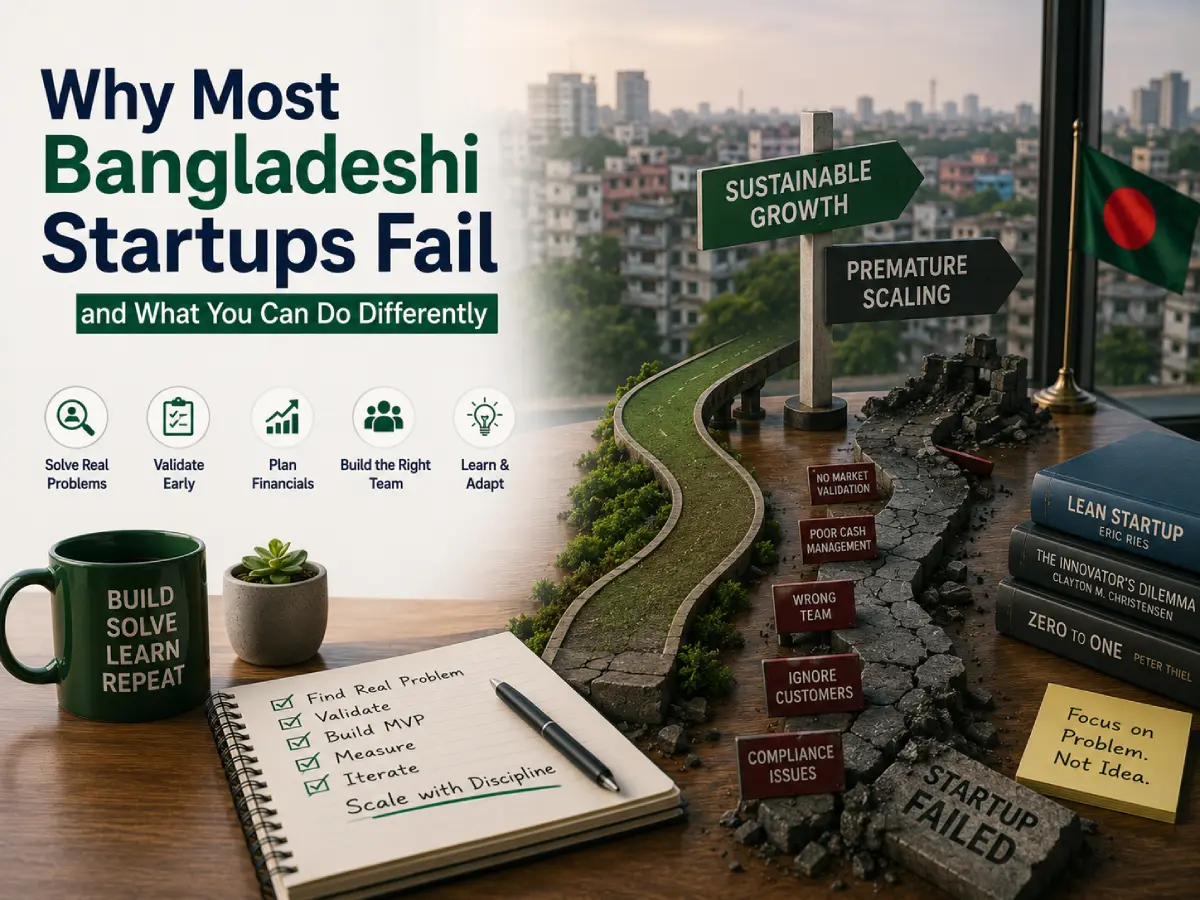
Why Most Bangladeshi Startups Fail — and What You Can Do Differently
Quick Answer: Most Bangladeshi startups fail because of poor market validation, weak financial planning, and founder-market mismatch, not lack of ideas or effort. The founders who survive focus on solving real problems, build lean, and learn from their market before scaling.
Customer Acquisition Strategies That Work for Bangladesh Startups
Customer Acquisition Strategies That Work for Bangladesh Startups
Quick Answer: The most effective customer acquisition strategies for Bangladesh startups combine low-cost digital channels (Facebook, WhatsApp Business, SEO), mobile financial service integration for frictionless payment, referral-driven growth, and hyperlocal targeting. Startups that blend paid acquisition with retention-focused tactics see the lowest long-term cost per customer.
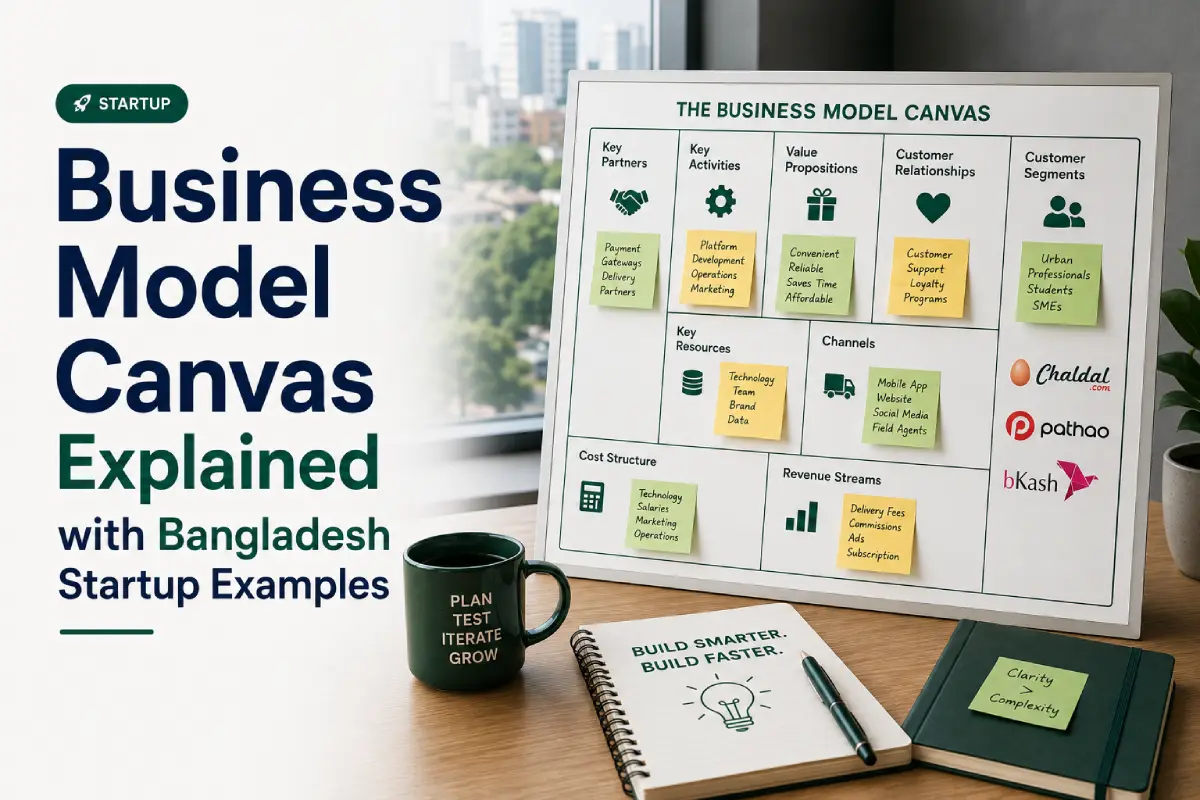
Business Model Canvas Explained with Bangladesh Startup Examples
Quick Answer: The Business Model Canvas (BMC) is a one-page strategic framework with 9 building blocks: Customer Segments, Value Propositions, Channels, Customer Relationships, Revenue Streams, Key Resources, Key Activities, Key Partnerships, and Cost Structure. It helps founders map, test, and communicate their entire business model before writing a single page of a business plan.
Comments (0)
No comments yet. Be the first to share your thoughts!