Youth Entrepreneurship in Bangladesh: Programs, Barriers, and Opportunities for Under-30 Founders
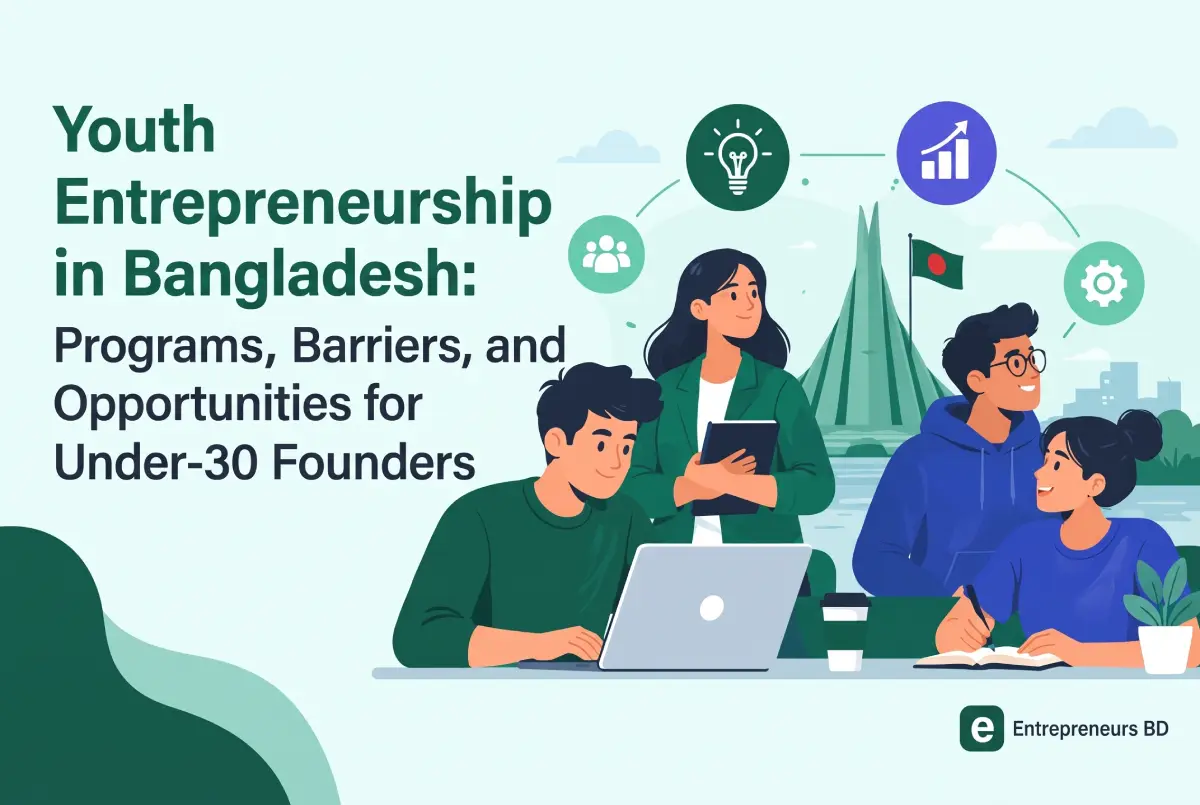
Youth entrepreneurship in Bangladesh runs on government programs like iDEA and Startup Bangladesh, plus accelerators like BYLC Ventures and Orange Corners. Under-30 founders still face a real financing gap and thin mentorship, even though people aged 15 to 29 make up over 30 percent of the population.
Key Takeaways
The iDEA project has funded over 400 startups since 2016 and created roughly 7,000 direct jobs. Its grants top out at Tk 10 lakh, enough to validate an idea, not scale one.
Startup Bangladesh Limited launched a Tk 400 crore Fund of Funds in 2026, alongside a government-stated Tk 500 crore allocation for startup development this fiscal year.
Only 6.4 percent of formal Bangladeshi firms offered structured training in 2022, against a 28 percent regional average.
Collateral, not ambition, shuts young founders out of bank credit. Women received about 7 percent of CMSME loans disbursed in 2025.
Bangladesh scored well behind regional peers like Nepal and Indonesia in the World Bank's first Business Ready assessment, which covered 50 economies.
Youth entrepreneurship in Bangladesh has stopped being a slogan. More than 30 percent of the population, close to 52 million people, is between 15 and 29.
That group also carries most of the country's unemployment problem. Youth unemployment sits at 7.3 percent, nearly 1.94 million people. Another 8.26 million young people are neither working, studying, nor training.
For a government watching those numbers, funding under-30 founders isn't charity. It's the cheapest way to convert idle years into taxable revenue.
What's different now is that money is finally showing up alongside the speeches. A Tk 400 crore Fund of Funds went live in 2026. A zero percent turnover tax now targets young and tech-driven founders specifically.
The question for a 24-year-old in Rajshahi or Chattogram isn't whether programs exist. It's which ones are worth the application, and which barriers no program has fixed yet.
Why So Many Young Bangladeshis Are Choosing to Build Instead of Apply
The push toward entrepreneurship isn't purely aspirational. Graduate unemployment runs at 12.3 percent, and among higher-secondary graduates, 8.87 percent can't find work either, according to the government's most recent Labour Force Survey data.
A degree here is not the guarantee it once was.
At the same time, the barrier to entry has dropped. The entrepreneurial mindset that used to require family money or a government job as a fallback matters less now.
A founder can validate a startup idea with a landing page and a few thousand taka in ad spend. That wasn't realistic a decade ago.
Bangladesh's startup ecosystem now counts more than 2,500 active startups and has pulled in over $900 million in funding since 2010. That's real progress.
It's worth being honest about the ceiling too. The country has produced exactly one unicorn, bKash, in fifteen years. India produced 131 in the same window. Under-30 founders are entering an ecosystem with real momentum, and a scaling problem that hasn't been solved yet.
The Programs Actually Funding Under-30 Founders
Not every "youth entrepreneurship initiative" does the same job. Some fund an idea. Some fund a company. Knowing which is which saves months.
Program | Run by | What it actually offers | Best fit |
|---|---|---|---|
iDEA Project | Bangladesh Computer Council, ICT Division | Pre-seed grants up to Tk 10 lakh, Tk 50,000 for SMEs, free co-working, mentorship | Founders with a prototype, no revenue yet |
Startup Bangladesh Limited | ICT Division's venture arm | Direct equity, roughly Tk 111 crore deployed across 36 tech startups so far | Founders past MVP with early traction |
Bangladesh Fund of Funds | Startup Bangladesh Limited | Tk 400 crore routed through licensed VC managers, 1:1 matching required | Founders needing a larger, later-stage round |
BYLC Ventures | Bangladesh Youth Leadership Center | Tk 8 lakh seed funding per team, six-month accelerator | Founders who want leadership and legal support alongside capital |
Orange Corners Bangladesh | Netherlands Ministry of Foreign Affairs, run by YY Ventures | Incubation through 2028, deliberate focus on founders outside Dhaka | Youth-led ventures in agriculture, water, health |
A pattern is worth noticing here. The government track (iDEA, Startup Bangladesh) casts the widest net but writes the smallest checks.
The accelerator track (BYLC, Orange Corners) writes fewer checks. It pairs them with mentorship that most young founders say they need more than the money itself.
Before applying anywhere, it helps to know where startup funding in Bangladesh actually comes from at each stage. A pre-seed grant and a Series A round solve different problems.
The Barriers That Haven't Moved as Fast as the Headlines
Money announcements travel faster than the fixes underneath them. Three barriers still define building a business under 30 here.
Financing still runs on collateral, not merit. Women-led enterprises make up the majority of a $2.8 billion MSME financing gap, according to an IFC estimate reported by the Daily Star. Women received only about 7 percent of total CMSME loans disbursed in 2025.
Most banks default to asking for collateral. Few young founders, male or female, actually hold any.
Mentorship is thin outside a handful of programs. Just 6.4 percent of formal Bangladeshi firms offered structured training in 2022, against a 28 percent regional average.
A founder outside a BYLC or Orange Corners cohort is largely on their own for the parts of running a business a degree doesn't teach: pricing, contracts, tax filing.
Bureaucracy still costs time young founders don't have. In the World Bank's first Business Ready assessment, covering 50 economies, Bangladesh scored 70.49 on operational efficiency but only 41.46 on public services and 56.99 on regulatory framework, trailing regional peers Nepal and Indonesia. A larger, updated edition covering 101 economies has since been released, though a re-confirmed Bangladesh rank in that expanded edition wasn't available at the time of writing.
That's still an improvement in framing from the old Ease of Doing Business index, where Bangladesh sat at 168th of 190 in its final 2020 edition. But friction around business registration and licensing hasn't closed just because the ranking system changed.
Where the Opportunity Is Concentrated, and Where It Isn't
Almost everything above is easier to access if you live in Dhaka. Startup Bangladesh, the biggest iDEA cohorts, and most angel investors in Bangladesh are based there.
Founders elsewhere spend real money just traveling to pitch.
That gap is exactly what Orange Corners Bangladesh has built its next phase around. It deliberately weights support toward founders outside Dhaka, and toward sectors like agriculture and water that rarely get venture attention.
It's also the logic behind growing interest in tech-driven rural growth. A founder solving a problem for a farming household in Rangpur competes for far less capital than a fintech founder in Gulshan.
The gender gap tells a similar story. Women lead roughly 2.8 million SMEs, about 25 percent of all SMEs in the country, employing an estimated 8.4 million people, according to a UNDP policy dialogue on gender investment barriers.
Yet women own only 7.2 percent of all registered businesses. Under-30 women founders are building at real scale and still hitting a wall the moment they need formal capital or formal registration.
What an Under-30 Founder Should Actually Do With This
Programs are useless if the sequencing is wrong. A rough order that matches how the ecosystem works:
Validate before applying anywhere. Grant committees can tell the difference between an idea and evidence of demand.
Settle the co-founder question early. A co-founder agreement written before money changes hands prevents most disputes that kill young companies in year two.
Apply to iDEA or a regional program first, not last. Pre-seed grants exist to fund the version of the product that gets real users, not the polished pitch deck.
Register the business before chasing bank credit. Lenders and larger grant programs both expect formal registration.
Treat mentorship as seriously as capital. A founder inside BYLC or Orange Corners gets legal and financial support most solo founders pay for later, at a worse price, after a mistake.
Frequently Asked Questions
What is the best government program for a first-time entrepreneur under 30 in Bangladesh?
How much funding can a young founder actually get from iDEA?
Do you need collateral to get a startup loan in Bangladesh?
Is Bangladesh's business environment actually improving for young founders?
What sectors are young entrepreneurs succeeding in right now?
How can women entrepreneurs under 30 access more funding in Bangladesh?
The Founders Who Move First Will Set the Pattern
Bangladesh's youth entrepreneurship story right now runs at two speeds. Government capital and accelerator programs are moving faster than they have in a decade.
The underlying barriers are moving slower: collateral requirements, thin mentorship outside Dhaka, a regulatory system still working through a poor global standing.
That gap is where the opportunity actually sits. A founder under 30 who registers properly, validates before pitching, and picks the right program for their stage isn't just avoiding common failure points.
They're building a track record that makes the next round of funding easier to get, at a moment when the country badly needs more of its 52 million young people creating jobs instead of searching for them.
Specializing in SaaS product marketing, SEO strategy, Content marketing, TikTok advertising, PPC, and digital growth.
View Full Profile & ContributionsRelated Articles
The Innovation of Tanvir A. Mishuk: From Fintech Pioneer to AI Entrepreneur
Tanvir A. Mishuk is a fintech entrepreneur recognised for advancing digital financial inclusion in Bangladesh through innovations like e-KYC and USSD based banking access. He has since founded App AI Pty Ltd, an artificial intelligence company based in Australia, applying lessons from financial technology to a new generation of AI driven solutions.
HealthTech in Bangladesh: Opportunities, Regulations, and Early-Stage Players
HealthTech in Bangladesh covers telemedicine, e-pharmacy, diagnostics logistics, and digital health records serving a population with limited doctor access outside major cities. No single unified health-tech law exists yet; founders answer to DGDA, BMDC, and DGHS depending on the product. Early movers like Praava Health and Arogga built durable models around trust and last-mile delivery, not app polish.
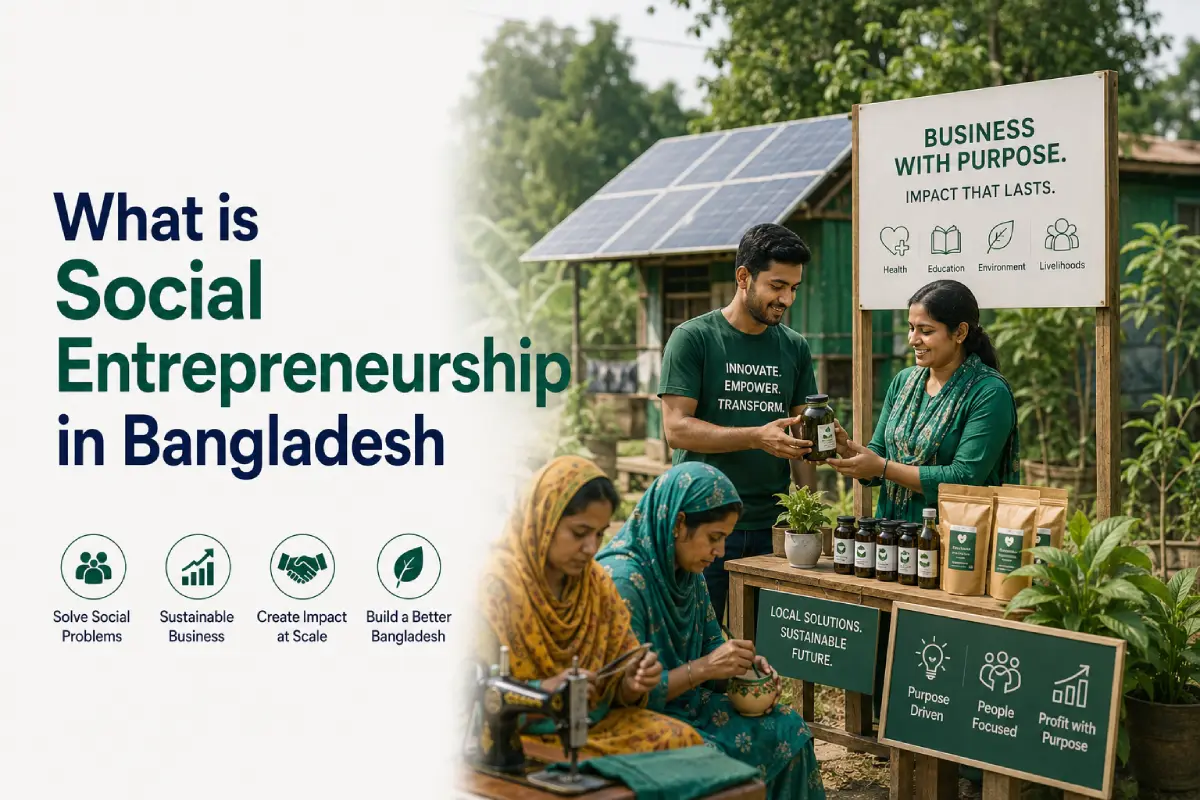
What is Social Entrepreneurship in Bangladesh 2026
Quick Answer: Social entrepreneurship in Bangladesh means building a self-sustaining business that solves a social problem, whether poverty, illiteracy, healthcare access, or climate vulnerability, without relying on charity. Bangladesh pioneered this model globally through Grameen Bank and BRAC, and the approach continues to grow across health, agriculture, and clean energy in 2026.
Comments (0)
No comments yet. Be the first to share your thoughts!