What is Social Entrepreneurship in Bangladesh 2026
Quick Answer: Social entrepreneurship in Bangladesh means building a self-sustaining business that solves a social problem, whether poverty, illiteracy, healthcare access, or climate vulnerability, without relying on charity. Bangladesh pioneered this model globally through Grameen Bank and BRAC, and the approach continues to grow across health, agriculture, and clean energy in 2026.
Key Takeaways
Bangladesh is widely recognised as the birthplace of modern social entrepreneurship, driven by Nobel Laureate Muhammad Yunus
Social enterprises differ from NGOs and charities by being financially self-sustaining through earned revenue
BRAC and Grameen Bank remain two of the most successful social enterprise models in the world
Key sectors in 2026 include healthcare, agritech, clean energy, waste management, and sustainable fashion
Bangladesh still lacks a formal legal definition and national registry for social enterprises, which limits sector growth
If you ask economists which country did the most to prove that business could fight poverty, the answer keeps coming back to Bangladesh. Long before "social enterprise" became a global buzzword, Bangladesh was already running the experiment at scale. The results, decades later, are both remarkable and unfinished.
In 2026, social entrepreneurship in Bangladesh sits at a crossroads. The country has a founding legacy that few can match, a young population hungry for purpose-driven work, and growing pressure from climate risk, inequality, and a shifting aid landscape. What it still lacks is a formal structure to match its potential.
This guide breaks down what social entrepreneurship actually means in the Bangladeshi context, who is doing it well, what the barriers look like, and what you need to know if you are thinking about entering this space.
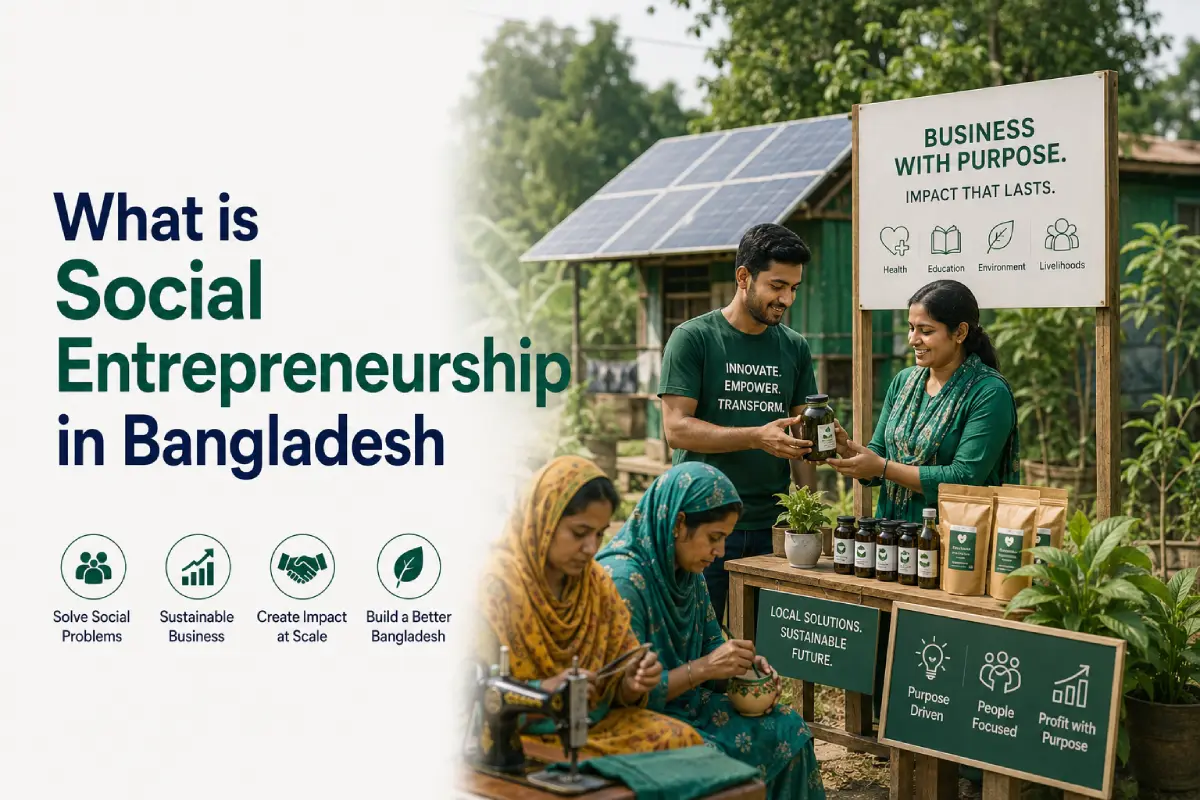
What Social Entrepreneurship Actually Means
Social entrepreneurship is the practice of using business methods to solve social problems. Unlike traditional charity, a social enterprise is designed to sustain itself through revenue. Unlike a profit-driven business, its primary objective is measurable social impact rather than financial return for owners.
In Bangladesh, the concept is anchored to the work of Professor Muhammad Yunus, who founded Grameen Bank in 1983. Starting from a personal loan of just $27 to 42 families in Jobra village, Yunus built a bank that now operates across 94% of Bangladeshi villages and has helped millions of rural women move out of acute poverty.
Over 95% of its borrowers are women, and the bank requires no collateral, a direct challenge to how conventional banking defines creditworthiness.
Yunus later formalized the concept as "social business," defined as a company that covers its costs, makes a profit, and reinvests all surplus back into the social mission.No dividends are extracted by investors.
This distinction matters: a social business is neither a charity nor a conventional company. It is a third category, one Bangladesh essentially created.
The State of Social Enterprise in Bangladesh in 2026
Bangladesh's social enterprise sector is active but fragmented. Organisations including the Yunus Centre, BRAC, YY Ventures, and Startup Bangladesh have supported initiatives in sustainable fashion, waste recycling, health access, and renewable energy.
Yet these efforts remain scattered, with no national coordination body, no formal legal category for social enterprises, and no registry to separate genuine social enterprises from CSR projects or grant-dependent NGOs.
BRAC, the world's largest non-governmental development organisation, is the clearest example of what a mature social enterprise model looks like in Bangladesh. It runs self-sustaining enterprises in dairy, healthcare, retail, and education that cross-subsidise its development programs. This hybrid model, part commercial, part mission-driven, is exactly what the sector aspires to replicate at a wider scale.
The World Bank's December 2025 approval of $150.75 million for the RAISE project signals continued international recognition of Bangladesh's potential. The project creates employment and income opportunities for around 176,000 additional youth, combining skills training, entrepreneurship development, and microfinance access, a package that directly aligns with social enterprise principles.
Key Sectors and Opportunities
Bangladesh's social challenges are also its biggest entrepreneurial opportunities. The sectors drawing the most social enterprise activity in 2026 are:
Healthcare access. Rural and peri-urban populations are chronically underserved. Social enterprises delivering telemedicine, affordable diagnostics, and community health workers have strong demand fundamentals.
Climate adaptation. Bangladesh ranks among the most climate-vulnerable countries globally. Social enterprises focused on flood-resilient housing, clean energy for char (riverine island) communities, and sustainable agriculture are increasingly relevant as climate shocks become more frequent.
Agritech. Smallholder farmers make up a significant portion of Bangladesh's workforce. Platforms connecting farmers to markets, offering fair pricing, and reducing post-harvest loss address a well-documented structural gap.
Waste and circular economy. Urban waste management is a growing crisis in Dhaka and other cities. Social enterprises in recycling, upcycling, and sustainable manufacturing are early but expanding.
Women's economic participation. With women still underrepresented in formal employment, social enterprises that create income pathways through skills training, flexible work, and microenterprise support remain deeply needed.
What Holds the Sector Back
Despite the legacy, Bangladesh faces real structural constraints in social entrepreneurship. The World Bank's April 2025 financing agreement with Bangladesh underscores the scale of work still required: $200 million is being directed toward social protection for 4.5 million people, which speaks to how much the formal economy still fails vulnerable populations.
Three barriers stand out consistently. First, access to capital: most social enterprises struggle to attract investors who are comfortable with below-market returns and long impact timelines. Second, the legal gap: Bangladesh has no dedicated social enterprise legal structure. Social enterprises must register either as companies under the RJSC or as NGOs under the NGO Affairs Bureau, neither of which reflects their actual operating model. Third, low public awareness: outside of Dhaka and a few NGO-heavy sectors, social entrepreneurship is not widely understood as a distinct career or business path.
Frequently Asked Questions
What is the difference between a social enterprise and an NGO in Bangladesh?
Is Grameen Bank a social enterprise?
Does the government of Bangladesh formally recognise social enterprises?
What sectors offer the most opportunity for social entrepreneurs in Bangladesh?
Can social enterprises in Bangladesh attract investment?
How does climate change affect social entrepreneurship in Bangladesh?
Where Bangladesh Goes from Here
Bangladesh invented a concept that the rest of the world is still learning to use properly. The Grameen model inspired microcredit programs in over 64 countries. BRAC is studied at business schools globally. The 3ZERO vision, zero poverty, zero unemployment, zero net carbon, has attracted international attention as a development framework. The foundation is real.
What the sector needs now is structure. A formal legal identity for social enterprises, a national registry, dedicated blended finance mechanisms, and inclusion in SME policy would change the trajectory significantly. None of these requires reinventing the wheel; Malaysia and Thailand have already done versions of this successfully.
If you are building a social enterprise in Bangladesh in 2026, the opportunity is genuine, and the need is urgent. The path is less clear than it should be, but that gap is also where the work gets done.

Specializing in SaaS product marketing, SEO strategy, Content marketing, TikTok advertising, PPC, and digital growth.
View Full Profile & ContributionsRelated Articles
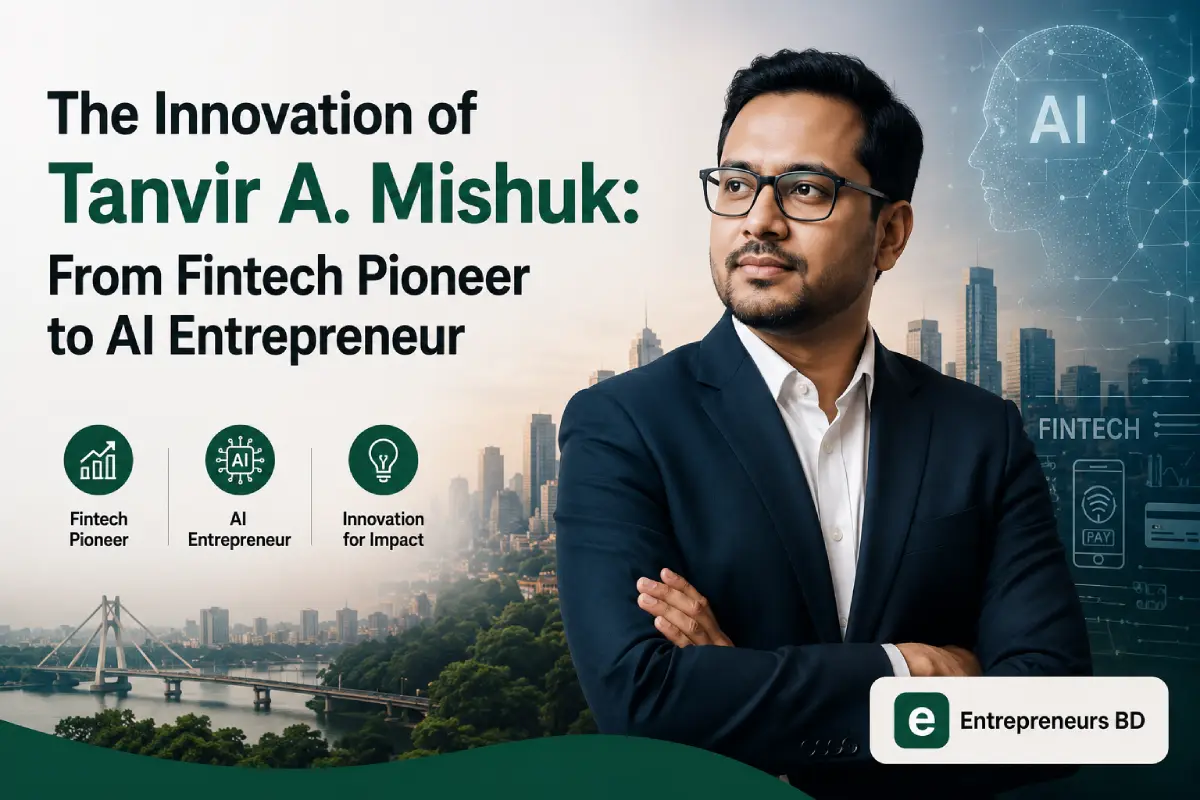
The Innovation of Tanvir A. Mishuk: From Fintech Pioneer to AI Entrepreneur
Tanvir A. Mishuk is a fintech entrepreneur recognised for advancing digital financial inclusion in Bangladesh through innovations like e-KYC and USSD based banking access. He has since founded App AI Pty Ltd, an artificial intelligence company based in Australia, applying lessons from financial technology to a new generation of AI driven solutions.
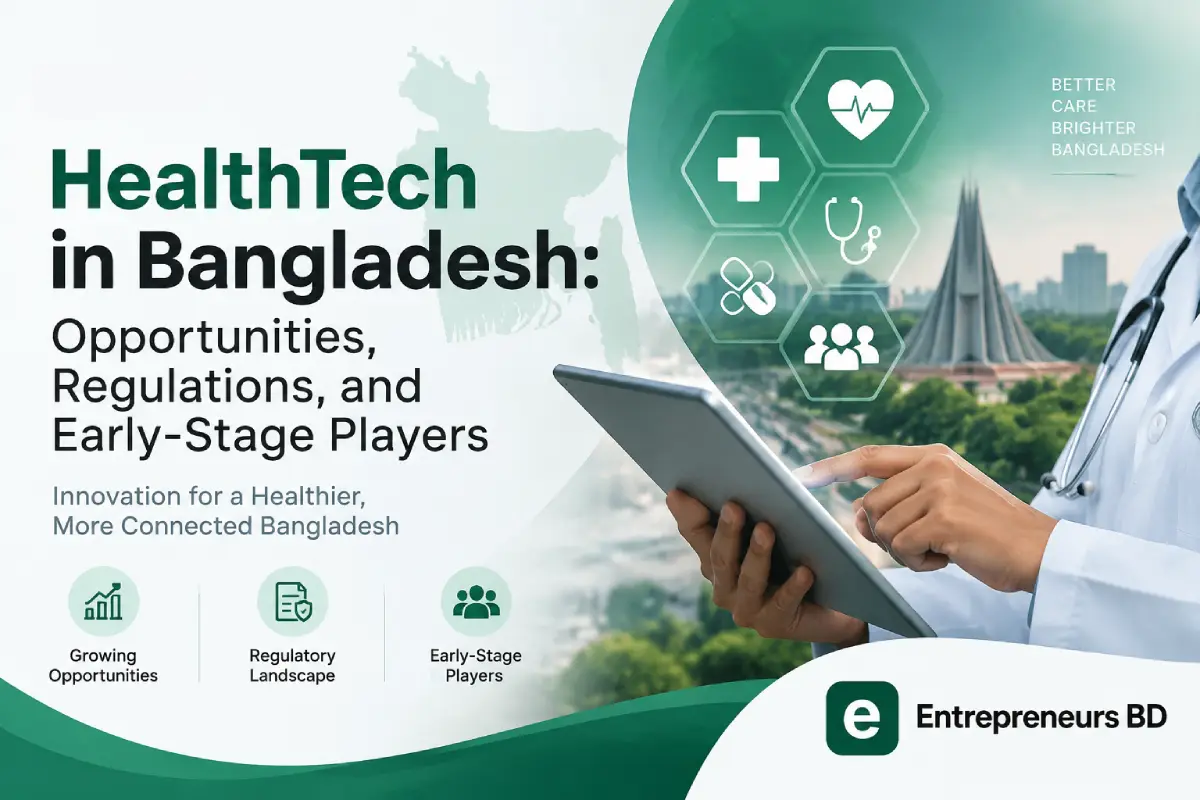
HealthTech in Bangladesh: Opportunities, Regulations, and Early-Stage Players
HealthTech in Bangladesh covers telemedicine, e-pharmacy, diagnostics logistics, and digital health records serving a population with limited doctor access outside major cities. No single unified health-tech law exists yet; founders answer to DGDA, BMDC, and DGHS depending on the product. Early movers like Praava Health and Arogga built durable models around trust and last-mile delivery, not app polish.
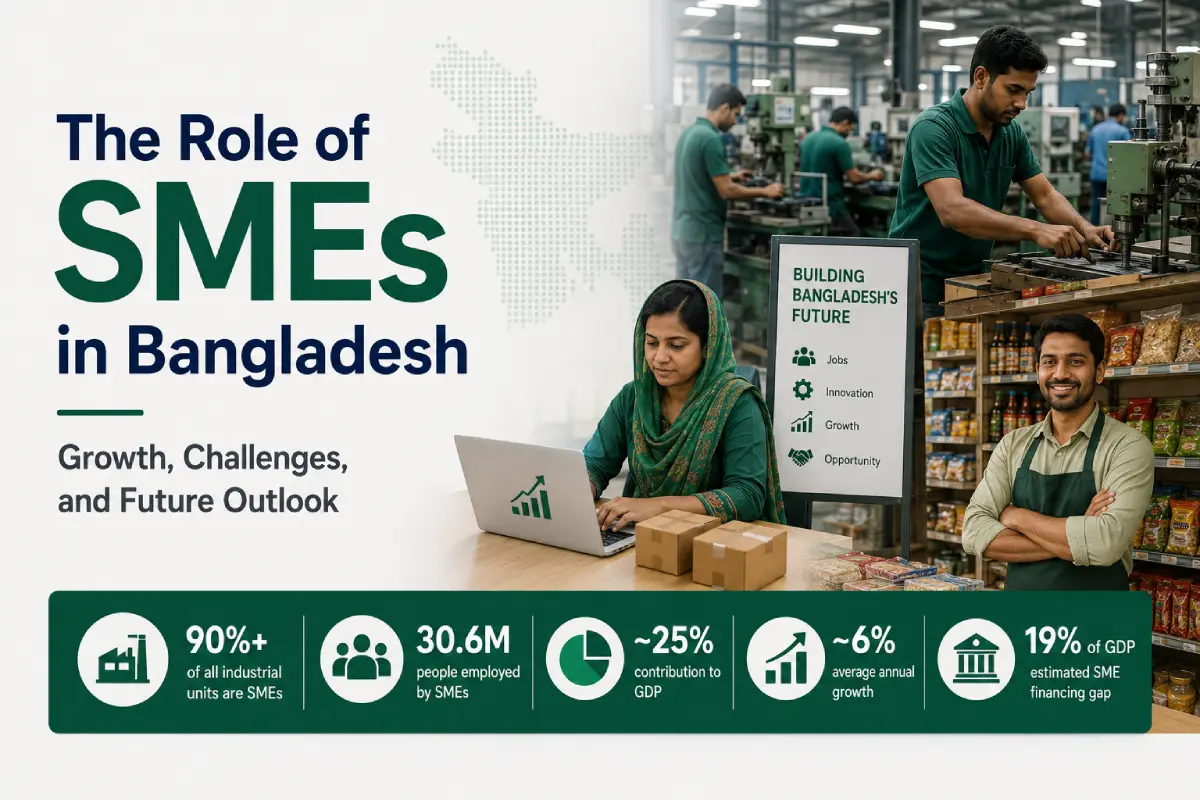
The Role of SMEs in Bangladesh in 2026: Growth, Challenges, and Future Outlook
Quick Answer: SMEs in Bangladesh make up over 90% of all industrial units, employ around 30.6 million people, and contribute approximately 25% of GDP. In 2026, the sector continues to grow at roughly 6% annually, but persistent challenges around access to finance, informality, and low productivity mean that scale and quality remain elusive for most enterprises.
Comments (0)
No comments yet. Be the first to share your thoughts!