How Technology Is Enabling Rural Business Growth in Bangladesh
Quick Answer: Technology is helping rural businesses in Bangladesh grow through mobile banking, e-commerce, social media, and internet access. Rural entrepreneurs can now sell products online, receive digital payments, reach nationwide customers, and manage businesses more efficiently using smartphones and digital platforms.
Key Takeaways
Mobile internet is expanding business opportunities in rural Bangladesh.
Digital payments like bKash and Nagad are improving financial access for entrepreneurs.
Social media platforms help rural businesses market products nationwide.
E-commerce and delivery networks are connecting villages to larger markets.
Government digital initiatives are supporting entrepreneurship and business growth.
Bangladesh is experiencing a major digital transformation, and rural businesses are becoming one of the biggest beneficiaries. From mobile banking and e-commerce to social media marketing and digital logistics, technology is helping small entrepreneurs in villages grow faster than ever before.
In 2026, rural business owners are no longer limited to local markets. A farmer in Rangpur can now sell products online, a tailor in Barishal can receive payments through mobile banking, and a handicraft seller in Khulna can promote products on Facebook or TikTok. Technology is reducing distance, increasing financial access, and creating new business opportunities across rural Bangladesh.
According to DataReportal, Bangladesh had around 77.7 million internet users in early 2025, while mobile internet usage continues to expand rapidly in rural areas. (DataReportal – Global Digital Insights)
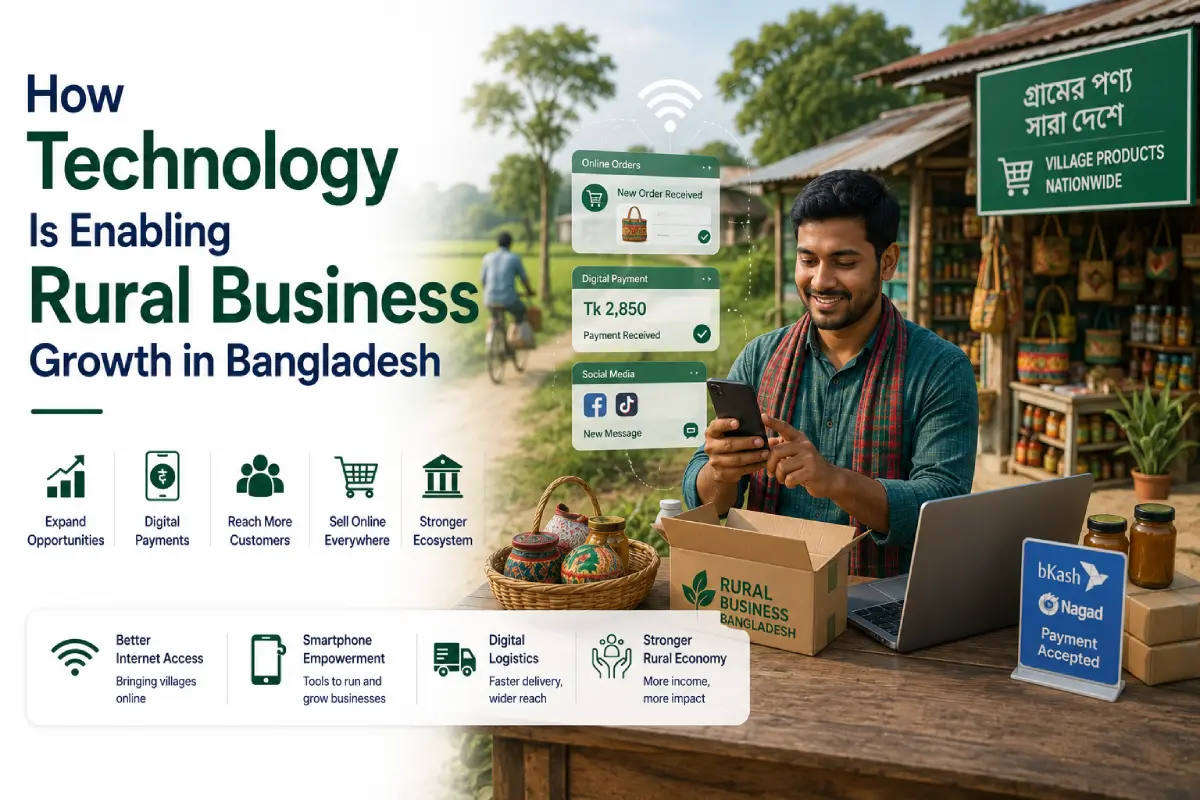
The Rise of Mobile Internet in Rural Bangladesh
The growth of affordable smartphones and mobile internet has changed how rural businesses operate. Today, many entrepreneurs use smartphones as their primary business tool.
Rural business owners now use technology for:
Product promotion on Facebook and TikTok
Online customer communication through Messenger and WhatsApp
Digital payments using bKash, Nagad, and Rocket
Online product delivery coordination
Livestream selling and digital advertising
Bangladesh Telecommunication Regulatory Commission (BTRC) data cited in recent digital economy reports shows that mobile internet subscribers crossed 119 million in 2025, with mobile internet dominating nationwide connectivity. (Source: The Daily Star)
This expansion is helping rural entrepreneurs participate in the national digital economy without needing physical stores in big cities.
Mobile Financial Services Are Driving Rural Entrepreneurship
One of the biggest reasons behind rural business growth is the success of Mobile Financial Services (MFS).
Services like bKash, Nagad, and Rocket have made financial transactions easier for millions of people who previously had limited access to banks. Rural entrepreneurs can now:
Receive customer payments instantly
Pay suppliers digitally
Send and receive money securely
Save transaction history
Reduce dependency on cash
According to Bangladesh Bank-related reports and recent industry analysis, Bangladesh had more than 238 million MFS accounts by 2025. Total MFS transaction values also increased significantly year over year. (Future Startup)
Research published in 2026 also found that mobile financial services have a positive impact on rural entrepreneurship and financial inclusion in Bangladesh. (ResearchGate)
For many small businesses in villages, digital payments are no longer optional — they are becoming essential.
Social Media Is Creating New Markets
Social media platforms are becoming digital marketplaces for rural entrepreneurs.
Facebook remains the most widely used social platform in Bangladesh, but TikTok and YouTube are also growing rapidly. Many small business owners now use these platforms to:
Showcase products
Reach customers nationwide
Build trust through videos and reviews
Sell directly through live sessions
Run low-cost advertisements
DataReportal reported that Bangladesh had around 60 million social media users in early 2025. (DataReportal – Global Digital Insights)
This trend is especially important for women entrepreneurs in rural areas. Many women now run home-based online businesses selling clothing, food products, handicrafts, cosmetics, and agricultural goods through social platforms.
Technology has reduced the need for expensive physical shops and opened opportunities for people with limited startup capital.
E-Commerce Is Expanding Beyond Major Cities
Bangladesh’s e-commerce sector is growing steadily, and rural businesses are becoming part of the ecosystem.
Previously, online business was mostly concentrated in Dhaka and Chattogram. But now, courier networks, digital payments, and smartphone access have made nationwide e-commerce possible.
Rural sellers are using platforms like Daraz and Facebook Shops to reach customers across the country. Logistics companies are also improving delivery services in district and upazila-level areas.
Industry reports published in 2026 suggest that Bangladesh’s e-commerce sector continues to expand due to increasing smartphone adoption, digital wallets, and better logistics infrastructure. (The Business Standard)
This is creating opportunities for:
Farmers
Local food producers
Handmade product sellers
Rural fashion businesses
Small retailers
Instead of depending only on local buyers, rural entrepreneurs can now access national markets.
Digital Government Services Are Supporting Businesses
Government digital initiatives are also helping rural businesses operate more efficiently.
Services such as online registration, digital tax systems, agricultural information platforms, and online public services are reducing paperwork and saving time.
Reports on Bangladesh’s digital transformation highlight that digital public infrastructure and e-government services are improving access to services across both urban and rural areas. (ficci.org.bd)
Farmers and small entrepreneurs can now access:
Agricultural advice
Market price updates
Government incentives
Online training
Digital identity verification
Banking support
These changes are helping rural entrepreneurs become more connected to formal economic systems.
Challenges Still Remain
Despite significant progress, several challenges continue to affect rural business growth.
Limited Digital Literacy
Many rural entrepreneurs still lack advanced digital skills. Some struggle with online marketing, cybersecurity, and digital accounting.
Internet Quality Issues
Internet speed and reliability can vary greatly in remote areas. Poor connectivity affects online sales, communication, and digital services.
Cybersecurity Risks
As more businesses go online, scams and digital fraud are increasing. Small entrepreneurs often lack awareness about online security.
Access to Funding
Although mobile finance has improved financial inclusion, many rural startups still face difficulties obtaining business loans and investment support.
Addressing these challenges will be important for sustaining long-term rural economic growth.
The Future of Rural Business in Bangladesh
The future looks promising for rural entrepreneurs in Bangladesh.
Experts believe that technologies such as 5G, AI-powered financial services, cloud platforms, and digital marketplaces will continue transforming rural economies over the next few years. (ficci.org.bd)
Bangladesh’s digital economy is growing rapidly, supported by increasing internet access, expanding mobile financial services, and rising digital adoption. (Future Startup)
As technology becomes more affordable and accessible, rural entrepreneurs will likely gain even greater opportunities to compete in national and international markets.
Conclusion
Technology is no longer limited to urban businesses in Bangladesh. Rural entrepreneurs are now using digital tools to improve sales, manage finances, reach customers, and grow their businesses.
Mobile banking, social media, e-commerce, and digital connectivity are creating a new generation of rural entrepreneurs who are more connected, financially included, and business-focused than ever before.
While challenges still exist, the overall trend is clear: technology is helping rural Bangladesh become a stronger contributor to the country’s economic growth.
For Bangladesh, empowering rural businesses through technology is not just a digital transformation — it is an economic transformation.
Frequently Asked Questions
How is technology helping rural businesses in Bangladesh?
What technologies are most useful for rural entrepreneurs?
Why are mobile financial services important for rural businesses?
How does social media support rural business growth?
What challenges do rural businesses still face in Bangladesh?

Specializing in SaaS product marketing, SEO strategy, Content marketing, TikTok advertising, PPC, and digital growth.
View Full Profile & ContributionsRelated Articles

The Innovation of Tanvir A. Mishuk: From Fintech Pioneer to AI Entrepreneur
Tanvir A. Mishuk is a fintech entrepreneur recognised for advancing digital financial inclusion in Bangladesh through innovations like e-KYC and USSD based banking access. He has since founded App AI Pty Ltd, an artificial intelligence company based in Australia, applying lessons from financial technology to a new generation of AI driven solutions.

HealthTech in Bangladesh: Opportunities, Regulations, and Early-Stage Players
HealthTech in Bangladesh covers telemedicine, e-pharmacy, diagnostics logistics, and digital health records serving a population with limited doctor access outside major cities. No single unified health-tech law exists yet; founders answer to DGDA, BMDC, and DGHS depending on the product. Early movers like Praava Health and Arogga built durable models around trust and last-mile delivery, not app polish.
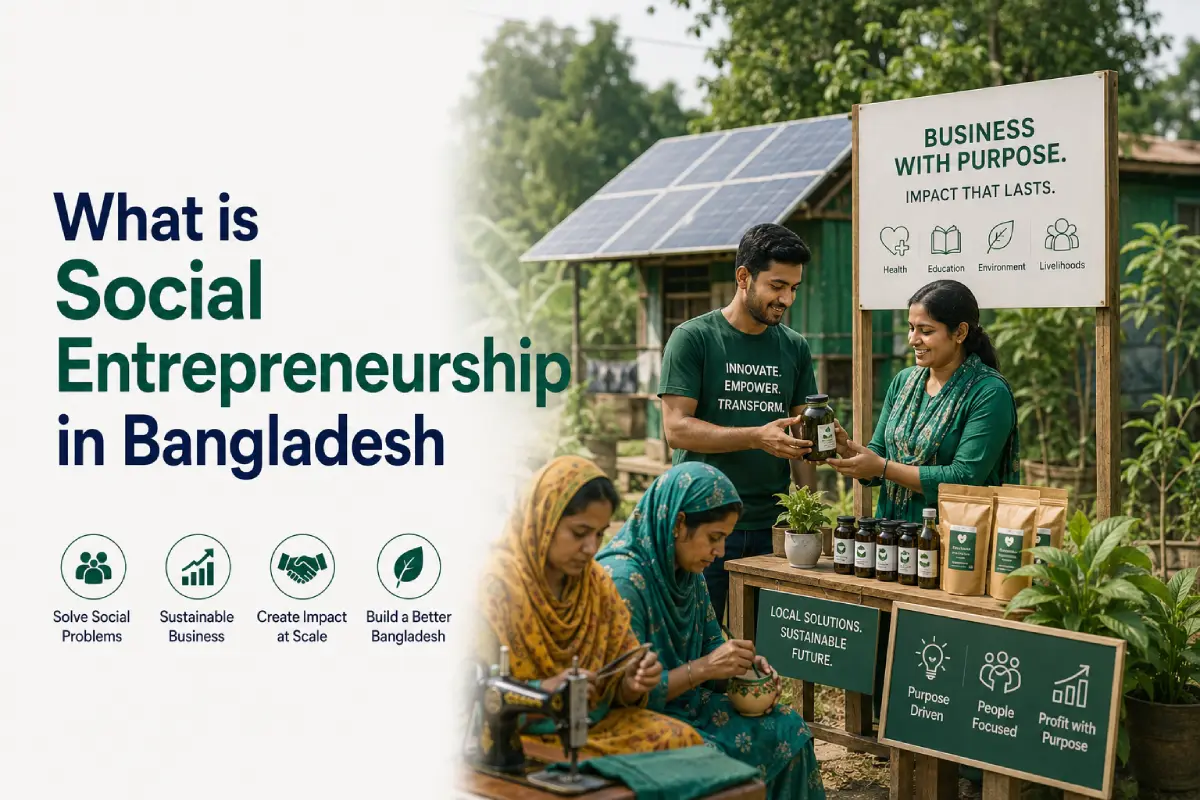
What is Social Entrepreneurship in Bangladesh 2026
Quick Answer: Social entrepreneurship in Bangladesh means building a self-sustaining business that solves a social problem, whether poverty, illiteracy, healthcare access, or climate vulnerability, without relying on charity. Bangladesh pioneered this model globally through Grameen Bank and BRAC, and the approach continues to grow across health, agriculture, and clean energy in 2026.
Comments (0)
No comments yet. Be the first to share your thoughts!