Fostering an Entrepreneurial Mindset In Bangladesh
Quick Answer: Fostering an entrepreneurial mindset in Bangladesh means developing habits of problem-solving, calculated risk-taking, and continuous learning that are grounded in the local market reality. It is less about motivation and more about building specific mental patterns that help you spot opportunities, survive setbacks, and act decisively in Bangladesh's dynamic business environment.
Key Takeaways
An entrepreneurial mindset is a set of trainable habits, not a personality trait you either have or don't
Bangladesh's young demographic and digital economy create real conditions for founders to thrive in 2026
Risk tolerance, resourcefulness, and market awareness are the three core pillars to develop first
Local ecosystems like BIDA and startup hubs actively support early-stage founders
Mindset without action is just self-help; pair mental shifts with concrete steps every week
Bangladesh has one of the youngest populations in South Asia, with over 28% of its 175.7 million people under the age of 10-24, according to The Daily Star. That is a structural advantage. But a young population alone does not create entrepreneurs. What actually drives business creation is how people think about problems, failure, and opportunity.
This article breaks down exactly what an entrepreneurial mindset looks like in a Bangladeshi context, why the conventional "hustle harder" narrative misses the point, and what you can do this week to start building one.
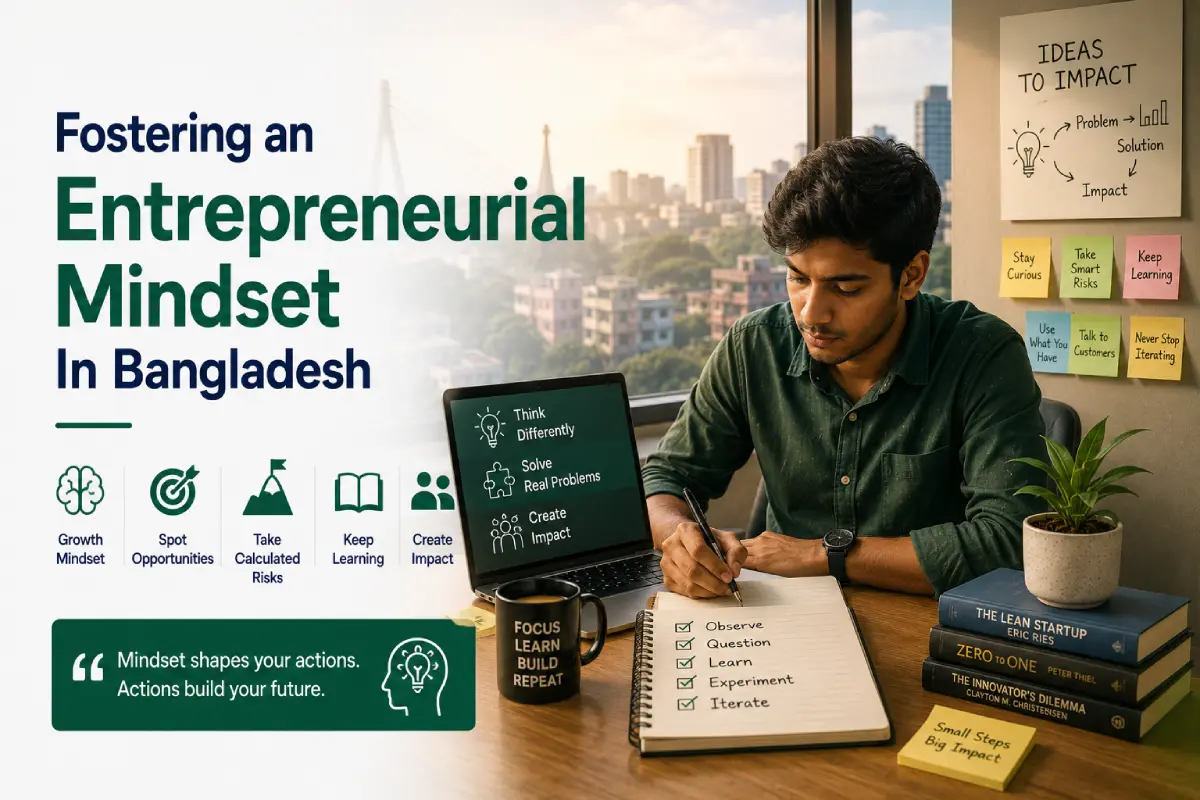
What an Entrepreneurial Mindset Actually Means
The term gets used loosely. Here is a working definition that actually holds up: an entrepreneurial mindset is a pattern of thinking that consistently seeks solutions over complaints, treats setbacks as data, and pursues value creation over mere employment.
It is not about being fearless. Most successful founders in Bangladesh, from Dhaka-based SaaS companies to rural agritech ventures, report being deeply afraid of failure. The difference is they act anyway, with a plan to reduce risk rather than ignore it.
Three core mindset pillars for Bangladeshi entrepreneurs:
Pillar | What It Looks Like | Common Barrier in BD Context |
Risk Tolerance | Taking calculated bets with real stakes | Family pressure to pursue a stable govt. jobs |
Resourcefulness | Building with limited capital and networks | Assuming you need significant funding first |
Market Awareness | Deeply understanding local consumer behavior | Copying foreign business models without adaptation |
Why Bangladesh's Context Demands Its Own Mindset Framework
Foreign startup advice is not always wrong, but it is frequently irrelevant. Bangladeshi founders operate in a specific environment with specific constraints and advantages.
Advantages unique to Bangladesh in 2026:
A domestic digital economy is growing significantly due to expanded internet access
A remittance-fed consumer base with rising spending capacity
A garment and manufacturing ecosystem that can be leveraged for product businesses
Government-backed startup support through the Bangladesh Investment Development Authority
Constraints you need to plan around:
Limited access to formal venture capital compared to India or Southeast Asia
Infrastructure gaps in logistics and payments outside major cities
A cultural norm that stigmatizes public business failure
The mindset work, then, is not just about attitude. It is about understanding these factors clearly and building strategies around them rather than pretending they do not exist.
6 Habits That Build an Entrepreneurial Mindset in Practice
Abstract advice about "thinking differently" produces nothing. These are specific, actionable habits that compound over time:
Do a daily problem audit. Spend 10 minutes writing down one friction point you encountered, either in your industry, your neighborhood, or your daily life. Train your brain to see problems as market signals.
Talk to potential customers before building anything. Bangladeshi founders frequently skip this step and build products based on assumptions. Customer conversations are free, and they eliminate expensive mistakes.
Set a monthly "small bet" budget. Reserve a fixed amount to test a small idea, whether a microservice, a reseller arrangement, or a digital product. Risk tolerance is built through practice, not inspiration.
Learn from local failures publicly discussed. The growing Bangladeshi startup community on LinkedIn and at Dhaka startup events is increasingly transparent about failures. Study them.
Find one peer who challenges your thinking. Isolation is the enemy of the entrepreneurial mindset. A single well-matched accountability partner changes outcomes more than a hundred motivational videos.
Replace consumption time with creation time. One hour a week spent building something, writing something, or selling something beats passive learning indefinitely.
The Role of Formal Ecosystems in Mindset Development
You do not build an entrepreneurial mindset in isolation. The environment around you either accelerates or suppresses it.
Bangladesh's formal startup ecosystem has grown meaningfully. iDEA Project, under the ICT Division, has supported over 1,000 startups with training, mentorship, and seed funding access. The World Bank's Bangladesh private sector assessments consistently highlight the country's young entrepreneurs as a key economic driver.
Beyond formal programs, the mindset shift often comes from:
Joining co-working spaces in Dhaka and Chittagong, where founders are in the room
Attending BASIS Softexpo and similar tech ecosystem events
Connecting with diaspora entrepreneurs who bring cross-border market perspectives
Ecosystem participation does something no solo practice can: it normalizes the identity of being a founder. When being an entrepreneur stops feeling unusual, the mental barriers around it drop significantly.
Frequently Asked Questions
Is entrepreneurship a natural talent or something you can develop?
Why do many educated Bangladeshis still prefer government jobs over entrepreneurship?
How much capital do you need to start developing an entrepreneurial mindset?
Can students in Bangladesh start building an entrepreneurial mindset while still in university?
What is the difference between a growth mindset and an entrepreneurial mindset?
How does family and social pressure in Bangladesh affect entrepreneurial thinking?
Start Where You Are, Not Where You Think You Should Be
The biggest mindset shift is also the simplest: stop waiting for better conditions. Bangladesh's market is imperfect, capital is limited, infrastructure has gaps, and failure still carries a social cost. None of that is changing fast enough to wait for.
What is changing is the number of Bangladeshi founders building real companies in these exact conditions, right now. The common thread among them is not a special talent or exceptional connections. It is a habit of acting on small opportunities consistently, learning from each iteration, and adjusting without quitting.
Pick one habit from the list in this article. Do it for 30 days. That is where the entrepreneurial mindset actually begins.
Specializing in SaaS product marketing, SEO strategy, Content marketing, TikTok advertising, PPC, and digital growth.
View Full Profile & ContributionsRelated Articles
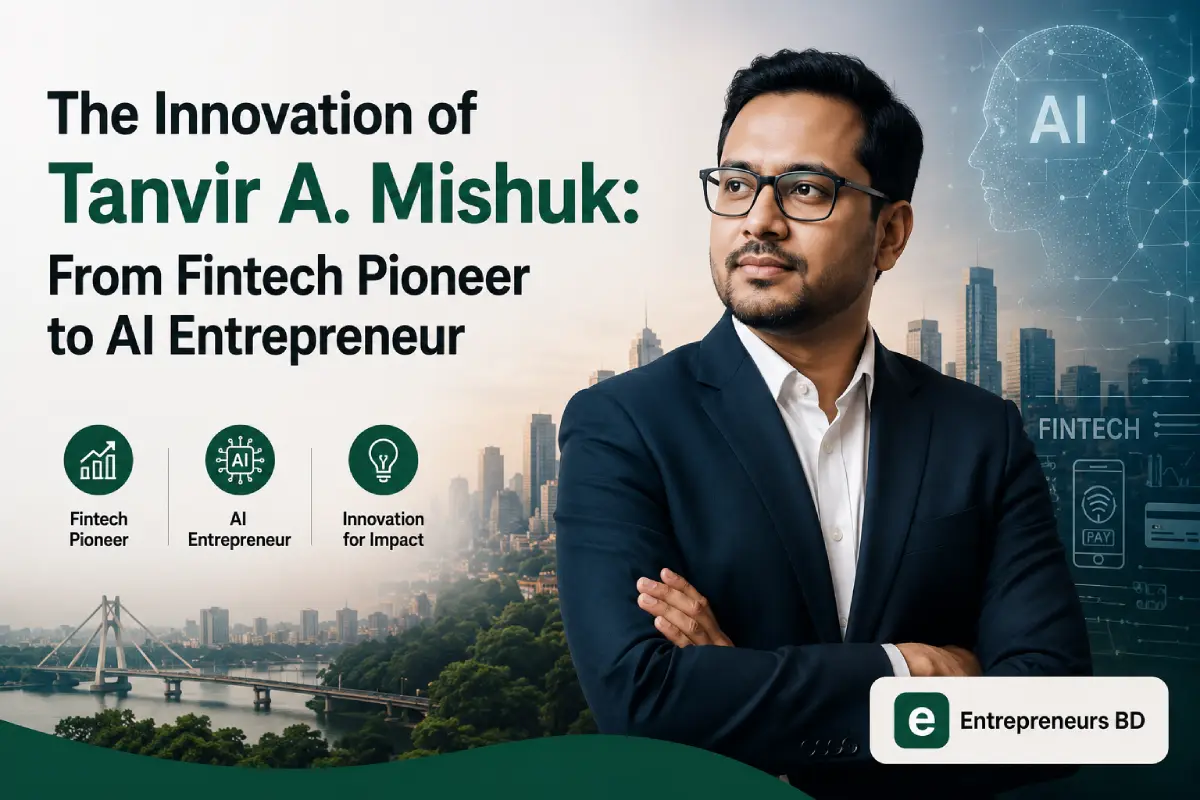
The Innovation of Tanvir A. Mishuk: From Fintech Pioneer to AI Entrepreneur
Tanvir A. Mishuk is a fintech entrepreneur recognised for advancing digital financial inclusion in Bangladesh through innovations like e-KYC and USSD based banking access. He has since founded App AI Pty Ltd, an artificial intelligence company based in Australia, applying lessons from financial technology to a new generation of AI driven solutions.

HealthTech in Bangladesh: Opportunities, Regulations, and Early-Stage Players
HealthTech in Bangladesh covers telemedicine, e-pharmacy, diagnostics logistics, and digital health records serving a population with limited doctor access outside major cities. No single unified health-tech law exists yet; founders answer to DGDA, BMDC, and DGHS depending on the product. Early movers like Praava Health and Arogga built durable models around trust and last-mile delivery, not app polish.
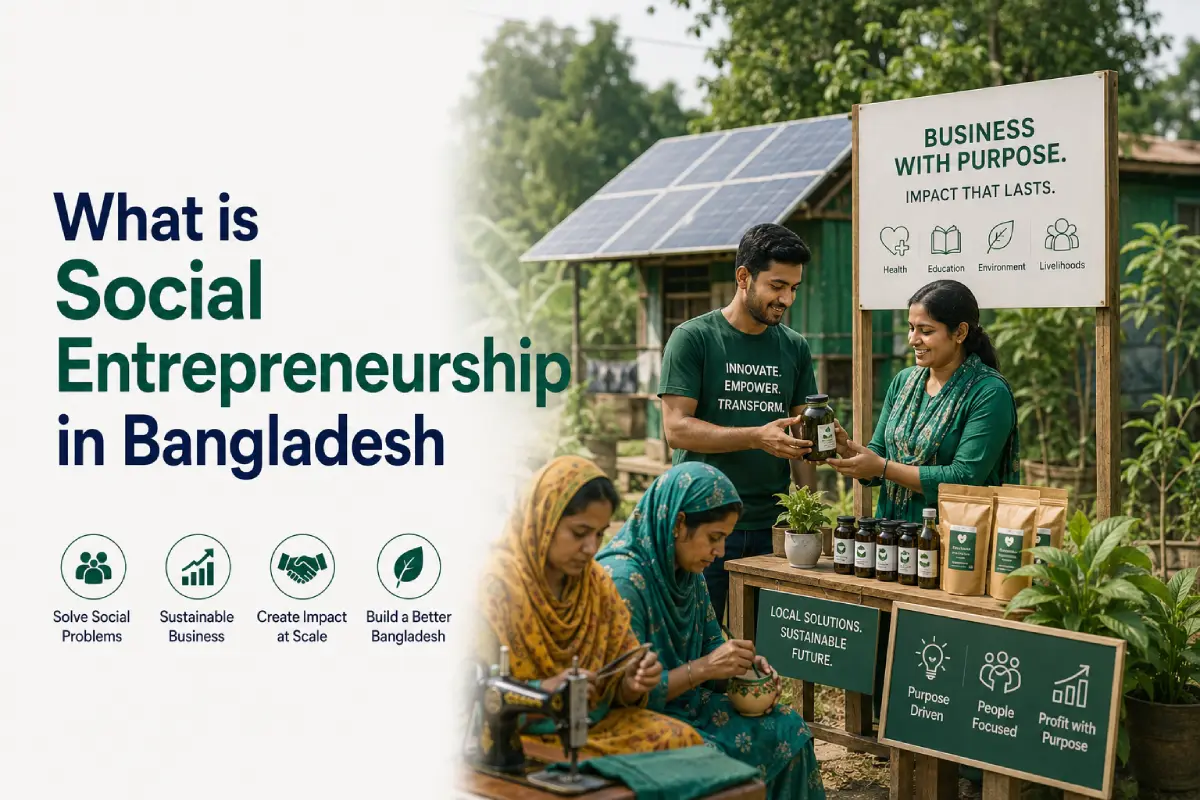
What is Social Entrepreneurship in Bangladesh 2026
Quick Answer: Social entrepreneurship in Bangladesh means building a self-sustaining business that solves a social problem, whether poverty, illiteracy, healthcare access, or climate vulnerability, without relying on charity. Bangladesh pioneered this model globally through Grameen Bank and BRAC, and the approach continues to grow across health, agriculture, and clean energy in 2026.
Comments (0)
No comments yet. Be the first to share your thoughts!