Bootstrapping a Startup in Bangladesh: How to Stay Lean and Grow Profitably
Bootstrapping a startup in Bangladesh means funding growth from your own savings, early revenue, and reinvested profit instead of outside investors. It works because operating costs stay low, digital tools cut overhead, and disciplined pricing lets founders reach profitability faster than they would chasing funding.
Key Takeaways
Bootstrapping forces early revenue focus, which often produces a stronger, more resilient business model
Low local operating costs give Bangladeshi founders a real bootstrapping advantage over founders in more expensive markets
Free and low-cost digital tools can replace most of the early hires a funded startup would make
Government registration and tax steps are simpler than founders expect once broken into stages
Profitable growth beats fast growth for a bootstrapped founder who has no investor cushion
Most founders in Bangladesh do not raise a funding round before they start. They register a business, build something small, sell it, and reinvest whatever comes back in. That is bootstrapping, and it is not a fallback option. It is a legitimate, often stronger way to build a company. This guide walks through what staying lean actually looks like day to day, where the money traps are, and how to grow without depending on outside capital.
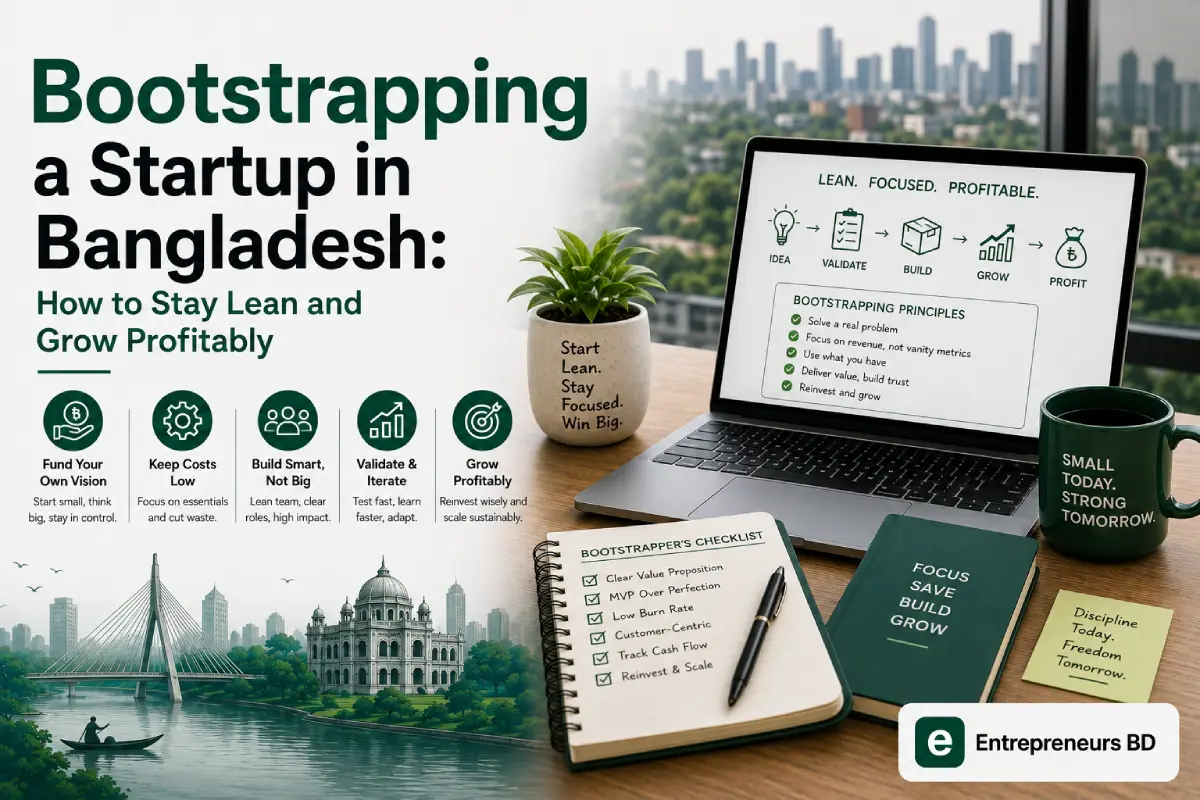
What Bootstrapping Really Means for a Bangladeshi Founder
Bootstrapping is building your business using your own money, your customers' money, or both.
There is no investor writing a check to cover your losses while you figure things out. Every taka spent has to be justified against what it returns.
This changes how you make decisions. A funded startup can hire ahead of demand. A bootstrapped one hires after demand proves itself.
That constraint is uncomfortable at first. Over time, it becomes the reason bootstrapped companies often survive longer than funded ones that burned cash chasing growth metrics nobody could sustain.
Why Bootstrapping Fits the Bangladesh Market So Well
Operating costs in Bangladesh are genuinely lower than in most markets founders compare themselves to.
Office space, part-time talent, and basic tools cost a fraction of what they cost in Singapore, Dubai, or the West. That gap is a real structural advantage, not a consolation prize.
Mobile financial services and digital payment adoption also mean a founder can start collecting revenue without a physical storefront or a large upfront investment.
A freelancer building a service business, for example, can start earning immediately using nothing more than a laptop and an internet connection. The future of freelancing in Bangladesh has made this kind of lean, revenue-first start increasingly common.
The tradeoff is patience. Bootstrapped growth is usually slower in the first year than founders expect from reading funded-startup stories. That slower start is the price of staying in control.
The Lean Toolkit: Cutting Costs Without Cutting Quality
Staying lean is not about being cheap everywhere. It is about being deliberate with every cost.
Start with a minimum viable version. Build the smallest version of your product that solves the core problem, then improve it with real customer feedback rather than guesswork. A clear MVP guide will save you from overbuilding before you know what customers actually want.
Delay fixed costs as long as possible. Office rent, full-time salaries, and long software subscriptions all lock in cash you may need elsewhere. Push these until revenue justifies them.
Use free and low-cost software before buying anything custom. Spreadsheets, free-tier CRMs, and open-source tools can run an entire early-stage operation.
Hire for output, not headcount. Freelancers and part-time specialists can cover design, accounting, and marketing without the fixed cost of full-time staff.
Price for margin from day one. A bootstrapped business without healthy margins has no cushion. Every sale needs to leave enough behind to reinvest.
Track cash weekly, not monthly. Bootstrapped founders who wait for a monthly report to notice a cash problem usually notice it too late.
Marketing deserves its own line here. Paid acquisition can drain a lean budget fast, so early traction should lean on low-cost digital marketing fundamentals and organic channels before any serious ad spend begins.
Bangladesh Context: Registration, Tax, and Local Financing Realities
Getting the legal basics right early prevents expensive fixes later.
Most small Bangladeshi startups begin as a sole proprietorship or partnership because the paperwork is lighter than incorporating a private limited company. A clear breakdown of the business registration process in Bangladesh helps founders pick the right structure before money starts moving.
If your annual turnover crosses the mandatory threshold, VAT registration becomes a legal requirement, not an option. The process now runs almost entirely online through the National Board of Revenue's VAT Online registration portal, where businesses apply for a Business Identification Number using the Mushak 2.1 form.
Bootstrapping does not mean rejecting all outside support. Bangladesh Bank runs several refinance schemes aimed specifically at cottage, micro, small, and medium enterprises, channeling lower-cost funds through participating banks so eligible small businesses can borrow at reduced rates. Details of these facilities are outlined in Bangladesh Bank's SME credit policy documentation, and they are worth reviewing before assuming self-funding is your only path forward.
For founders planning to bring in outside investors, work with distributors, or set up a formal office, Bangladesh Investment Development Authority's One Stop Service platform consolidates dozens of government approvals into a single portal. The BIDA FAQ page explains which services apply to domestic founders versus foreign investors.
None of this requires a lawyer on retainer in the early months. It requires knowing which step applies to your stage and doing it in order.
Practical Steps to Grow Profitably While Staying Lean
Growth and profitability are not opposites, but bootstrapped founders have to sequence them carefully.
Validate before you scale. Confirm real demand before investing in inventory, staff, or marketing spend. A rushed scale-up is the fastest way to burn a small cash reserve. Understanding product-market fit in the Bangladesh context before expanding protects that reserve.
Reinvest profit deliberately. Decide in advance what percentage of profit goes back into the business versus what stays as a buffer. Reinvesting everything leaves no cushion for a slow month.
Protect your time like a budget. A bootstrapped founder is usually doing five jobs at once, so poor time management shows up directly in lost revenue, not just stress.
Grow acquisition channels one at a time. Master one customer acquisition channel before adding a second. Spreading thin across five channels usually performs worse than doing one well, a pattern covered in detail in this guide to customer acquisition in Bangladesh.
Plan the scaling stage before you need it. Staying lean does not mean staying small forever. When the numbers justify it, a structured approach to scaling a startup in Bangladesh prevents the same founder from repeating early mistakes at a larger, more expensive scale.
The founders who bootstrap successfully in Bangladesh are rarely the ones with the cleverest idea. They are the ones who kept costs honest, watched cash weekly, and grew only as fast as their revenue could support.
Frequently Asked Questions
Is bootstrapping realistic for a startup in Bangladesh, or is outside funding necessary?
How much personal savings should a founder set aside before bootstrapping a startup?
What is the biggest mistake bootstrapped founders make in Bangladesh?
Can a bootstrapped startup still apply for a business loan later?
Do I need to register my business before I start selling anything?
How do I know when to stop bootstrapping and raise outside capital?
Staying Lean Is a Strategy, Not a Limitation
Bootstrapping in Bangladesh is not the beginner's path before the real startup story begins. For many founders, it is the entire story.
The discipline it forces, tight budgets, early revenue focus, careful hiring, tends to build companies that survive their first hard year. Funded companies without that discipline often do not.
Start with the smallest version of your idea that can earn money. Register it properly. Track your cash every week, not every month.
Grow only as fast as your profit allows, and treat every taka you keep in the business as a decision, not an accident. That is what staying lean and growing profitably actually looks like in practice.

Specializing in SaaS product marketing, SEO strategy, Content marketing, TikTok advertising, PPC, and digital growth.
View Full Profile & ContributionsRelated Articles
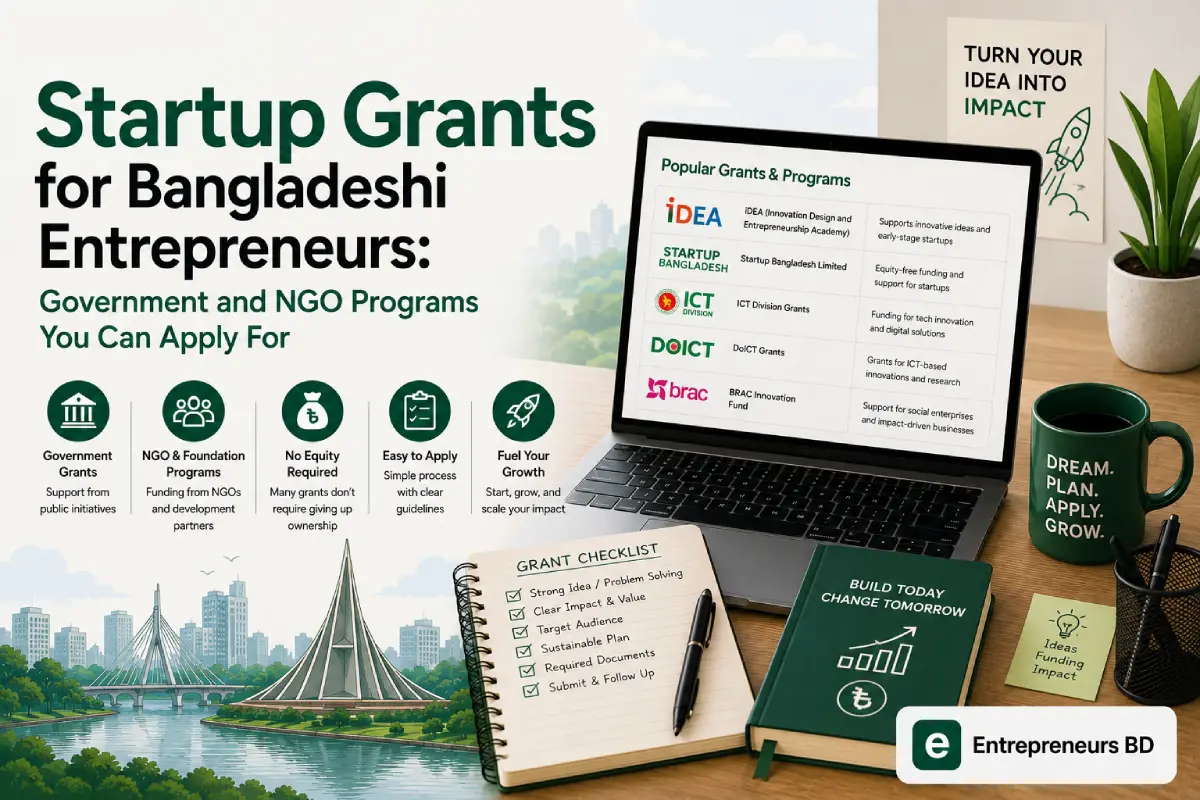
Startup Grants for Bangladeshi Entrepreneurs: Government and NGO Programs You Can Apply For
Bangladeshi entrepreneurs can apply for grants and low-cost financing through the ICT Division's iDEA project (up to BDT 10 lakh), SME Foundation's Credit Wholesaling Program, and Bangladesh Bank's refinance schemes for women and new entrepreneurs. Most require a trade license, a clear business plan, and an online application.
Fintech in Bangladesh: Key Players, Regulations, and Opportunities for Founders
For the payment and digital-finance businesses covered here, four regulated models matter most: MFS, PSP, PSO and digital banking. MFS requires a bank, financial institution or government entity to hold at least 51% of the provider and control its board. PSPs don't carry that requirement. PSOs run payment infrastructure and can't issue e-money. Digital banks are licensed under the Bank Company Act and now require Tk 300 crore in paid-up capital.
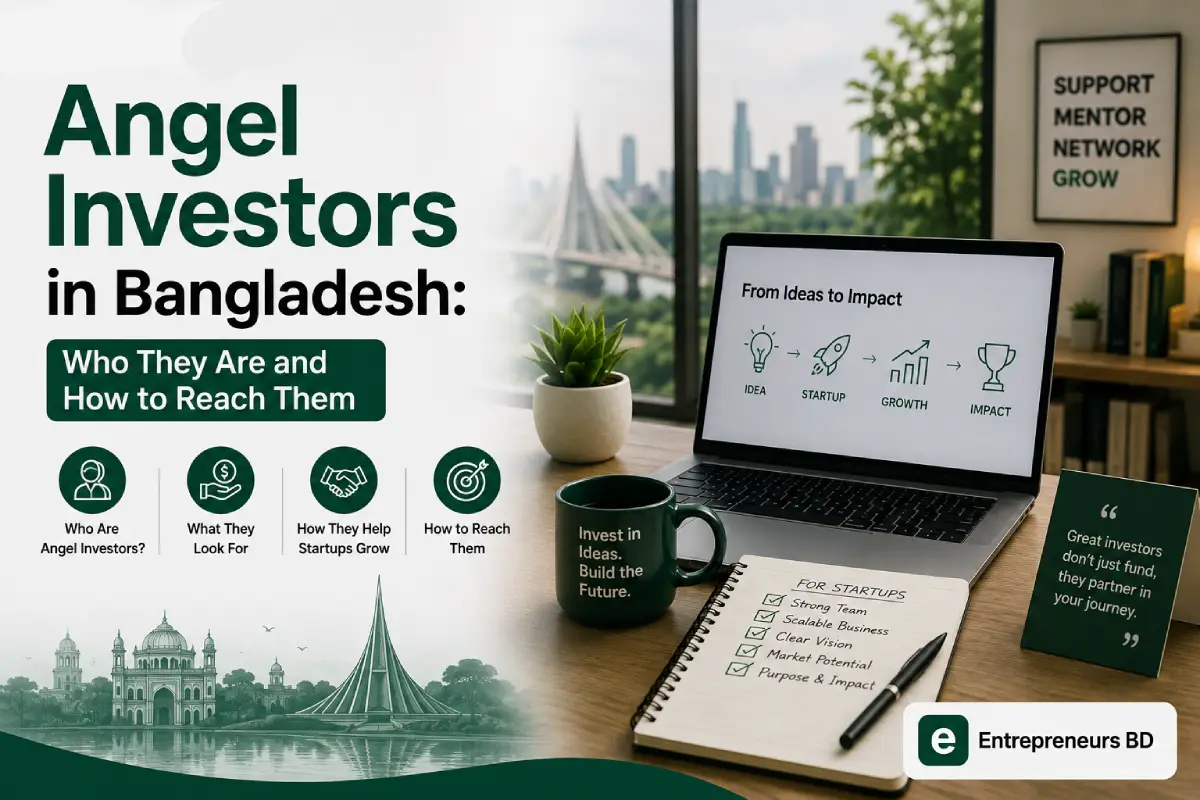
Angel Investors in Bangladesh: Who They Are and How to Reach Them
Angel investors in Bangladesh are individuals, family offices, and diaspora professionals who fund early-stage startups in exchange for equity. Most operate through organized networks like Bangladesh Angels Network (BAN) and Bangladesh Women Investors Network (BWIN), which vet founders, run pitch sessions, and syndicate deals among members.
Comments (0)
No comments yet. Be the first to share your thoughts!