The Freelancing Future of Bangladesh in 2026
Quick Answer: Bangladesh is the world's second-largest freelancing workforce, with over 650,000 active freelancers earning more than $500 million in annual foreign exchange. In 2026, the sector is shifting from low-cost task work toward high-value specializations in AI, UI/UX, and digital marketing, with new government infrastructure making the ecosystem more formal and bankable than ever before.
Key Takeaways
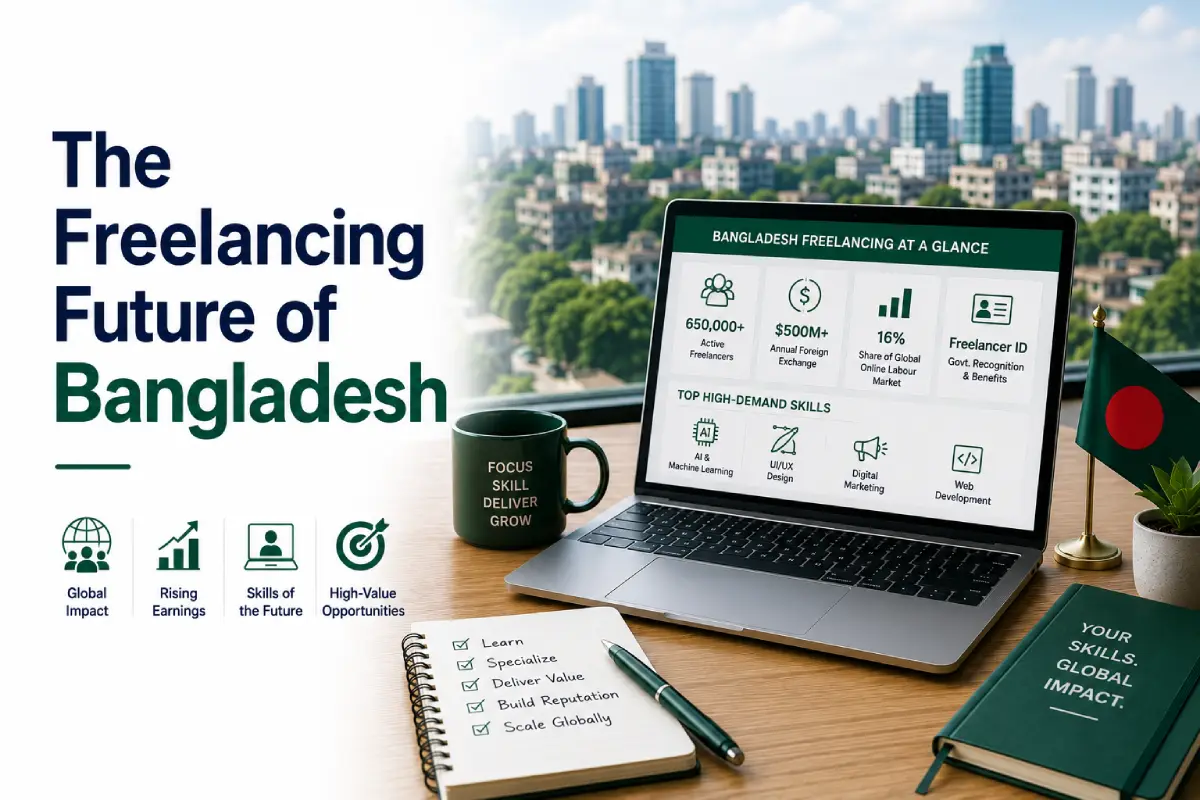
Bangladesh holds a 16% share of the global online labour market, second only to India
Average Bangladeshi freelancer earnings reached $500 to $700 per month in 2025, per Payoneer data
The government launched freelancers.gov.bd in January 2026, offering a free Freelancer ID for banking, loans, and institutional recognition
AI-specialized freelancers now command 25 to 60% higher rates than general practitioners in the same field
The next competitive edge is not platform volume; it is skill depth and client diversification
Bangladesh's freelancing sector did not grow gradually; it erupted. A country with limited formal employment, a massive youth population, and a government that bet early on digital infrastructure built something the rest of the world now watches carefully.
It was earned project by project, deadline by deadline, largely by people under 30 working from Dhaka flats, Sylhet guesthouses, and increasingly, from rural districts with newly stable broadband.
But the 2026 picture is more complicated than the headline numbers suggest. The volume is there, but the value has not fully caught up. Understanding both sides of that gap is what separates freelancers who will thrive in the next three years from those who will stall.
Where Bangladesh Actually Stands in Global Freelancing
The statistics are real, but they need honest context.
Bangladesh has 650,000 active freelancers, a figure sourced from the Daily Star, giving the country a 16% share of the world's online labour market.
Together, these freelancers earn more than $500 million annually in foreign exchange, making the sector one of the country's most significant sources of remittance income outside the garment industry.
That is the upside. Here is the tension: Bangladesh ranks second globally in freelancer volume, yet sits only seventh in freelancing earnings.
Most freelancers are engaged in low-paying work such as data entry, basic graphic design, and web development, often earning as little as $1–$2 per hour.
The country is producing output at scale but leaving significant money on the table. That gap is where 2026's real story begins.
The Earnings Landscape in 2026
The average Bangladeshi freelancer earned $500 to $700 monthly in 2025, according to Payoneer data. Most beginners land their first paid project within one to three months of starting, typically earning $50 to $200 for initial projects.
For comparison, Bangladesh's average entry-level corporate salary sits around $100 to $115 per month. Freelancing, even at beginner rates, already outperforms most formal employment options for educated youth.
A professional freelancer working 20 billable hours per week at mid-level rates can earn BDT 120,000 to 400,000 per month, multiples of most formal salaries in Bangladesh.
The most in-demand categories right now include web development (Python, PHP, JavaScript), graphic and UI/UX design, digital marketing, content creation, video editing, and virtual assistance.
What is changing fast is the premium attached to AI fluency. AI-enabled freelancers earn approximately 40% more per hour and save about eight hours per week. Growing categories include AI editing (+180%) and prompt engineering (+240%), while data entry has declined 35% and basic writing has dropped 21%.
This is not a distant trend. It is the current market. Bangladeshi freelancers who treat AI as a threat will lose ground. Those who treat it as a multiplier will accelerate.
The Government's Structural Shift
The most consequential development of early 2026 has nothing to do with platforms or algorithms. It is institutional recognition.
On January 13, 2026, Bangladesh launched freelancers.gov.bd, the country's first national digital platform for freelancer registration and ID card management, implemented by the ICT Division and the Department of ICT.
Registered freelancers receive a government-recognized Freelancer ID Card, giving them easier access to banking services, loans and credit facilities, financial incentives, and government training opportunities.
The registration is free and requires a national ID, a passport photo, and proof of earning at least $50 in the last 12 months. The ID is valid for three years and is renewable. This matters enormously for a sector that has historically struggled with banking access and institutional credibility.
The government is also running a Tk319 crore Learning and Earning Development Project and a Tk299 crore extended training programme running from January 2024 to December 2026, specifically aimed at closing skill gaps across all 64 districts.
Visit freelancers.gov.bd to register and get your Freelancer ID. For tax compliance requirements, the National Board of Revenue publishes current guidance for income earners in foreign currency.
From Solo Freelancer to Agency Builder
The most interesting structural shift happening in Bangladesh's freelancing economy is not individual upskilling. It is agency formation.
A growing number of experienced freelancers are stepping away from the gig economy and building their own agencies. In Sylhet in mid-2025, a 24-year-old UI/UX designer co-founded a small creative agency with two freelancers from Rajshahi and Chattogram. Their client list now spans three continents.
The economics are straightforward. Fiverr charges 20% on every order. Upwork's post-2025 fee structure runs 0 to 15%. Direct client relationships on LinkedIn or through outbound prospecting eliminate those fees while building relationships that generate repeat work and referrals.
LinkedIn has around 9.9 million users in Bangladesh as of early 2025, with the 25 to 34 age group dominating, and freelance earnings growth linked to active LinkedIn use is rising at 31% year-on-year, according to Payoneer data.
The agencies gaining traction are not generalists. They specialize in a single vertical: a brand identity studio, a WordPress development shop, a digital marketing agency with a specific industry focus. Specialization makes pricing more defensible and client acquisition more targeted.
Frequently Asked Questions
Is freelancing a stable income source in Bangladesh in 2026?
What skills have the highest earning potential for Bangladeshi freelancers right now?
How does the Freelancer ID from freelancers.gov.bd actually help?
Do Bangladeshi freelancers need to pay tax on foreign earnings?
Yes. Freelance income in Bangladesh is taxable once annual earnings exceed BDT 300,000. Freelancers are required to obtain a Tax Identification Number (TIN) and file annual returns through the National Board of Revenue. Earnings brought in through official banking channels via Payoneer or SWIFT are the most straightforward to document for tax compliance purposes.
What is the biggest mistake new Bangladeshi freelancers make?
Can someone in a rural district outside Dhaka build a serious freelancing career in 2026?
What the Next Three Years Actually Require
Bangladesh's freelancing sector is at an inflection point. The foundation has been built: the workforce is large, the government is more supportive than it has ever been, and global demand for remote digital work continues to grow.
What the next chapter requires is a deliberate shift in the value freelancers deliver. Volume without specialization keeps earnings low. Platform dependence without client relationships keeps leverage low. Refusing to integrate AI into workflows makes any category vulnerable.
The freelancers who will define Bangladesh's next decade in this space are not necessarily the ones who work the most hours. They are the ones who raise the strategic value of what they offer, diversify how they find clients, and build something that outlasts any single platform's algorithm change.
The tools are available. The government recognition is now in place. The skill gap between where the sector sits and where it could sit is real, but it is also closable. That is the most honest summary of Bangladesh's freelancing future in 2026: the ceiling is high, and reaching it is genuinely within reach for anyone willing to invest in depth over volume.

Specializing in SaaS product marketing, SEO strategy, Content marketing, TikTok advertising, PPC, and digital growth.
View Full Profile & ContributionsRelated Articles

Affiliate Marketing in Bangladesh: How to Earn and How to Set Up a Program
Affiliate marketing lets Bangladeshi creators, bloggers, and site owners earn commissions by promoting products from platforms like Daraz, Amazon Associates, and global networks such as ClickBank or Digistore24. Businesses can launch their own program with tracking software, clear commission terms, and payout channels that follow Bangladesh Bank's remittance rules for service exporters.
Freelancing as an Export Business in Bangladesh: Platforms, Payments, and Taxes
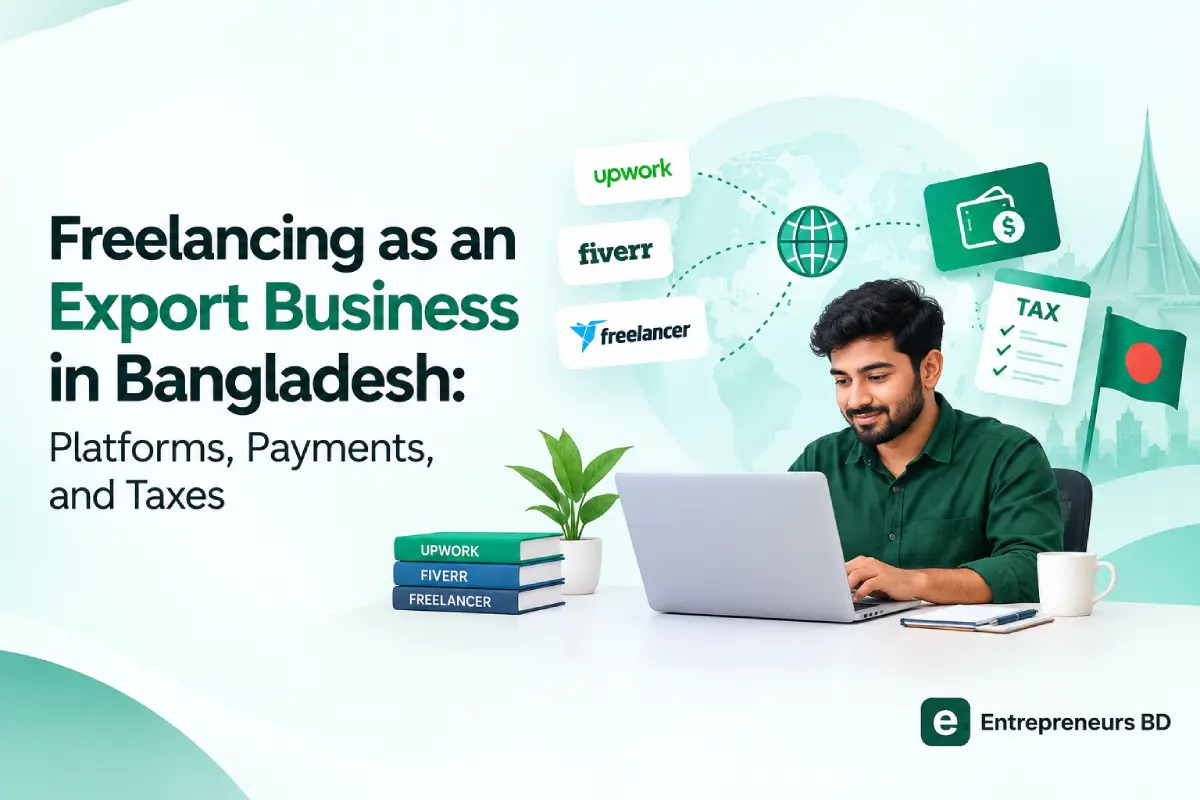
Bangladesh Bank treats freelance income as a service export under Part K of its July 2026 export circular. Qualifying tech work can be tax-exempt through June 2027, but only as a registered business with a Trade Licence, TIN, and BIN. Banks may also deduct 10 percent at source on incoming service fees.
Comments (0)
No comments yet. Be the first to share your thoughts!