Business Networking in Bangladesh: Where to Go, What to Say, and Who to Meet
Business networking in Bangladesh usually works best through sector associations such as BASIS and e-CAB, chambers like DCCI and CCCI, Startup Bangladesh events, SME Foundation fairs, and focused online communities. Check access rules before you go, introduce yourself in one clear sentence, and decide in advance who you want to meet.
Key Takeaways
Pick events by your sector, stage and goal; a famous speaker list is a weak reason to attend
Lead with the problem you solve, then add your title if it helps in that room
People a stage ahead of you teach a lot, but a customer or supplier may matter more for a specific goal
Follow up within a day or two, on the channel the person actually offered you
Many Bangladeshi business events are member-only, paid or application-based, so check access before you travel
A common first-event story goes like this. You queue at registration, sit through four speeches, leave with a pocket full of visiting cards, and hear from nobody. Usually the problem isn't confidence. It's the wrong room, no clear reason to talk to anyone, and no plan for the next morning.
Business networking in Bangladesh pays off when you prepare for it. Referrals carry real weight in many local industries, and a referral only happens when someone can explain what you do to a third person in one sentence. Our piece on networking and collaboration covers why relationships matter here. This one is narrower and more practical: where to go, what to say when you get there, and who to look for at your stage.
One note on dates. Several events mentioned below already happened earlier in 2026. We use them as examples of the kind of room worth finding, and we point you to the official calendars for what is coming next.

Where to Go: The Best Places for Business Networking in Bangladesh
Most useful business networking in Bangladesh happens in five places: sector associations, chambers of commerce, government-backed startup programmes, trade fairs, and smaller founder or online communities. The right one depends on what you sell, who buys it, and how easily you can get to Dhaka.
Associations, chambers and apex bodies: what's the difference?
These get lumped together, but they do different jobs. A sector association, like BASIS for software and IT services or e-CAB for e-commerce, is built around one industry. A chamber of commerce, such as DCCI or MCCI in Dhaka, serves businesses across many sectors in one area. FBCCI is the national apex body that represents chambers and trade associations together.
If you need peers who share your exact problems, start with the association. If you need buyers, suppliers or service providers from outside your industry, a chamber is usually the better bet.
Sector associations
BASIS is the main body for software and IT services firms. Its SoftExpo has, in past editions, combined exhibition halls with B2B matchmaking and startup sessions. The expo hasn't run on a fixed yearly schedule, though. The most recent edition we could confirm was the 17th, held in Purbachal in February 2023, so treat it as something to watch for until BASIS announces new dates.
e-CAB is the equivalent for online sellers and the businesses around them: couriers, payment providers, marketplaces. Its elections are contested by working founders. Waseem Alim of Chaldal, for example, led one of the panels in the 2022 vote. For a new seller, e-CAB seminars and workshops are a practical way to meet the courier and payment-gateway people you would otherwise only reach through support tickets.
One caveat for both. Membership and event access are not the same thing. Some sessions are open to anyone, some are members-only, and some need an invitation. Ask before you go.
Chambers of commerce
DCCI and MCCI are separate Dhaka chambers with their own committees and events. In Chattogram, the Chittagong Chamber of Commerce and Industry, based at the Agrabad World Trade Center, is an important channel for trade and industry businesses. Most divisional cities have a chamber of their own. If you import, export or want foreign partners, bilateral chambers such as AmCham Bangladesh and EuroCham Bangladesh are worth a look too.
Big chamber dinners are hard places to have a real conversation as a newcomer. Seminars, committee sessions and pre-budget consultations tend to be smaller and more focused. Joining is a formal process (DCCI, for instance, asks for a proposer and a seconder from existing members, plus an admission fee and annual subscription), so ask the secretariat what is open to guests before assuming you can sit in on a committee.
Government-backed startup programmes
Startup Bangladesh Limited, the state-backed venture fund, now hosts its own gatherings. Its Portfolio Night in January 2026 was a short programme followed by an informal dinner where portfolio founders talked with investors and development partners. In July, at an ICT Division event at the University of Dhaka, the Prime Minister launched the National Startup and Entrepreneurship Platform, a single online point for government services, training, mentoring and investment links.
Both events are over. They are still useful because they show what these rooms look like. Startup Bangladesh often announces events at short notice, so following its news page and social accounts is more reliable than waiting for an invite.
Trade fairs
For product businesses, the SME Foundation's National SME Product Fair is the big one. Organisers and press coverage describe it as the country's largest SME product exhibition. The December 2025 edition in Agargaon had about 350 enterprises and roughly 30 banks and financial institutions.
A fair like this is useful for a lot more than finance. You can sell directly, watch how buyers react to your price, meet distributors and retailers, and find suppliers. The banker-entrepreneur sessions are a bonus: you can ask a lender what they need and, where the bank agrees, start an application on site. It helps to read up on SME loan options before you go.
The SME Foundation also runs regional fairs, including one in Rajshahi in September 2026. For businesses outside Dhaka these cut travel time and can put you in front of local buyers and support agencies. The SME Foundation event list is where upcoming dates appear.
Smaller founder sessions and online communities
Some of the most honest conversations happen in small rooms. Future Startup's Founders at Work series, for example, has hosted talks with operators such as Mahadi Hasan Sagor of Geeky Social. With a small audience, a sharp question during the Q&A gives you a natural reason to follow up afterwards. It doesn't guarantee anything, but it beats a cold handshake.
Don't overlook online and alumni networks. University alumni groups, LinkedIn industry groups, Facebook seller communities, and professional bodies for accountants, lawyers and marketers can be more useful than a general business dinner. That's especially true if you run a small business in Khulna or Sylhet. Start the relationship online and save travel for meetings that have a clear purpose.
Upcoming events to watch
As of October 2026, the SME Foundation's official event list showed the 13th National SME Product Fair scheduled for 22 to 28 November 2026, with exhibitor applications listed as closing on 15 October. If you want a stall and that date has passed, contact the SME Foundation directly about late or future slots. If you are visiting, confirm the venue and hours from the official announcement nearer the date.
For everything else, go to the source. Lists like this one age fast.
SME Foundation event list, for national and regional fairs
Startup Bangladesh's news page, for founder and investor gatherings
BASIS and e-CAB websites and Facebook pages, for sector events
DCCI, MCCI and your local chamber, for seminars and consultations
AmCham and EuroCham Bangladesh, for international business events
Is this event worth your time?
Before you register, run through a few questions:
Who usually attends: customers, suppliers, investors, or peers who can actually help you?
Is it open to your stage and sector, or members-only?
Is there structured matchmaking, or is it mostly speeches?
Is the organiser credible, with a confirmed date, venue and registration link?
What's the real cost, counting the fee, the travel and a lost working day?
Paid workshops in particular are a mixed bag. Ask the organiser who usually attends before you pay. Forty founders at your stage can be worth more than four thousand visitors walking past a stall.
What to Say: Scripts That Work in Bangladeshi Rooms
Getting into the right room is half of it. The other half is the first minute of each conversation.
The one-sentence introduction
Lead with what you do for someone, then add your title if it helps. Compare these two:
"I run a B2B platform in the supply chain space."
"We help small pharmacies outside Dhaka restock without travelling to the wholesale market."
The second one gives the listener a picture. Anyone who knows a pharmacy owner or a distributor now has a reason to introduce you. In formal settings, with government officials or senior procurement people, mention your role and company straight after. Titles still matter in those rooms.
Test it on a friend outside your industry. The question isn't whether they can repeat it. It's whether they can tell you who you help, what problem you fix, and why that matters.
Starting the conversation
Shared ground is a common opener: where you're from, a university, a mutual contact. Use it if it comes up naturally, then move on. A question about their work tends to go further, something like "What's taking most of your time at the moment?" People talk more freely about a current problem than about their company profile.
Earning the right to ask
A specific ask works better than "let me know if anything comes up", but only once the other person knows enough about you to help. The order matters. Ask a relevant question, share something useful you've noticed, explain why the two of you might be connected, and only then ask for something sized to how well you know each other.
Asks that fit a first or second conversation:
"Do you know who handles procurement at a mid-size knitwear factory?"
"Who at your bank should I speak to about trade finance for a first import?"
"Would you be open to a 20-minute call about how you priced your first contract?"
Talking to a potential customer
With a likely customer, skip the pitch the first time you meet. Ask about the problem instead: "How do you handle restocking now? What goes wrong most often?" You will learn more in five minutes than a pitch would teach you, and if your product fits, they will often ask what you do before you get round to telling them.
Talking to investors
Do your homework first. Know your one-line pitch, your target customer, what evidence of demand you have, how much you are raising, and why this investor in particular. Networking does not make up for not being ready.
Check the investor's stated focus online, then ask something specific to it. If there's a fit, ask whether you can send a short note with your startup pitch deck. Please don't present it on your phone at the buffet.
Leaving a conversation
Nobody teaches this, and it is where a lot of people get stuck. Try something like: "It was good talking to you. I don't want to keep you from meeting others, but could I connect on LinkedIn and follow up about the supplier you mentioned?" It's polite, it sets up the next step, and it frees you both.
Matching the language
Most business rooms here move between Bangla and English. Follow the other person's lead rather than guessing from their background.
Who to Meet: Match the Person to Your Stage
The right contact changes as the business grows. Chasing the wrong person at the wrong stage wastes both your time and theirs.
Your stage | Who to look for | Where you usually find them |
|---|---|---|
Idea or pre-revenue | Potential customers, operators who solved the same problem | Sector associations, trade fairs, founder Q&A sessions |
First revenue | Suppliers, channel partners, founders one or two years ahead | Chamber committees, e-CAB or BASIS events |
Raising money | Angel investors, fund associates, programme managers | Startup Bangladesh events, demo days, investor dinners |
Scaling or exporting | Large buyers, bankers, chamber leaders, foreign delegations | Major expos, SME fairs, bilateral chamber events |
Treat the table as a starting point, not a rule. People a stage ahead of you are good for practical lessons. But if your goal is your first ten customers, one buyer is worth more than another founder.
At investment firms, the right first contact depends on the firm. Some funds have associates or investment managers screening deals, while at others the partners source deals themselves. Associates, principals and programme managers are often easier to reach and can explain how the firm decides. Our guide to angel investors in Bangladesh covers how early-stage money tends to move.
If you meet a possible co-founder or long-term partner, slow down. A great evening isn't the same as alignment. Put roles and ownership in writing with a proper co-founder agreement before any work starts.
The Bangladesh Context: Habits Worth Knowing
None of these are rules. They are patterns many people here will recognise, and they vary a lot by sector and by generation.
Warm introductions tend to build trust faster than cold messages. "Who referred you?" is a real question in plenty of Bangladeshi businesses. Cold outreach still works, especially in tech, but a mutual contact makes the first reply much easier.
Some contacts will look you up after you meet. An accurate LinkedIn profile, a working company website, or a public founder profile makes it easier for them to check who you are. You don't need all of them. You need one that is current.
Plenty of people prefer WhatsApp for quick follow-ups, but not everyone does. If someone gives you their number or says "message me on WhatsApp", use it. If they hand you a card with an email address, start there. Use the channel they offered.
Visiting cards are still handy at chamber events and trade fairs. In tech circles a LinkedIn QR code often does the same job.
Plan around geography. Big expos have been held at the exhibition centre in Purbachal, which is a long way from Gulshan or Dhanmondi in evening traffic. One event per evening is plenty.
And keep an eye on the calendar. Chambers and companies host iftar gatherings during Ramadan, which tend to be relaxed. December is fair season, and the weeks around the June budget fill chamber diaries with policy discussions.
A 30-Day Networking Plan You Can Start This Week
Reading about networking doesn't change much. A simple monthly rhythm does.
In week one, choose two events or communities that fit your sector and goal, and check that you are allowed in. Write your one-sentence introduction and try it on someone outside your industry.
In week two, go to one of them. Aim for a few real conversations. Three is a reasonable target, but one good conversation beats a pile of cards.
In week three, follow up within a day or two on whatever channel each person offered. Mention something specific they said. If you can genuinely help, with an introduction you can actually make or a supplier you trust, offer it. Don't invent favours just to create an obligation.
In week four, pick the warmest contact and ask whether a short follow-up would be useful to them. Let them choose the format: a call, a coffee or an email.
If you are outside Dhaka, swap the Dhaka event for your local chamber or an SME Foundation regional fair, keep follow-ups online, and travel to the capital only for a confirmed event that clearly fits.
Repeat this every month. Over time it builds something more useful than a stack of contacts, though how quickly depends on your sector and how consistently you follow up.
Frequently Asked Questions
Is it worth paying for a business networking event in Bangladesh?
How can I network if my business is outside Dhaka?
What should I bring to a networking event in Dhaka?
How do I approach an investor at an event without seeming pushy?
Can a very new company join BASIS or e-CAB?
Is WhatsApp acceptable for professional follow-up in Bangladesh?
Your Next Useful Contact Is One Room Away
Business networking in Bangladesh isn't about being everywhere. It's about turning up in two or three rooms that fit you, often enough that people start to recognise you, with an introduction short enough for them to pass on.
The channels are there: sector associations, chambers, Startup Bangladesh gatherings, SME Foundation fairs, and a lot of online communities. What makes the difference is how you use them. Check access before you go, lead with the problem you solve, ask for small things, and follow up the way the other person prefers.
If you want a concrete starting point, the November SME fair is only weeks away, and the SME Foundation's event list is where to confirm the details. If that doesn't fit, pick one event in the next 30 days instead. Write your sentence tonight and decide who you most want to meet there. The rest follows from that first conversation.

Specializing in SaaS product marketing, SEO strategy, Content marketing, TikTok advertising, PPC, and digital growth.
View Full Profile & ContributionsRelated Articles

Pricing Strategy for Bangladesh Products and Services: How to Set Prices That Sell
A good pricing strategy in Bangladesh starts with your full unit cost, adds the margin you need after VAT, delivery and payment costs, then checks the result against what customers will pay and what rivals charge. Set the price between your cost floor and the customer's value ceiling.
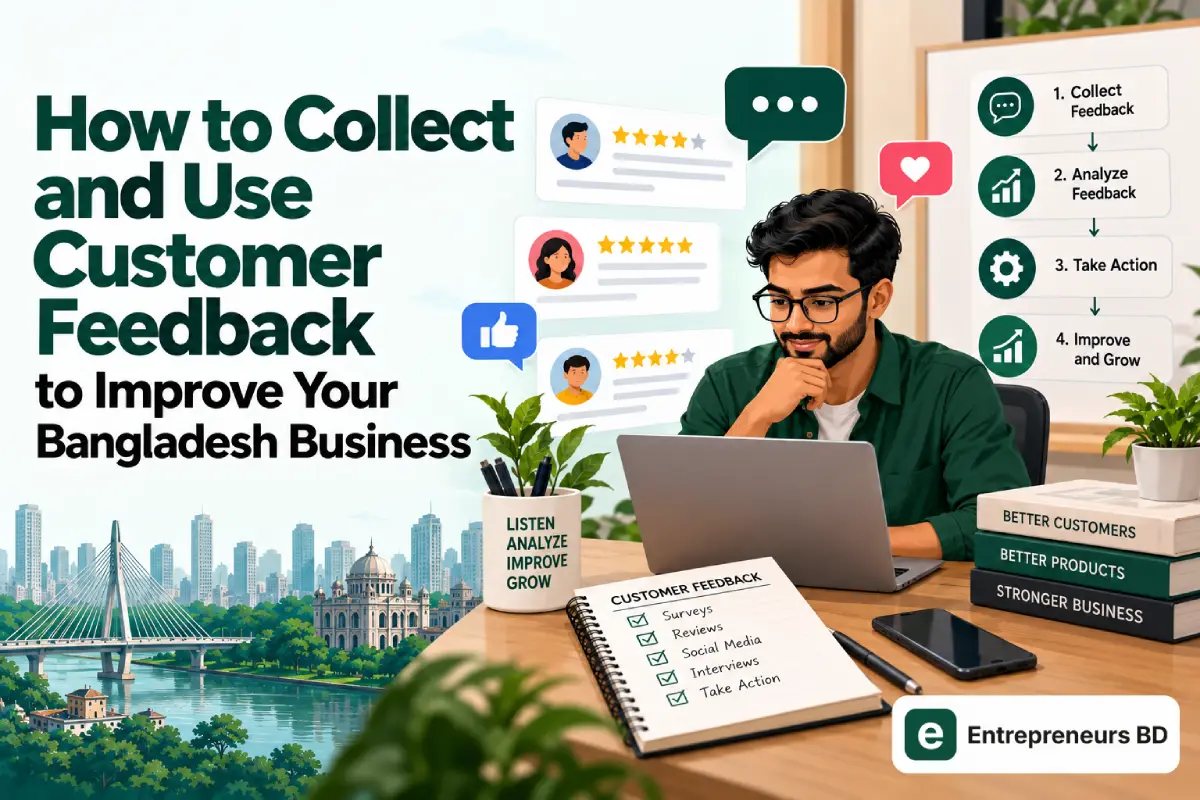
How to Collect and Use Customer Feedback to Improve Your Bangladesh Business
To use customer feedback in Bangladesh, ask short questions through channels your customers already use, log each response in one sheet with minimal personal data, tag it by theme, fix the highest-priority problem first, measure whether the fix worked, and tell customers what changed.

Google Ads for Bangladesh Businesses: Setup, Budget, and Bidding Guide
Quick Answer: Running Google Ads for Bangladeshi businesses means setting up BDT billing and conversion tracking first, sizing a daily budget against your own profit margins (most SMEs start at 500 to 2,000 taka), and starting with manual CPC or Maximize Clicks before switching to Smart Bidding once you have steady conversion data.
Comments (0)
No comments yet. Be the first to share your thoughts!