Growth Hacking for Bangladesh Startups: Tactics That Don't Require Big Budgets
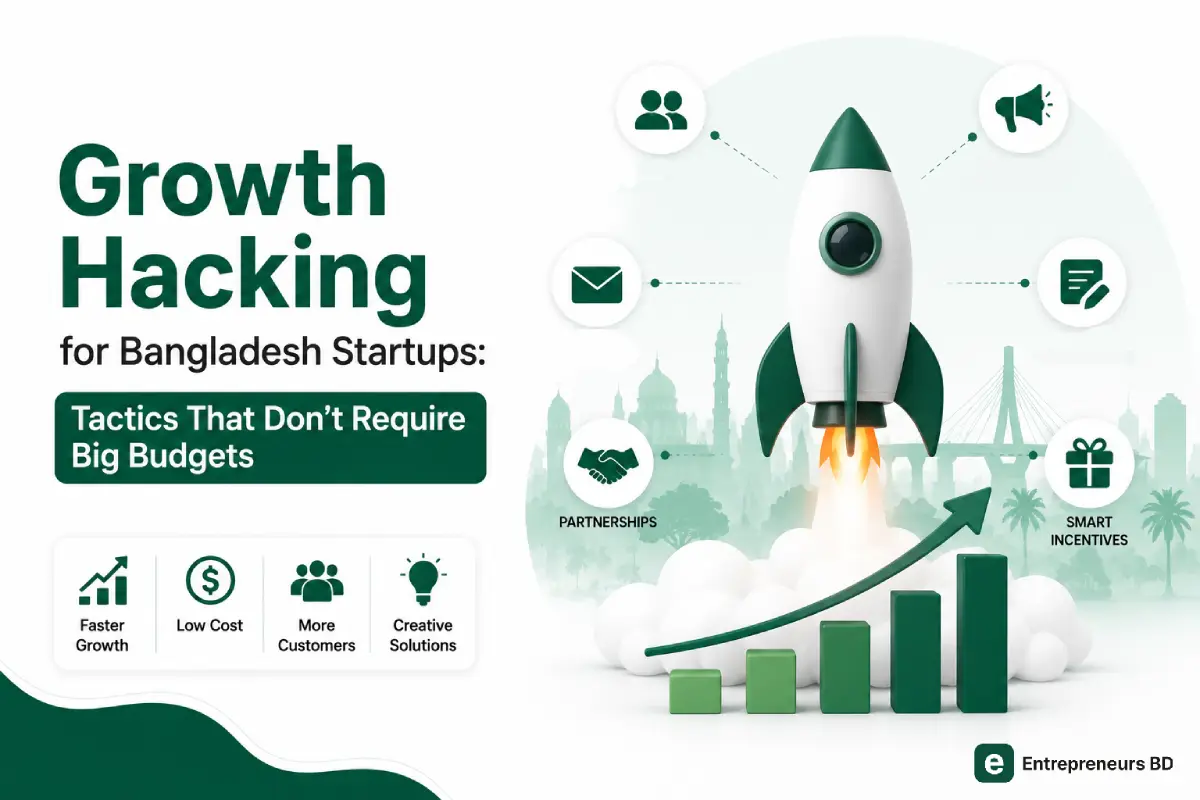
Growth hacking for Bangladesh startups means using referral loops, organic Facebook and WhatsApp communities, SEO content, and mobile financial service incentives to win customers without paid ads. These tactics work because they lean on distribution channels Bangladeshi customers already use every day, not on a marketing budget.
Key Takeaways
Referral programs turn early customers into a free acquisition channel, especially when the reward pays out instantly through bKash or Nagad.
Organic Facebook groups and WhatsApp still build more trust than paid ads in Bangladesh's mobile-first market.
SEO and long-form content compound over time and cost nothing per click once they are live.
Bangladesh's fast-growing internet and mobile financial service base means digital-first tactics reach more people every quarter.
A focused 90-day plan beats spreading effort thin across every channel at once.
Most guides on growth hacking for Bangladesh startups assume the founder already has a budget to test with. That assumption falls apart fast for someone running a business out of a small office in Dhaka or Chattogram.
Every taka has to justify itself against rent, salaries, and inventory. Growth hacking, in its original sense, was never about spending more. It was about using product design, existing relationships, and free distribution channels to find customers faster than a bigger budget would allow.
That idea fits Bangladesh particularly well. The country has a large mobile internet base, deep Facebook penetration, and a mobile payment system most competitors barely use for marketing.
This article covers tactics that lean on those existing conditions instead of an ad account: referral loops, organic community building, content that keeps working after you publish it, and local payment habits you can turn into growth mechanics. None of them need outside funding. All of them need discipline.
What Growth Hacking Actually Means Without an Ad Budget
Growth hacking started as a discipline for early-stage teams who had a product but no marketing headcount. The core principle has stayed the same since: find the smallest change to your product or process that produces the largest jump in new users, then repeat it.
Dropbox gave both sides of a referral extra storage space instead of running banner ads. Hotmail added a one line signature to every outgoing email and grew a user base of millions with no marketing spend at all. Neither result was accidental. Both were built into the product itself so that using it naturally created more usage.
That distinction matters for a founder in Bangladesh comparing this approach to standard digital marketing basics. Growth hacking is not a cheaper version of advertising; it is a different starting question. Instead of asking how to reach more people, it asks how the product itself can create its own distribution.
Turn Your First Customers Into a Referral Engine
A referral loop only works if the reward is immediate and the ask is small. Delayed rewards, complicated redemption steps, or vague language like "get a discount on your next order" kill momentum before it starts.
The referrer and the new customer should both see value the same day. A flat cash credit usually works better than a percentage that requires the customer to calculate anything.
Before scaling a referral programme, test it on a small group first. Treat the first version as an experiment, not a launch, the same way you would test a minimum viable product before committing engineering time to a full feature.
Track only two numbers: how many existing customers actually shared their link, and how many of those shares converted within a week. If fewer than one in ten customers shares anything, the incentive or the ask needs to change before you promote the programme further.
Win Organic Attention Before You Ever Pay For It
Content and search are slow compared to a Facebook ad campaign, but they do not decay the way ads do. An article that ranks for a buyer's question keeps bringing in visits a year later without another taka spent.
This is the part of growth hacking most cash-strapped founders skip, because the payoff is not visible in week one.
The starting point is answering the specific questions buyers already type into Google before they type your brand name. A founder selling accounting software should write about VAT filing deadlines, not the software's feature list. A founder selling handmade goods should write about care instructions and sizing, the exact questions that show up in customer message threads.
Building this habit early, paired with basic on-page structure, is covered in more depth in this guide to SEO for Bangladeshi businesses. Four well-researched articles a month that each answer one real question will outperform twenty short posts that say nothing new.
Bangladesh Context: Why This Market Rewards Low-Budget Tactics
Bangladesh's internet base gives these tactics more room to work than in a smaller or slower-growing market. The telecom regulator's own subscriber count puts total internet subscribers well past 130 million, most of them connecting through a phone rather than a desktop.
That fact should shape every growth decision a startup makes here. Build for a small screen first, write short paragraphs, and assume the connection might drop mid-scroll.
The payment side has changed just as much. According to Bangladesh Bank's mobile financial services data, the country now has well over 200 million registered mobile financial service accounts, served by more than 1.8 million agents nationwide.
That infrastructure is what makes instant referral payouts possible. A customer who refers a friend can receive their reward directly into bKash or Nagad within minutes, with no bank account and no waiting period. Few local competitors build this into their growth loop, which makes it a genuine edge rather than a gimmick.
There is also more headroom left than current adoption suggests. A World Bank Group private sector diagnostic for Bangladesh estimated that digital financial services reforms alone could generate between 96,000 and 460,000 new jobs, a sign that merchant-level mobile payments still have room to grow. Startups building their growth mechanics around MFS now are ahead of that curve.
Facebook groups also behave differently here than in most Western markets. Buy-and-sell groups, profession-specific communities, and neighbourhood groups function as informal marketplaces with real trust built in.
Rather than posting a product photo and hoping, the more durable tactic covered in this breakdown of Facebook marketing in Bangladesh is becoming a genuinely useful member of a few relevant groups first, so a later product mention reads like a recommendation rather than an ad.
A 90 Day Plan You Can Actually Run
Spreading effort across five channels at once is the most common way founders waste their first quarter. A tighter plan looks like this.
Days 1 to 30: fix the referral loop. Ship the simplest possible version, cash or credit reward, instant MFS payout, and put it in front of existing customers only. Do not promote it publicly yet.
Days 31 to 60: publish four to six pieces of content answering real buyer questions, and join three to five Facebook or WhatsApp communities where your actual customers already spend time. Contribute before you sell.
Days 61 to 90: review the numbers. Which channel produced customers at the lowest cost per acquisition, counting your own time as a cost? Double down on that one channel next quarter instead of adding a fourth or fifth.
This plan only works if you measure the right things instead of vanity numbers like page views or group members. A basic dashboard tracking signups, referral shares, and content-driven visits by source, the kind of setup covered in this guide to data analytics, tells you within weeks which tactic deserves more of your time.
Frequently Asked Questions
What is growth hacking in simple terms?
Do I need a developer to run growth hacking experiments in Bangladesh?
Which works better for a bootstrapped startup, Facebook or SEO?
How much should a referral reward be?
Is growth hacking only useful for tech startups?
How long before growth hacking tactics show results?
Growth Comes From Discipline, Not From a Bigger Budget
Every tactic in this article works because it removes the assumption that growth requires spending. A referral loop works because existing customers already trust you more than any ad could. Organic content works because it answers a question your buyer was already going to search for. Facebook communities work because trust already exists inside them.
None of it is free in terms of time, but all of it is available to a founder with no outside funding and a working product.
The founders who get the most out of growth hacking in Bangladesh pick one tactic, run it properly for a full quarter, and measure it honestly before adding another. Start with the referral loop this month, and get the first version in front of ten real customers before touching anything else on this list.

Specializing in SaaS product marketing, SEO strategy, Content marketing, TikTok advertising, PPC, and digital growth.
View Full Profile & ContributionsRelated Articles
Why Most Bangladeshi Startups Fail — and What You Can Do Differently
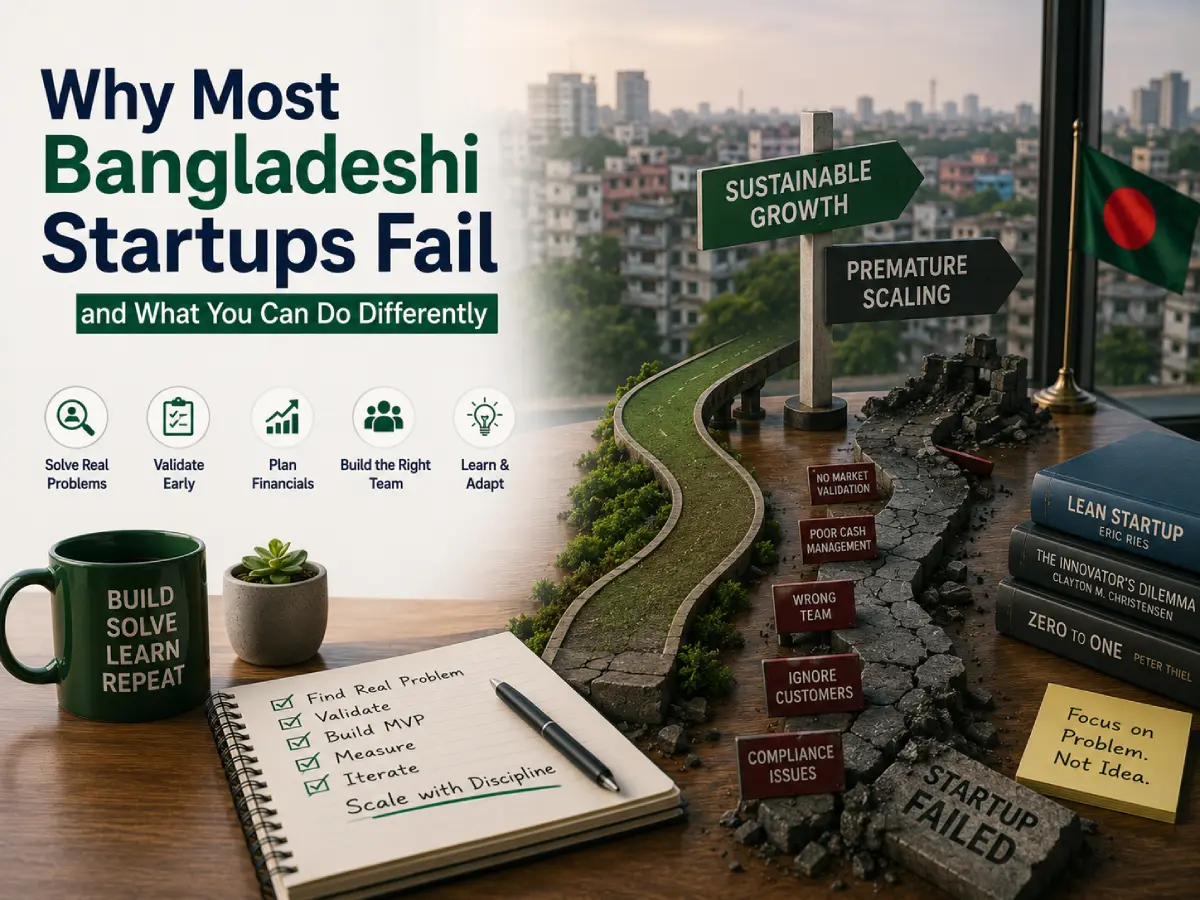
Quick Answer: Most Bangladeshi startups fail because of poor market validation, weak financial planning, and founder-market mismatch, not lack of ideas or effort. The founders who survive focus on solving real problems, build lean, and learn from their market before scaling.
Customer Acquisition Strategies That Work for Bangladesh Startups
Quick Answer: The most effective customer acquisition strategies for Bangladesh startups combine low-cost digital channels (Facebook, WhatsApp Business, SEO), mobile financial service integration for frictionless payment, referral-driven growth, and hyperlocal targeting. Startups that blend paid acquisition with retention-focused tactics see the lowest long-term cost per customer.
Business Model Canvas Explained with Bangladesh Startup Examples
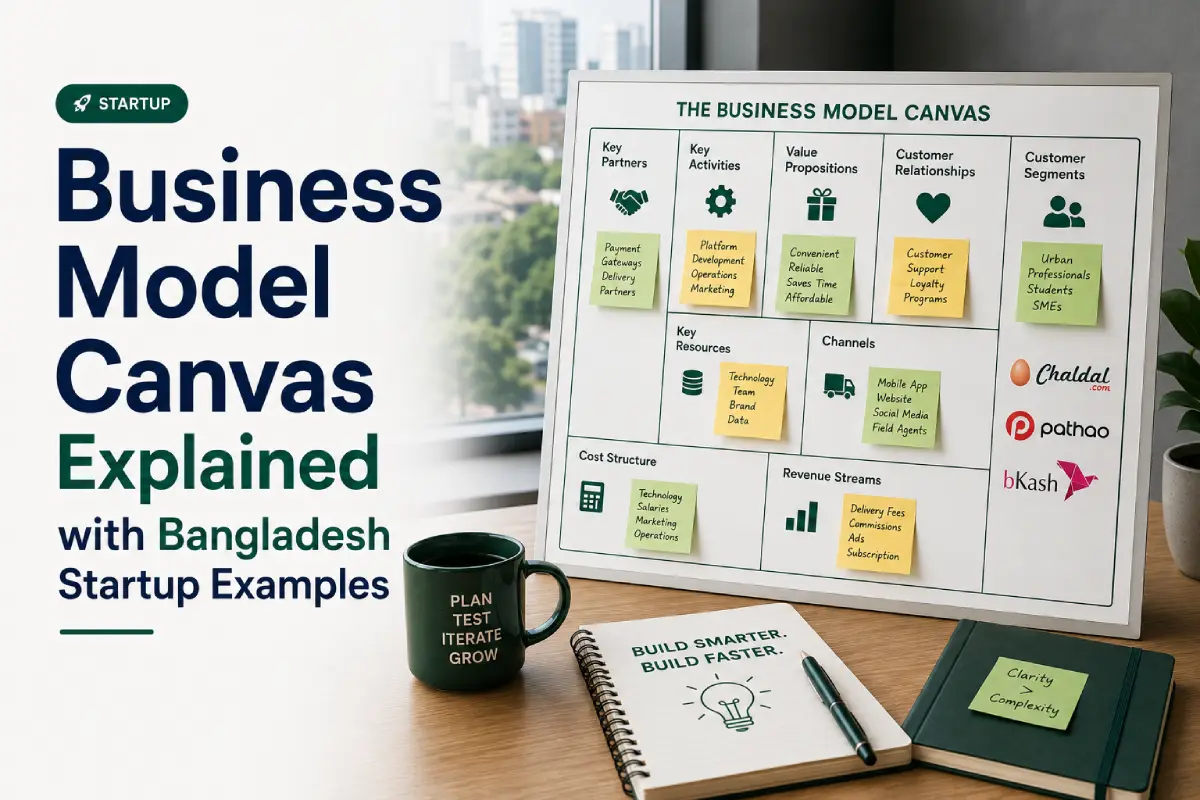
Quick Answer: The Business Model Canvas (BMC) is a one-page strategic framework with 9 building blocks: Customer Segments, Value Propositions, Channels, Customer Relationships, Revenue Streams, Key Resources, Key Activities, Key Partnerships, and Cost Structure. It helps founders map, test, and communicate their entire business model before writing a single page of a business plan.
Comments (0)
No comments yet. Be the first to share your thoughts!