Crowdfunding in Bangladesh: Is It Legal and Which Platforms Can You Use
Crowdfunding itself is not illegal in Bangladesh, but there is no single law that governs it yet. Donation based campaigns for personal causes face the fewest restrictions. Offering equity or profit share to backers counts as a public offer of securities and needs BSEC approval. Foreign funds for organizational causes fall under separate NGO rules.
Key Takeaways
Bangladesh has no dedicated crowdfunding law as of 2026, so legality depends entirely on what type of campaign you run.
Donation based crowdfunding for personal needs is the least regulated option available to entrepreneurs and individuals.
Selling equity or a profit share to backers is treated as a public securities offer and requires BSEC consent.
Kickstarter and Indiegogo do not accept creators based in Bangladesh, though backers here can still fund projects on both.
Local platforms such as EkSho are giving Bangladeshi founders a legal, home grown alternative for donation based fundraising.
Crowdfunding sounds simple. You post a project, people chip in, and the money lands in your account.
In Bangladesh, it works a bit differently. The country has no single crowdfunding act, so the legal picture depends on what you are actually asking people for.
Ask for donations to cover a medical bill or a small community project, and you are on fairly safe ground. Ask people to fund your startup in exchange for shares, and you have stepped into securities law territory that most founders never see coming.
This guide breaks down what is actually legal, which rules apply to which type of campaign, and which platforms Bangladeshi entrepreneurs can realistically use in 2026.
Is Crowdfunding Legal in Bangladesh?
Yes, crowdfunding is legal in Bangladesh, but it is not regulated as its own category. Instead, existing laws apply depending on what backers get in return.
Donation based campaigns, where people give money and expect nothing back, are the most common and the least regulated. Reward based campaigns, where backers get a product or perk, work similarly as long as you deliver what you promise.
Equity based crowdfunding is a different story. If you offer shares, profit shares, or any kind of financial return in exchange for money, that falls under the Securities and Exchange Ordinance, 1969. Under this law, no person can publicly offer securities for subscription without the consent of the Bangladesh Securities and Exchange Commission (BSEC).
That single rule is why most Bangladeshi startups raising equity go through registered channels like angel investors or BSEC registered alternative investment funds, rather than open crowdfunding.
The Laws That Actually Govern Crowdfunding Here
There is no BSEC crowdfunding license and no dedicated crowdfunding act in Bangladesh. What exists instead is a patchwork of older laws, each covering a piece of the picture.
Securities Law Covers Equity and Investment Offers
Sections 2B and 2C of the Securities and Exchange Ordinance require BSEC consent before anyone can publicly offer securities for subscription. This applies whether the offer is made through a website, a social media post, or a formal prospectus.
The BSEC does allow private capital raising through the Alternative Investment Rules, 2015, which cover registered private equity and venture capital funds. This is a private placement route for qualified investors, not open crowdfunding from the general public.
Foreign Donations Fall Under NGO Rules
If your crowdfunding campaign raises money from abroad for a cause, charity, or voluntary activity carried out through an organization, the Foreign Donations (Voluntary Activities) Regulation Act, 2016 requires registration with the NGO Affairs Bureau before the funds can be used.
This mostly applies to registered NGOs and formal charitable projects. A student personally raising a few thousand taka for tuition through a donation link is in a very different position than a registered organization pulling in foreign grants.
Personal Donation Campaigns Sit in a Gray Zone
For an individual raising money for medical bills, a small business idea, or a personal project, there is currently no dedicated law that blocks the activity outright. The main practical concerns are how the money enters the country and how it is reported for tax purposes, rather than a crowdfunding specific restriction.
Crowdfunding Platforms You Can Actually Use From Bangladesh
The bigger obstacle for most Bangladeshi entrepreneurs is not the law. It is that the world's biggest crowdfunding platforms simply were not built for this market.
Kickstarter and Indiegogo Are Off the Table for Creators
Kickstarter only lets creators launch projects from 25 approved countries, and Bangladesh is not one of them. Indiegogo has a wider list of 39 countries, but Bangladesh is missing there too.
Backers in Bangladesh can still fund projects on either platform. Creators cannot launch from here directly, unless they set up a business entity in one of the supported countries.
GoFundMe Requires a Partner Abroad
GoFundMe supports withdrawals in roughly 20 countries, and Bangladesh is not currently one of them. A Bangladeshi organizer can still create a campaign, but the person who withdraws the funds must be based in a supported country and must clearly explain how the money will reach Bangladesh.
This setup works for one off personal causes, but it depends entirely on trust in whoever holds the account abroad.
Local Platforms Are Starting to Fill the Gap
Bangladesh now has homegrown donation based platforms built for local payment rails. EkSho, developed by Data State Ltd, launched in 2026 to let individuals and organizations run campaigns for medical treatment, education, and small business needs, with donations collected through local payment channels rather than foreign processors.
Platforms like this solve the biggest practical problem entrepreneurs face: getting Bangladeshi taka in and out of a campaign without routing everything through a foreign bank account.
Bangladesh Context: Why Crowdfunding Has Been Slow to Take Off Here
Crowdfunding took off in the United States and United Kingdom partly because payment infrastructure like Stripe made it easy to collect small payments from thousands of strangers. Bangladesh's digital payment ecosystem, built around mobile financial services like bKash and Nagad, developed along a different path.
That difference matters. International platforms built their onboarding around Stripe and similar processors, which is exactly why Bangladesh has never made their supported country lists.
Local demand has not gone away in the meantime. Bangladeshi campaigns have quietly succeeded on GoFundMe and Indiegogo for years, mostly through backers abroad organizing on behalf of people at home.
The rise of local platforms and growing digital payment adoption suggest this gap is closing, even without a dedicated crowdfunding law pushing it along.
How to Run a Legally Sound Crowdfunding Campaign
A few practical habits keep a campaign inside the rules, regardless of which platform you use.
Register your business properly before you raise money for it. Completing business registration in Bangladesh first gives you a legal entity to receive funds and issue receipts.
Never offer equity, profit share, or guaranteed returns to backers unless you have gone through the BSEC consent process. This single line separates ordinary crowdfunding from an unlicensed securities offer.
Be specific about what backers get. A vague promise of "investment opportunity" invites more legal scrutiny than a clear reward or a straightforward donation ask.
Keep records of every donation and its source, especially for larger campaigns or ones drawing funds from abroad. This protects you if questions come up later about foreign remittances or tax reporting.
Work through a startup legal checklist before launching, rather than after a campaign has already gone live. Fixing structure after the money has arrived is far harder than setting it up correctly from day one.
If your real goal is equity investment rather than donations or pre-orders, explore startup funding options in Bangladesh built for that purpose instead of trying to force it through a donation platform.
Frequently Asked Questions
Is equity crowdfunding legal in Bangladesh?
Can I use GoFundMe from Bangladesh?
Why can't I launch a project on Kickstarter from Bangladesh?
Do I need to pay tax on money raised through crowdfunding?
Is donation based crowdfunding for medical bills legal in Bangladesh?
What is the safest type of crowdfunding for a small business in Bangladesh?
Building a Crowdfunding Campaign That Actually Works Here
Crowdfunding in Bangladesh is legal, but it is not one simple thing. The rules that apply depend entirely on whether you are asking for a donation, offering a reward, or selling a piece of your company.
The safest path for most founders right now is to stick with donation or reward based campaigns, register your business properly, and be explicit about what backers are getting. Save the equity conversation for registered investment channels built for that purpose.
Platforms built specifically for this market, like EkSho, are making local fundraising easier than it was even a year ago. Start with a small, clearly defined campaign, keep your paperwork clean, and build from there.
Specializing in SaaS product marketing, SEO strategy, Content marketing, TikTok advertising, PPC, and digital growth.
View Full Profile & ContributionsRelated Articles
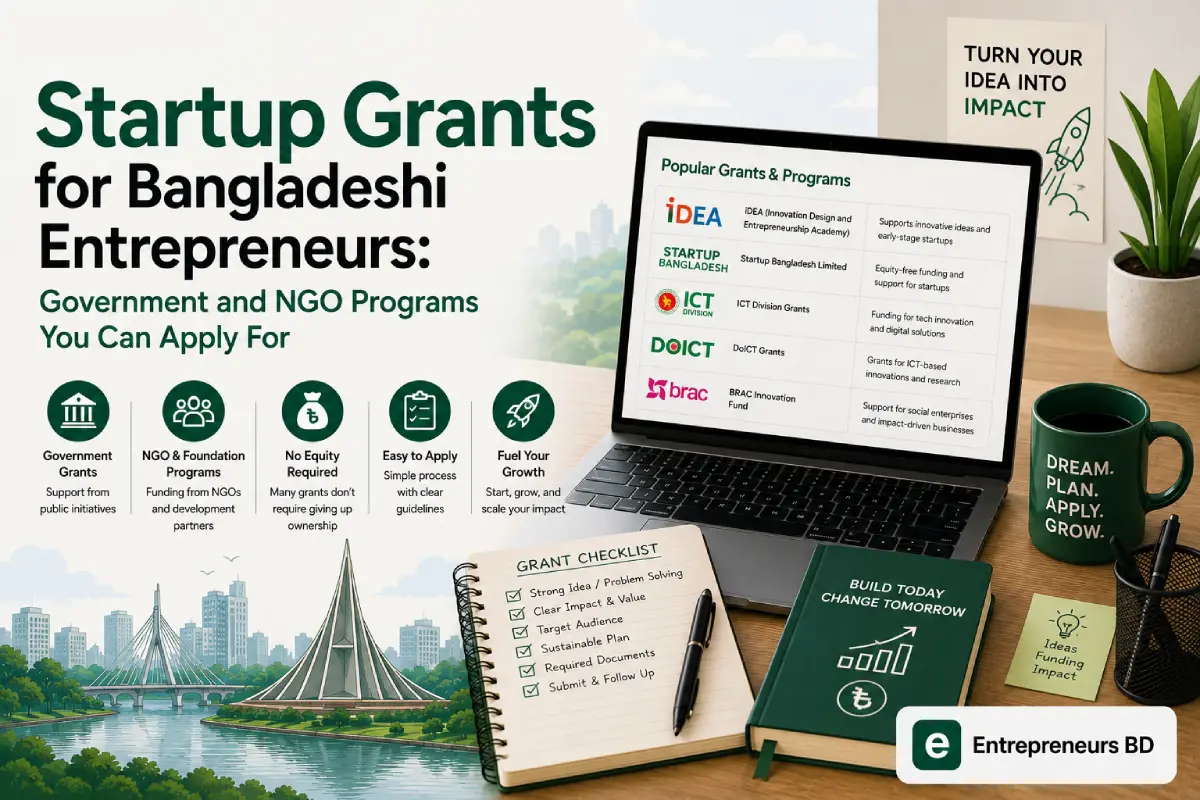
Startup Grants for Bangladeshi Entrepreneurs: Government and NGO Programs You Can Apply For
Bangladeshi entrepreneurs can apply for grants and low-cost financing through the ICT Division's iDEA project (up to BDT 10 lakh), SME Foundation's Credit Wholesaling Program, and Bangladesh Bank's refinance schemes for women and new entrepreneurs. Most require a trade license, a clear business plan, and an online application.
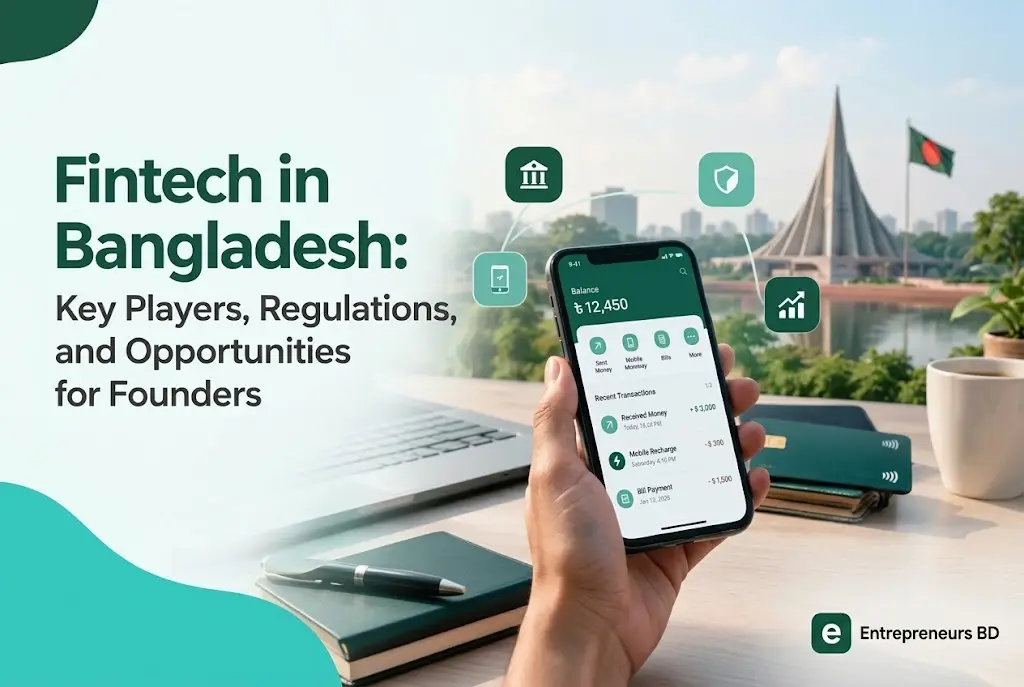
Fintech in Bangladesh: Key Players, Regulations, and Opportunities for Founders
For the payment and digital-finance businesses covered here, four regulated models matter most: MFS, PSP, PSO and digital banking. MFS requires a bank, financial institution or government entity to hold at least 51% of the provider and control its board. PSPs don't carry that requirement. PSOs run payment infrastructure and can't issue e-money. Digital banks are licensed under the Bank Company Act and now require Tk 300 crore in paid-up capital.
Angel Investors in Bangladesh: Who They Are and How to Reach Them
Angel investors in Bangladesh are individuals, family offices, and diaspora professionals who fund early-stage startups in exchange for equity. Most operate through organized networks like Bangladesh Angels Network (BAN) and Bangladesh Women Investors Network (BWIN), which vet founders, run pitch sessions, and syndicate deals among members.
Comments (0)
No comments yet. Be the first to share your thoughts!