Invoice Financing for Bangladesh SMEs: How It Works and Where to Get It
Invoice financing lets a Bangladeshi SME borrow against unpaid customer invoices instead of waiting 30 to 90 days for payment. A bank or NBFI advances 70 to 90 percent of the invoice value upfront, then collects the rest once the buyer pays, minus a fee.
Key Takeaways
Invoice financing turns unpaid invoices into working capital without adding fixed collateral debt
Bangladeshi SMEs can access it through commercial banks, NBFIs like IDLC and IPDC, and Bangladesh Bank's CMSME refinance windows
Factoring hands your receivables to a financial institution; invoice discounting lets you keep collecting payment yourself
Approval depends more on your buyer's creditworthiness than your own balance sheet
Bangladesh still lacks a dedicated factoring law, so most deals run as bank-structured working capital products
A garment exporter ships goods to a European buyer and waits ninety days for payment. A local supplier delivers stock to a retail chain and waits sixty. In both cases, the business has already spent money on raw materials, labor, and logistics. The revenue exists on paper, but the cash does not exist in the bank account yet.
Invoice financing closes that gap. It lets a small or medium enterprise borrow against invoices that have already been issued but not yet paid. Instead of waiting out the payment cycle, the business gets most of the invoice value within a few days.
For Bangladeshi SMEs, this matters more than it does in markets with faster payment norms. Late payment is common here, and traditional bank loans often ask for collateral that early-stage or asset-light businesses simply do not have. This guide covers how invoice financing works, who provides it in Bangladesh, what it costs, and how to qualify.
What Invoice Financing Actually Is
Invoice financing is a broad term. In practice, it covers two distinct products.
Factoring means selling your invoice to a financial institution. The factor takes over collection and often takes on the risk of non-payment. Your buyer may know the arrangement exists, since payment sometimes goes directly to the factor.
Invoice discounting is different. You borrow against the invoice but keep control of the customer relationship. You still collect payment and repay the lender once you receive it. Your buyer usually never finds out.
Both products advance a percentage of the invoice value upfront, typically 70 to 90 percent, with the remainder released once the buyer pays in full.
How the Process Works in Bangladesh
The mechanics are fairly consistent across lenders.
You deliver goods or services and issue an invoice to a creditworthy buyer. You submit that invoice, along with proof of delivery, to a bank or NBFI that offers the product.
The lender checks your buyer's payment history more closely than it checks yours. This is the core difference from a term loan, where your own credit profile carries most of the weight.
Your eligibility still depends partly on how your enterprise is classified. Bangladesh Bank's CMSME guidelines set out how cottage, micro, small, and medium enterprises are defined, which affects the loan ceiling a bank can offer you.
Once approved, the lender advances a percentage of the invoice value, usually within a few business days. When the buyer pays on the due date, the lender releases the remaining balance to you, minus its fee and any interest on the advanced amount.
If the buyer pays late, the cost to you increases, since most facilities charge interest daily on the outstanding advance.
Where to Get Invoice Financing in Bangladesh
Commercial Banks
Several private commercial banks run working capital and receivables-based facilities for CMSME clients, often bundled under trade finance or supply chain finance desks. These require a functioning business account, verifiable invoices, and usually some history with the bank.
Non-Bank Financial Institutions (NBFIs)
NBFIs such as IDLC Finance and IPDC Finance are the most active players in structured factoring and receivables discounting for Bangladeshi businesses, including domestic and cross-border trade. NBFIs tend to move faster than banks on receivables products because factoring sits closer to their core business model.
Bangladesh Bank Refinance Schemes
Bangladesh Bank does not offer invoice financing directly to businesses. It refinances participating banks and financial institutions, which then lend to CMSMEs at capped rates.
Under Bangladesh Bank's SME credit policy, the central bank supplies refinance funds to participating banks at its bank rate, and for women entrepreneurs the bank can only pass that on plus a maximum of five percent. Rates for other borrowers vary by bank and sector.
Ask your bank directly whether your invoice-backed facility qualifies for refinancing, since this can meaningfully lower your effective cost.
If you're still mapping out how to fund a growing business beyond receivables, our guide on startup funding options in Bangladesh covers equity and debt routes side by side.
Export Factoring for International Trade
If your buyers are overseas, export factoring works slightly differently. The exporter sells receivables from a foreign buyer to a financial intermediary in exchange for an upfront advance, and approval leans on the buyer's payment history rather than the exporter's own balance sheet.
Because of that, an analysis of accounts receivable financing notes that suppliers typically don't need to pledge collateral once a factor has agreed to buy the receivable. This makes it a realistic option for younger export businesses that would otherwise struggle to qualify for a secured loan.
Bangladesh Context: What Makes This Market Different
Invoice financing in Bangladesh runs into a structural gap that lenders elsewhere don't face. As of the most recent World Bank review of MSME financing solutions in Bangladesh, dedicated factoring guidelines were still being finalized by Bangladesh Bank rather than already in force. That means most facilities get structured as working capital loans secured by receivables rather than a true sale of the invoice, which changes the legal protections available to both sides.
This also explains why NBFIs and banks apply conservative advance rates and lean heavily on buyer verification. Without a clear factoring registry, lenders have fewer tools to confirm an invoice hasn't already been pledged elsewhere.
A World Bank review of MSME financing solutions in Bangladesh found that Bangladesh Bank's refinancing schemes have generally increased MSME financing overall, which is worth knowing if you're weighing invoice financing against a standard CMSME term loan. The refinance window can make a conventional working capital loan cheaper than a factoring fee, depending on your bank's pricing.
If you're setting up the business itself before approaching lenders, our overview of business registration in Bangladesh walks through the paperwork most banks will ask for regardless of which financing product you choose. Understanding the role SMEs play in the broader economy also helps explain why regulators keep expanding CMSME credit targets year over year.
Practical Steps to Apply
Start by organizing your invoice trail. Lenders want to see a consistent pattern of invoices to the same buyers, not a single large one-off order.
Check your buyer's payment history. If your customer has a track record of paying late or disputing invoices, expect a lower advance rate or an outright decline.
Compare at least two or three providers. A bank offering a CMSME refinance-backed facility may beat an NBFI's standalone factoring rate, or the reverse may be true depending on your sector and invoice size.
Ask directly whether the facility is factoring or discounting. The difference affects whether your buyer will be contacted directly, which matters if you'd rather manage that relationship yourself.
Confirm the fee structure before signing. Ask for the advance rate, the daily interest rate on the advanced amount, and any flat processing fee, then calculate the real annualized cost rather than relying on the headline number.
If you operate as a sole proprietorship, note that some lenders prefer or require a registered limited company structure before extending larger receivables facilities, since it simplifies their legal recourse.
Frequently Asked Questions
Is invoice financing the same as a business loan?
What percentage of an invoice can I get upfront?
Does my buyer need to know I'm using invoice financing?
Can a new business with no credit history get invoice financing?
How is invoice financing priced in Bangladesh?
Is invoice financing available for export invoices?
Getting Paid Before Your Buyer Pays You
Invoice financing won't fix a business with weak margins or unreliable customers, but for a company with real invoices sitting unpaid for weeks or months, it converts paper revenue into usable cash. The tradeoff is cost: factoring and discounting fees add up, so they work best as a bridge, not a permanent funding strategy.
Before signing with any bank or NBFI, get the full fee breakdown in writing and ask specifically whether the facility can be paired with a Bangladesh Bank refinance rate. That one question can be the difference between a financing tool that supports your growth and one that quietly erodes your margin every time an invoice goes out the door.

Specializing in SaaS product marketing, SEO strategy, Content marketing, TikTok advertising, PPC, and digital growth.
View Full Profile & ContributionsRelated Articles
Business Registration in Bangladesh: All Legal Structures Explained
Quick Answer: Business registration in Bangladesh depends on your chosen legal structure. A sole proprietorship is registered via a trade license at your local city corporation. Partnerships and private limited companies are registered through the Registrar of Joint Stock Companies and Firms (RJSC). Each structure has different liability, tax, and compliance implications.
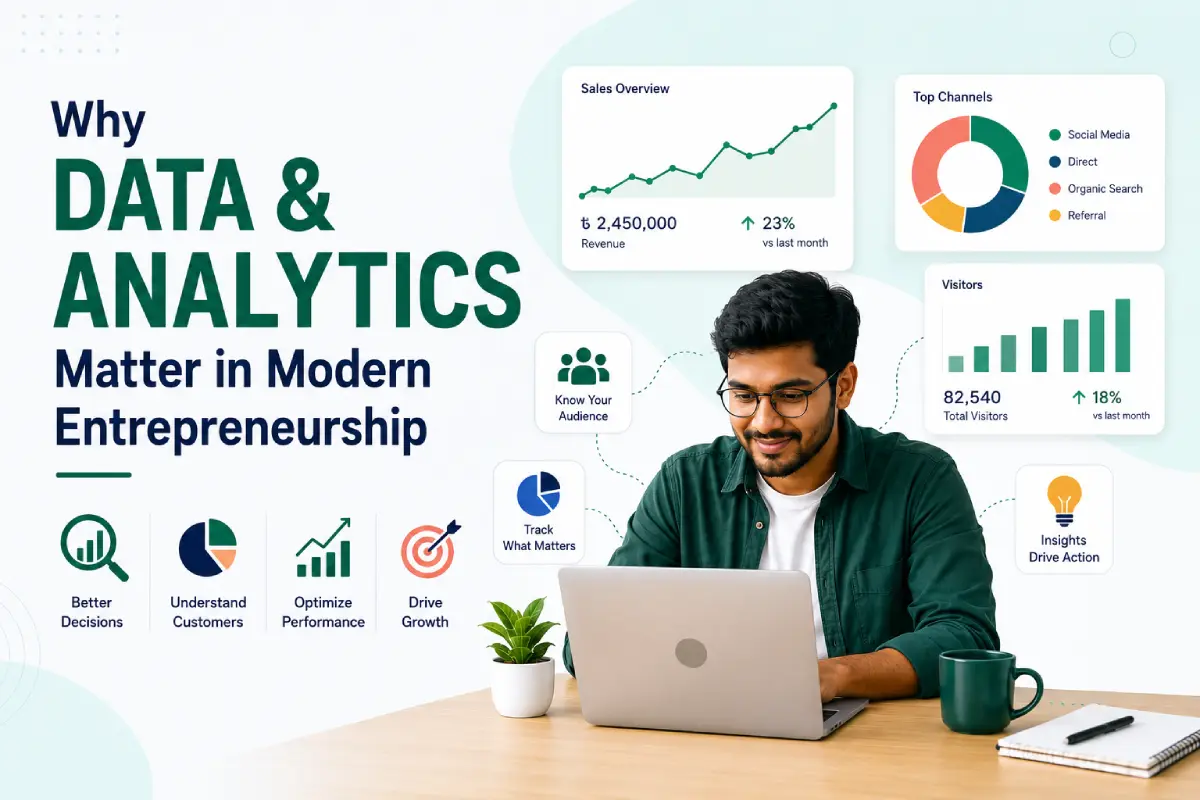
Why Data and Analytics Matter in Modern Entrepreneurship
Quick Answer: Data and analytics help entrepreneurs replace guesswork with evidence. Instead of relying on instinct alone, you use real numbers — from sales figures to customer behaviour — to make decisions that are faster, cheaper, and far more likely to succeed. In 2026, it is not a competitive advantage; it is a baseline requirement.
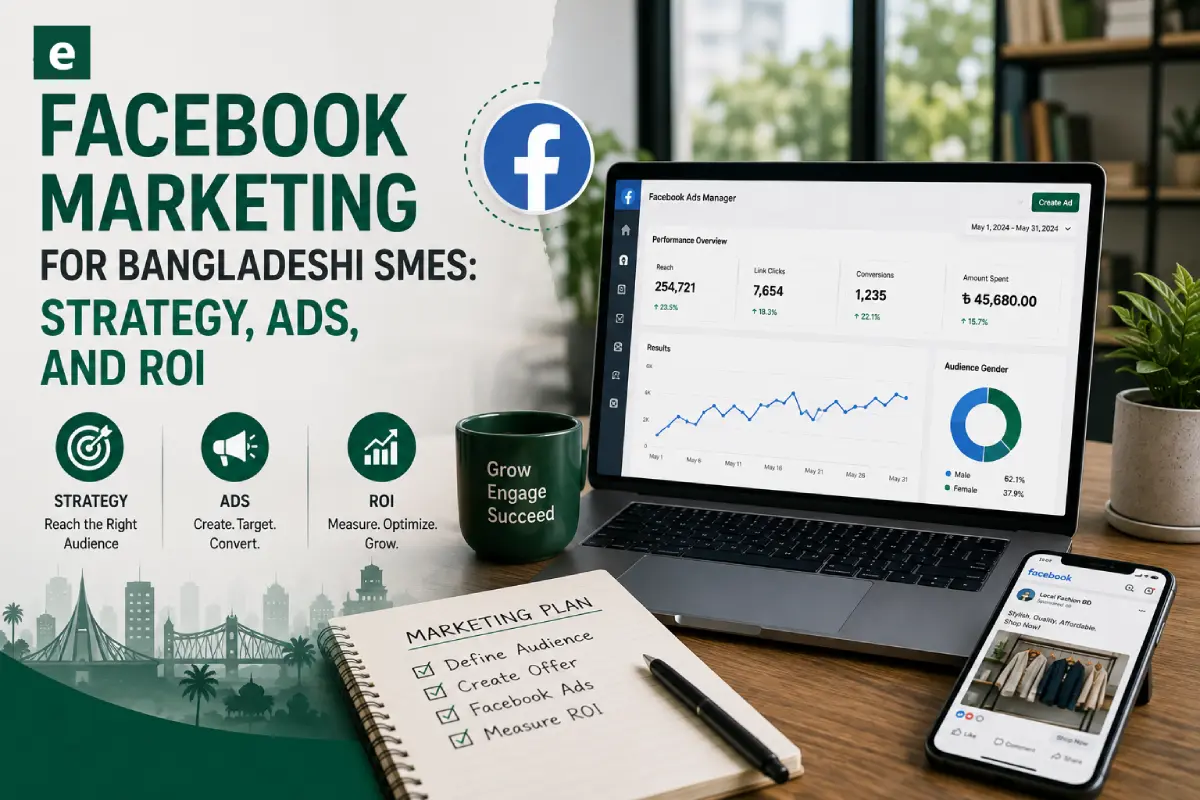
Facebook Marketing for Bangladeshi SMEs: Strategy, Ads, and ROI
Quick Answer: Facebook marketing for Bangladeshi SMEs involves building an optimized Business Page, posting consistently for organic reach, and running targeted paid ads using Meta Ads Manager. With over 50 million Facebook users in Bangladesh and low ad costs compared to Western markets, SMEs can generate strong ROI even on modest budgets of BDT 5,000–20,000 per month.
Comments (0)
No comments yet. Be the first to share your thoughts!