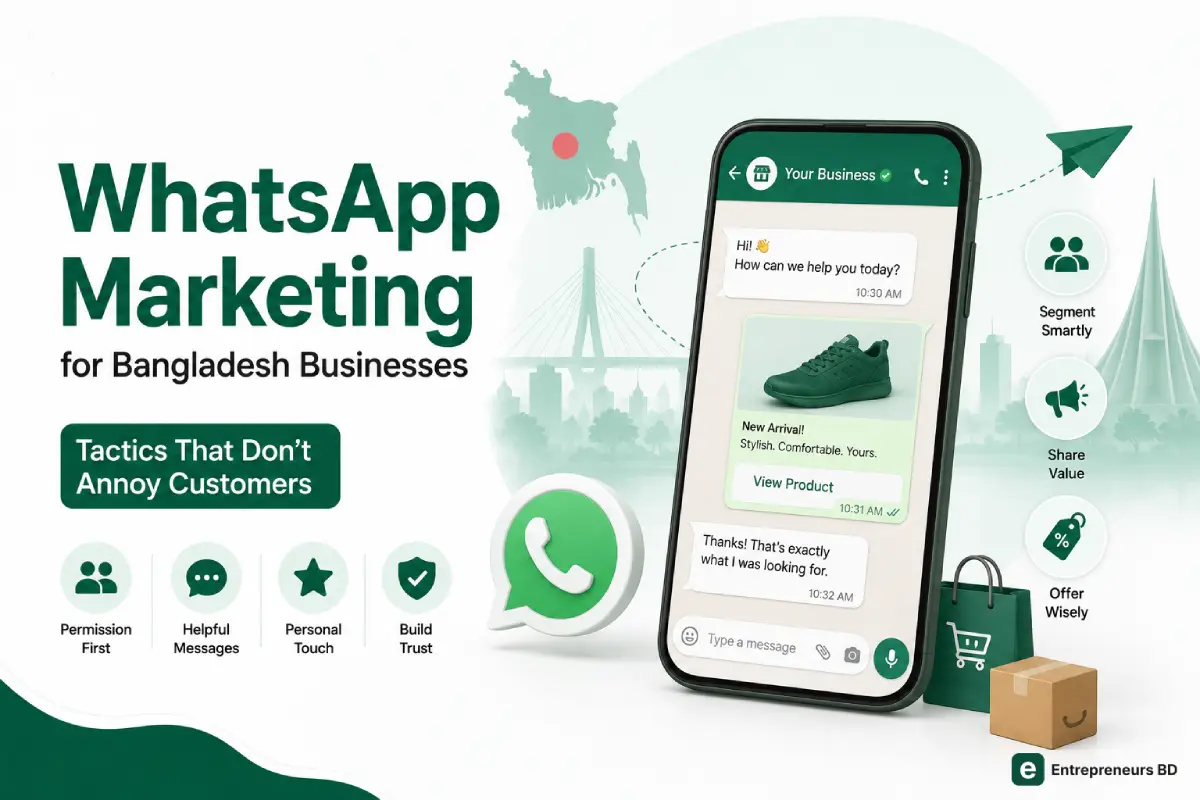
WhatsApp Marketing for Bangladesh Businesses: Tactics That Don't Annoy Customers
WhatsApp marketing works in Bangladesh when businesses get explicit opt-in before messaging, use broadcast lists instead of promotional groups, and keep helpful messages (order updates, support replies) far more frequent than sales pitches. Pair this with Bangla-language copy and local payment links through bKash or Nagad for the best response rates.
Key Takeaways
Get explicit opt-in before adding any customer number to a WhatsApp marketing list
Broadcast lists protect customer privacy far better than promotional groups
Order updates and support replies build more trust than discount blasts
Automation should feel like a fast human reply, not a robotic loop
Bangla-language messages tied to bKash or Nagad payment links consistently perform best
WhatsApp marketing for Bangladesh businesses works best when it feels like a conversation, not an interruption. Millions of small and medium businesses across Dhaka, Chattogram and beyond already use WhatsApp to talk with customers every day.
The problem is that many copy the same playbook used for Facebook ads or SMS blasts. Customers notice the difference immediately.
A phone number feels personal in a way a comment section never does. When a business sends five promotional messages a week to a number customers use to talk with family, it burns trust fast.
This guide walks through the tactics that actually work in the Bangladeshi market. Consent-based list building, message formats that add value, timing that respects daily routines, and local payment integration all matter here.
Every tactic below is built around one idea. Customers should look forward to opening a message from your business, not mute your number the same week they subscribed.
Why WhatsApp Marketing for Bangladesh Businesses Works Differently
Bangladesh reached more than 131 million internet subscribers by April 2026, and most of that access happens through a mobile phone, according to data from the Bangladesh Telecommunication Regulatory Commission.
That scale puts WhatsApp in front of nearly every customer a business might want to reach.
Unlike a social media marketing campaign built around impressions and reach, WhatsApp is a one-to-one channel by default. Customers open it dozens of times a day for personal conversations.
A business message lands in the same space as a message from their mother or their landlord. That closeness is the opportunity and the risk, in one package.
Done well, WhatsApp marketing for Bangladesh businesses builds the kind of loyalty a banner ad never will. Done poorly, it reads as an invasion of a private space, and customers block the number without a second thought.
Getting Consent Right Before You Send Anything
The single biggest mistake business owners make is adding every customer's number to a broadcast list the moment an order is placed.
Consent has to come first, and it has to be explicit. A checkbox at checkout, a verbal confirmation during a phone call, or a one-time opt-in message asking permission all work far better than silent enrollment.
Bangladesh's Digital Commerce Operation Guidelines require businesses to inform customers whenever personal data is collected during a transaction, and a phone number used for marketing counts as personal data under that framework (Ministry of Commerce).
Treat that requirement as a floor, not a ceiling. Businesses that also let customers opt out with a single word, like typing STOP, see far fewer complaints and blocks over time.
This same discipline matters across every digital marketing channel. WhatsApp just makes the cost of skipping it more personal, because the channel itself is more personal.
Message Types That Add Value Instead of Noise
Broadcast lists send a message individually to each contact, so replies stay private between the business and that one customer.
Groups, by contrast, put every member's number and every reply in front of the whole crowd. Most customers find that uncomfortable for a shopping relationship.
Use broadcast lists for anything promotional. Reserve groups only for opt-in communities where members already expect public discussion.
The WhatsApp Business catalog feature lets a shop display products with photos and prices directly inside the app. Customers browse without ever leaving the chat.
Order confirmations, delivery updates and payment reminders are the messages customers actually want. These should outnumber discount announcements by a wide margin.
Many small and medium enterprises in Bangladesh use this exact mix to keep repeat customers engaged without turning the channel into a billboard.
Timing, Frequency and Automation Without Feeling Robotic
A good rule of thumb is one promotional message a week at most. Transactional messages can go out any time, but only when actually triggered by an order or inquiry.
Avoid sending anything before 9am or after 9pm. A notification at those hours reads as disrespectful of a customer's time, whatever the offer inside it.
Automated quick replies and greeting messages handle common questions fast, and that speed genuinely helps customers. Every automated flow still needs a clear path to a human once the question gets specific.
Customers can tell the difference between a chatbot that respects their time and one that traps them in a loop. The second kind drives people away faster than a competitor's discount ever could.
Bangladesh Context: Payments, Language and Local Timing
Writing in Bangla, or a natural mix of Bangla and English that mirrors how customers actually text, consistently outperforms formal English copy in response rates.
Attaching a bKash or Nagad payment link directly inside an order confirmation removes a step that would otherwise send the customer to a separate app.
Bangladesh Bank tracks this activity closely, publishing regular data on mobile financial service transactions that shows how central these payment rails have become to everyday commerce (Bangladesh Bank).
Festival periods like Eid and Pohela Boishagh see a genuine spike in buying intent. They also see every business in a customer's contact list sending offers at once.
A short, specific message tied to a product a customer already asked about will beat a generic festival blast every time.
Businesses selling through WhatsApp should also keep their e-commerce compliance current, since a WhatsApp storefront is still subject to the same consumer protection rules as a website or Facebook shop.
A Practical Rollout Checklist
Start with a single, clear opt-in point. A website checkbox, an in-store QR code, or a verbal confirmation over the phone all work.
Set up the WhatsApp Business app or API with a complete catalog, listed business hours, and an away message that sets expectations honestly.
Segment contacts by what they actually bought, not just by phone number, so future messages stay relevant to each group.
Cap promotional sends at once a week. Let transactional messages flow automatically whenever a real event, like an order or delivery, triggers them.
Review block rates and opt-out numbers every month. A rising number is the clearest signal that frequency or tone needs to change.
Frequently Asked Questions
Is WhatsApp marketing legal for businesses in Bangladesh?
What is the difference between the WhatsApp Business App and the WhatsApp Business API?
How often should a business send WhatsApp marketing messages?
Can Bangladeshi businesses accept bKash or Nagad payments directly through WhatsApp?
Should a business use WhatsApp groups or broadcast lists for marketing?
How do customers opt out of WhatsApp marketing messages?
Building a WhatsApp Channel Customers Actually Keep Open
The businesses that get the most out of WhatsApp marketing in Bangladesh are rarely the ones sending the most messages. They are the ones customers trust enough to keep the chat open in the first place.
That trust comes from consent, restraint and genuine usefulness, not from clever copywriting alone. A customer who gets a fast, honest reply to a question remembers that far longer than a discount code.
Start small. Fix consent first, then tighten the message mix, and let the data on block rates guide every adjustment after that.
The businesses still messaging customers a year from now will be the ones that treated the channel with respect from day one.

Specializing in SaaS product marketing, SEO strategy, Content marketing, TikTok advertising, PPC, and digital growth.
View Full Profile & ContributionsRelated Articles

Google Ads for Bangladesh Businesses: Setup, Budget, and Bidding Guide
Quick Answer: Running Google Ads for Bangladeshi businesses means setting up BDT billing and conversion tracking first, sizing a daily budget against your own profit margins (most SMEs start at 500 to 2,000 taka), and starting with manual CPC or Maximize Clicks before switching to Smart Bidding once you have steady conversion data.
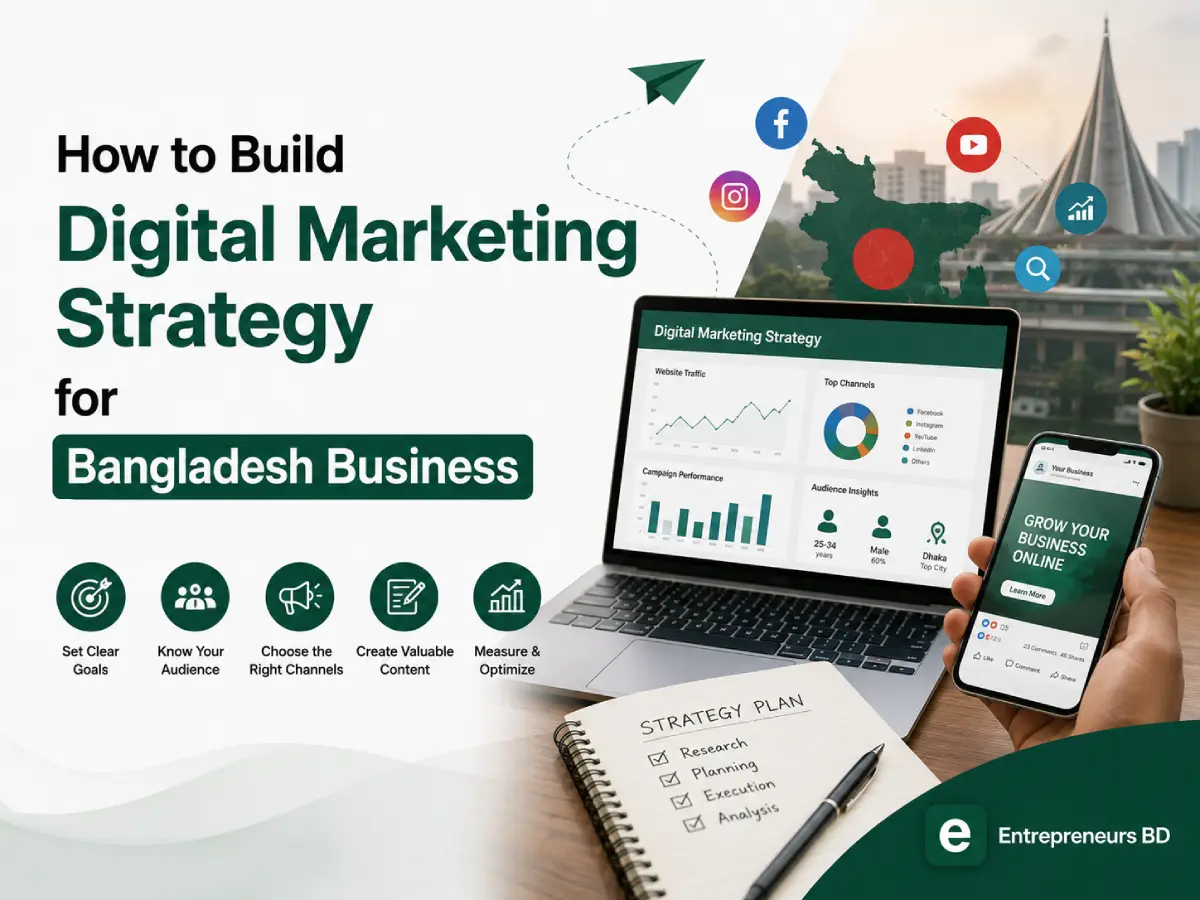
How to Build a Digital Marketing Strategy for a Bangladesh Business
A digital marketing strategy for a Bangladeshi business is a structured plan that defines your target audience, chooses the right channels (Facebook, Google, email, SEO), sets measurable goals, and allocates budget to reach customers online. Given Bangladesh's mobile-first internet culture and active Facebook user base, your strategy must prioritize mobile optimization and platform-specific content.
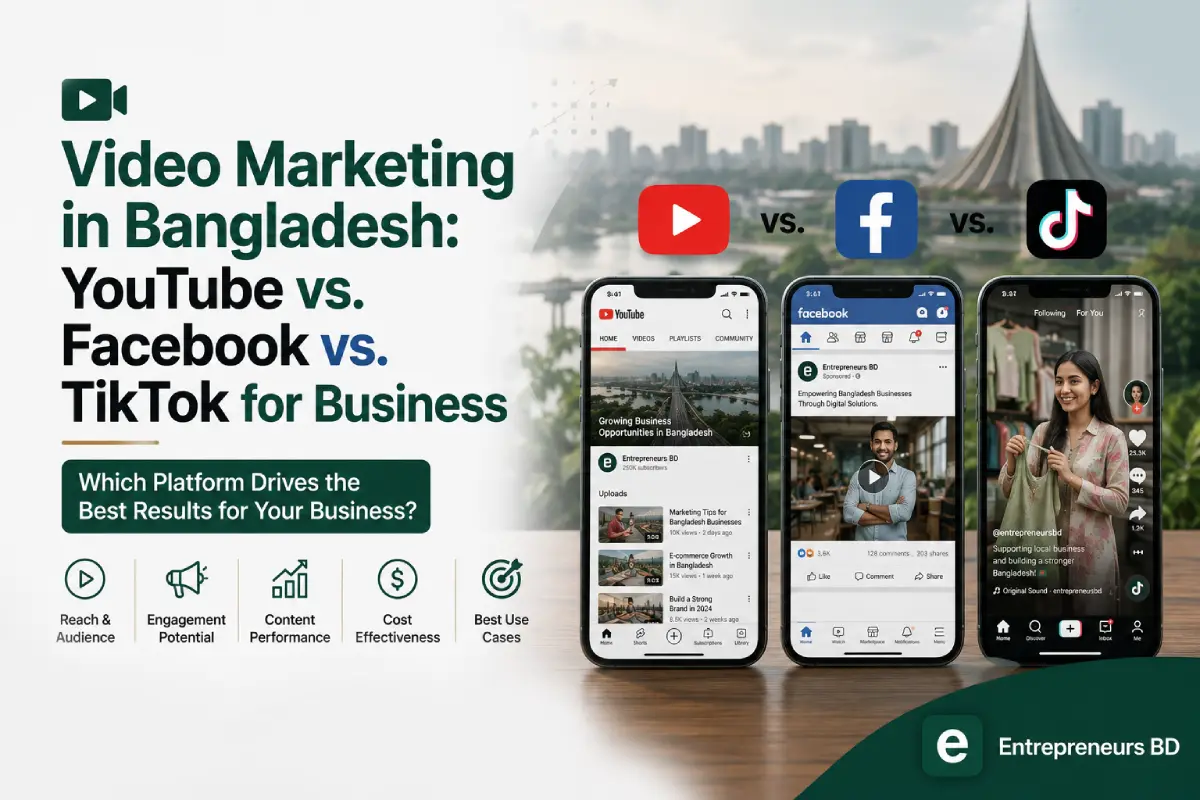
Video Marketing in Bangladesh: YouTube vs. Facebook vs. TikTok for Business
Facebook still reaches the most Bangladeshi users, making it the safest default for general brand and sales videos. YouTube builds long-term trust through search and detailed product demos. TikTok delivers the fastest reach among under-35 audiences for the lowest production cost. Most businesses need a mix, not just one channel.
Comments (0)
No comments yet. Be the first to share your thoughts!