eCommerce Regulations and Opportunities in Bangladesh: A Complete Guide
Quick Answer: Bangladesh’s eCommerce regulations matter because fast growth without compliance increases operational and partnership risk. By mapping rules across registration, taxes, payments, consumer protection, imports, and data handling, you can reduce risk, build customer trust, and unlock smoother access to payments and collaborations.
Why Bangladesh’s eCommerce Rules Matter More Than Ever
Bangladesh’s eCommerce ecosystem is moving fast—mobile payments are expanding, logistics are improving, and consumer trust is gradually rising. But speed alone doesn’t guarantee sustainable growth. In Bangladesh, the difference between a thriving digital retail brand and one that struggles to scale often comes down to understanding regulations early. The good news: compliance can become a competitive advantage. When you align your store with the right rules, you reduce operational risk, win customer confidence, and unlock smoother access to partnerships and payment options.
This guide breaks down the key eCommerce regulations and compliance opportunities in Bangladesh—and shows how you can turn them into a practical roadmap for building a resilient, growth-ready business.
Understanding the Regulatory Landscape for eCommerce in Bangladesh
eCommerce regulation in Bangladesh spans multiple areas: consumer protection, data privacy expectations, digital payments, taxation, import controls, and licensing requirements. Even if you’re selling locally, your operations may involve cross-border supply chains, online advertising, electronic transactions, and delivery services—all of which can trigger different regulatory obligations.
Think of compliance as a system, not a single checkbox. Your store’s policies, payment flow, product listings, customer communications, and fulfillment processes all need to match legal and regulatory expectations.
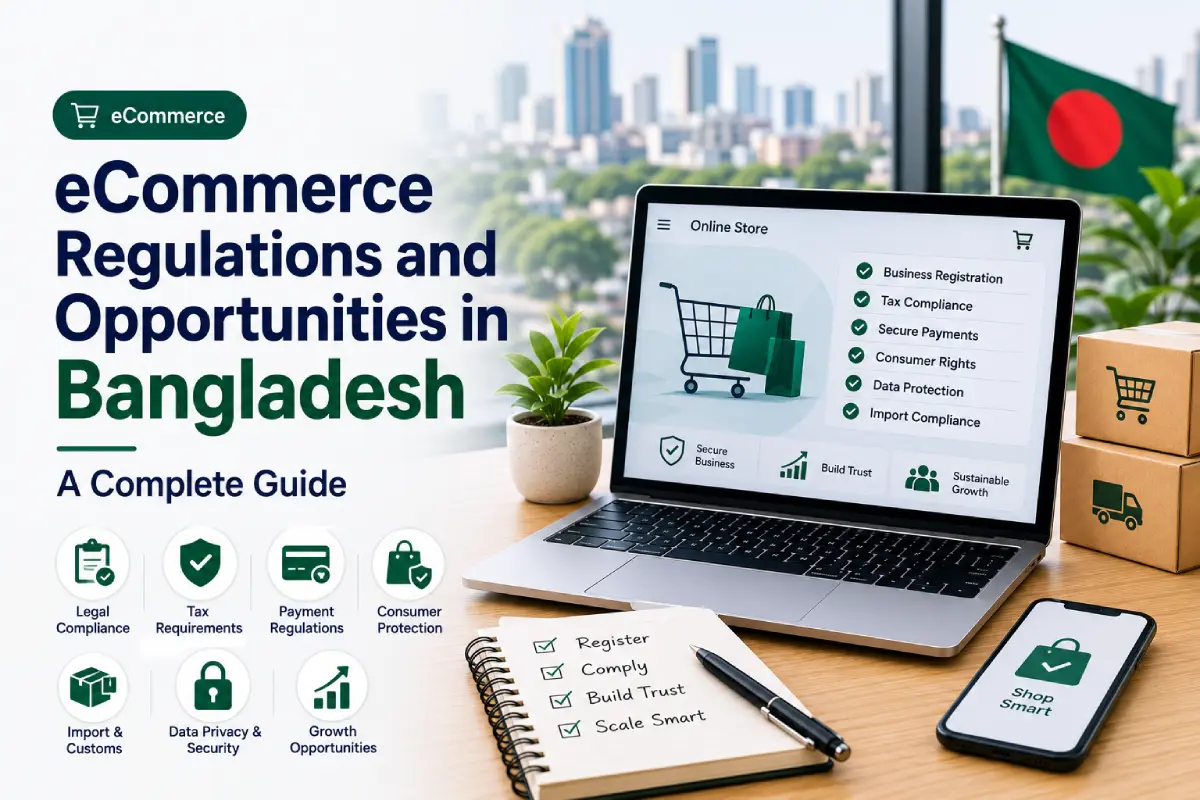
Key compliance areas you should map from day one
- Business registration and licensing: Ensure your entity and trade activities are correctly registered before scaling.
- Tax responsibilities: Understand VAT, income tax implications, and how invoices and records should be maintained.
- Payment and transaction compliance: Follow rules governing electronic payments and partnerships with payment service providers.
- Consumer rights: Maintain transparent product information, fair return/refund processes, and reliable delivery practices.
- Import and product compliance: For goods sourced from abroad, ensure documentation and customs processes are accurate.
- Privacy and data handling: Collect only necessary customer data, protect it, and be transparent about usage.
eCommerce Regulations in Bangladesh: What Businesses Need to Know
While specific requirements can differ by business model (marketplace vs. direct-to-consumer), industry (electronics, health products, fashion), and operational structure, the following themes are central to staying compliant in Bangladesh’s eCommerce environment.
1) Business registration, documentation, and traceability
Regulators and business partners often look for clear documentation: who you are, where you operate, and how you source products. Even small stores should ensure that customer invoices, order records, and supplier documentation are kept properly.
Opportunity: If you maintain strong traceability (purchase invoices, supplier records, product batch/serial info where applicable), you can move faster during audits and build trust with wholesale partners.
2) Consumer protection and transparent online trading
Bangladesh’s consumers increasingly expect reliability—accurate descriptions, pricing transparency, delivery updates, and responsive support. Non-compliance can lead to disputes, chargebacks, bad reviews, and reputational damage.
Actionable best practices:
- Display clear pricing, including shipping and any additional charges.
- Provide accurate product specifications, warranty terms, and expected delivery timelines.
- Publish return/refund policies and follow them consistently.
- Maintain customer support with documented issue resolution workflows.
3) Tax compliance and recordkeeping
Tax compliance is a major factor for sustainable eCommerce growth. You’ll need to understand how your transactions are treated, how VAT (if applicable) is applied, and how invoices and accounts should be maintained.
Opportunity: Good tax hygiene helps you scale. When your records are clean, you can more easily partner with distributors, payment providers, and enterprise buyers.
Actionable steps:
- Use consistent SKU-level accounting so product revenue and returns can be reconciled.
- Store invoices, delivery proofs, and payment confirmations for audit readiness.
- Review your pricing structure to ensure you can support tax obligations without margin erosion.
4) Digital payments and transaction compliance
Electronic payment systems are a growth engine in Bangladesh. However, payment flows must align with policies from payment service providers and any applicable rules around electronic commerce transactions.
In practice, this means ensuring that your checkout experience is secure, your refund and settlement logic is correct, and you can provide transaction records when customers or partners request them.
Actionable best practices:
- Integrate payments through reputable gateways or partner platforms.
- Implement reliable refund logic to match payment settlement status.
- Keep digital receipts and order status history in your system.
Opportunities Created by Compliance: How Regulations Can Help You Win
Compliance isn’t just about avoiding penalties—it can be a direct path to growth. In Bangladesh’s competitive eCommerce market, customers increasingly value trust. Regulations, when followed properly, strengthen that trust.
1) Increased customer confidence and fewer disputes
When your store has transparent policies, accurate product data, and a dependable fulfillment process, customers face fewer surprises. That translates into fewer returns, fewer complaints, and better retention.
Quick win: Use standardized product pages and consistent order tracking communication.
2) Stronger partner eligibility (logistics, wholesale, and marketplaces)
Many partners prefer sellers who can provide clear documentation and reliable operations. Meeting regulatory expectations can help you qualify for better shipping arrangements, supplier terms, and marketplace listings.
3) More scalable operations and better unit economics
Compliant operations reduce “hidden costs”: dispute resolution time, rework due to documentation errors, and revenue leakage from mismanaged returns. Over time, compliance becomes part of efficient cost control.
Building a Compliance Roadmap for Your eCommerce Store
Here’s a practical framework you can use to reduce risk and speed up growth. Consider it a checklist of systems to implement rather than only legal statements to publish.
Step 1: Set up your legal and operational foundations
- Confirm business registration and ensure your activities match your store’s operations.
- Prepare internal documentation: invoices, supplier records, and order history templates.
- Define who owns compliance tasks (finance, operations, customer service, or a dedicated officer).
Step 2: Create customer-facing trust assets
- Privacy and data handling notice: Explain what data you collect and why.
- Terms and conditions: Cover order processing, cancellations, and liabilities.
- Return/refund policy: Include timeframes, eligibility criteria, and the process to initiate returns.
- Warranty and authenticity statements: Particularly important for electronics and branded products.
Step 3: Make checkout and fulfillment policy-compliant
- Ensure shipping charges and delivery timelines are clearly displayed.
- Use consistent order status updates so customers know what to expect.
- Document proof of delivery and keep it accessible for dispute resolution.
Step 4: Strengthen payment and refund governance
- Verify settlement status before confirming refunds.
- Maintain a reconciliation routine between orders, payments, and refunds.
- Train customer support to explain refund timelines clearly.
Step 5: Implement product and labeling controls
Inaccurate listings are one of the fastest ways to trigger customer disputes and compliance concerns. Even if regulators don’t intervene directly, customers will.
- Use reliable product data sources from suppliers.
- Include essential specifications, brand/model identifiers, and usage limitations (where applicable).
- For imported goods, ensure documentation aligns with what you sell.
Sector-Specific Considerations for Bangladesh eCommerce
Different categories create different compliance challenges. Your strategy should account for the product type, not just the technology.
Electronics and consumer durables
- Warranty terms, service processes, and spare parts policies must be clear.
- Keep serial/batch identifiers when feasible for authenticity and returns.
Health and personal care products
- Be cautious about claims. Ensure your product descriptions are accurate and supportable.
- Follow applicable rules around product approvals, labeling, and handling.
Fashion and general merchandise
- Focus on accurate sizing charts, material descriptions, and return conditions.
- Ensure color, fit, and condition representations match the actual items.
Common Compliance Mistakes That Slow Growth
- Ignoring documentation quality: Missing invoices and unclear supplier records make scaling difficult.
- Unclear return policies: Confusing eligibility or inconsistent enforcement increases disputes.
- Inaccurate product listings: Even honest mistakes can harm trust and increase chargebacks/returns.
- Weak refund governance: Refund delays and incorrect settlement can damage customer loyalty.
- Underestimating tax and accounting needs: Poor bookkeeping can create expensive compliance problems later.
How to Stay Updated on eCommerce Regulations in Bangladesh
Regulations and enforcement priorities can change. Treat compliance as an ongoing process.
- Work with qualified local legal and tax professionals for periodic reviews.
- Monitor updates from relevant authorities and industry bodies.
- Run internal compliance audits quarterly—especially before major marketing campaigns.
- Keep your customer support team aligned with current policies and escalation paths.
Tip: If you plan to expand to new categories or cities, schedule a compliance check before launch.
Conclusion: Turning Bangladesh eCommerce Compliance into a Growth Strategy
eCommerce regulations in Bangladesh may seem complex at first, but they don’t have to be a barrier to success. When you approach compliance as a system—covering business setup, consumer protection, payments, tax recordkeeping, and product accuracy—you reduce risk and build trust. Over time, that trust becomes a measurable advantage: fewer disputes, stronger partnerships, better customer retention, and more scalable operations.
The smartest strategy is simple: build compliant foundations early, document everything, and keep improving as your store grows. In Bangladesh’s rapidly evolving market, those who treat regulations as opportunity—not obstacle—are the ones most likely to scale profitably and sustainably.
Frequently Asked Questions
What are the core Bangladesh eCommerce compliance areas I should set up before launching my online store?
How do VAT and income tax obligations typically apply to eCommerce businesses in Bangladesh?
What consumer rights and return/refund rules should online sellers follow in Bangladesh?
When does cross-border importing create additional regulatory requirements for eCommerce sellers in Bangladesh?
What privacy and data-handling expectations should Bangladeshi eCommerce businesses follow when collecting customer data?

Specializing in SaaS product marketing, SEO strategy, Content marketing, TikTok advertising, PPC, and digital growth.
View Full Profile & Contributions
Comments (0)
No comments yet. Be the first to share your thoughts!