eCommerce Marketing in Bangladesh: Channels That Convert Buyers
eCommerce marketing in Bangladesh works best through a mix of Facebook and social commerce, mobile-first search content, and checkout options built around bKash, Nagad, and cash on delivery. Buyers convert when trust signals, local payment methods, and fast delivery promises are visible before they add a product to cart.
Key Takeaways
Facebook remains the strongest discovery and conversion channel for Bangladeshi online sellers
Mobile financial services like bKash and Nagad directly influence checkout completion rates
Cash on delivery still dominates trust-building for first-time buyers
Search-driven content builds long-term traffic that paid ads cannot sustain alone
Local government guidelines shape how digital commerce businesses must operate and disclose information
Bangladesh crossed 13 crore internet subscribers according to BTRC's subscriber data, and most of that access happens through a mobile screen rather than a desktop.
eCommerce marketing in Bangladesh does not follow the same rulebook as markets with mature card payment systems and established online retail habits.
A seller who copies a Western funnel, ad to landing page to checkout, will often watch conversion rates collapse the moment a Bangladeshi buyer reaches the payment step.
The channels that convert here are shaped by mobile-first browsing, social commerce habits built over a decade of Facebook page selling, and a payment culture where cash on delivery and mobile wallets carry more trust than a card form ever will.
This article walks through the channels that actually move Bangladeshi buyers from scroll to sale, and how to sequence them so marketing spend does not get wasted on traffic that never converts.
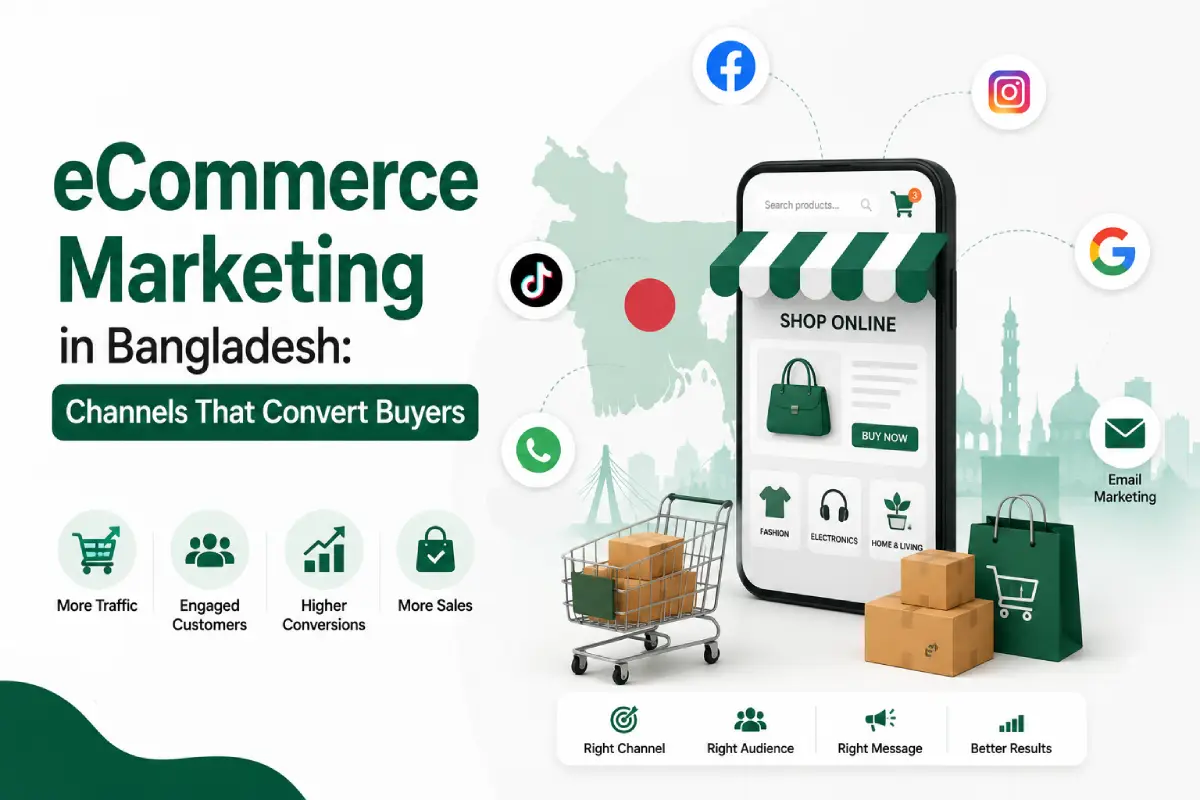
Facebook and Social Commerce: The Core Channel
Facebook is not one channel among many for Bangladeshi eCommerce; it is the default storefront for a large share of small and mid-sized sellers.
Product pages, boutique brands, and F-commerce operations built entire businesses on Facebook Pages and Groups long before many of them had a proper website.
What makes Facebook convert here is the comment-to-inbox flow. A buyer comments "price" on a product photo, the seller replies or moves the conversation to Messenger, and the sale closes through direct chat rather than an automated cart.
This pattern still outperforms standalone checkout pages for many categories, particularly fashion, home goods, and beauty products.
Sellers who lean into this behavior, using Messenger automation for FAQs while keeping a human available for price negotiation, tend to convert better than those forcing buyers into a rigid checkout flow.
For a deeper breakdown of running Facebook as a primary sales channel, see this guide on Facebook marketing strategies for Bangladeshi businesses.
Instagram and TikTok are growing fast among younger, urban buyers, but neither has replaced Facebook's role as the trust anchor where a buyer checks reviews, page age, and past comments before paying.
Mobile Financial Services and Checkout Conversion
Bangladesh's checkout experience runs through mobile wallets more than through cards. Bangladesh Bank's mobile financial services data tracks monthly transaction volumes and provider activity, and the trend confirms that MFS is the practical backbone of digital commerce payments, not a secondary option added for convenience.
For a seller building an online store, this means the payment gateway integration decision matters as much as the ad creative.
A checkout page that supports bKash and Nagad natively, alongside cash on delivery, removes the single biggest drop-off point in the Bangladeshi buying journey.
Marketers should treat MFS options as a conversion element, not a back-end setting. Displaying "Pay with bKash" or "Nagad accepted" badges near the buy button, and confirming order details through SMS after an MFS payment, both reduce the anxiety that causes cart abandonment on unfamiliar or new stores.
Search and Content Marketing for Product Discovery
Paid social ads generate quick spikes in traffic, but they stop the moment the budget runs out. Search-driven content, product comparison articles, buying guides, and category pages optimized for how Bangladeshi shoppers actually search build a channel that keeps working without continuous ad spend.
Bangladeshi search behavior mixes English product terms with Bangla intent phrases, so content that answers questions like "কোথায় ভালো দামে কিনব" alongside English keywords captures both search patterns.
Product pages that read like helpful buying guides rather than pure sales pitches tend to earn more organic visibility and referral traffic from social shares.
Sellers who have not yet built this foundation can start with the basics covered in this digital marketing fundamentals guide, then layer in category-specific content as the catalog grows.
Blog content also supports paid channels indirectly. A well-ranked buying guide gives paid ads a warmer landing page to point to, which improves quality scores and lowers cost per click on platforms that reward relevance.
Local Buyer Behavior and Trust Signals
Bangladeshi online buyers, especially outside Dhaka and Chattogram, are still cautious about new sellers.
Trust is built through visible signals rather than brand statements. A seller's Facebook page history, the number of genuine comments and reviews, a working phone number, and a physical shop address all carry more weight than professional-looking design alone.
The regulatory environment reinforces this expectation. The National Digital Commerce Policy 2018, issued by the Ministry of Commerce, sets out the framework digital commerce businesses in Bangladesh are expected to operate under, and later operational guidelines built on it require sellers to disclose product details, pricing, and return conditions clearly on their marketplace or page.
Displaying this information openly is not just compliance; it doubles as a trust signal that reduces buyer hesitation at checkout.
Sellers still setting up their legal and operational foundation can reference this guide to e-commerce regulations in Bangladesh before scaling paid acquisition.
Delivery speed and transparency matter just as much. Buyers who see a clear delivery timeline and receive proactive updates rather than silence after payment are far more likely to return for a second purchase and recommend the seller within their social circle.
Building a Practical Channel Mix
Most Bangladeshi eCommerce sellers do not need to be present everywhere at once. A workable channel mix usually looks like this: Facebook for discovery and direct sales conversations, a lightweight website or landing page with MFS checkout for buyers who prefer self-service, and search content that compounds over time.
Budget allocation should shift as the business matures. Early-stage sellers often get more return from organic Facebook engagement and word of mouth than from paid ads, since trust has not been established yet.
As reviews and repeat customers accumulate, paid acquisition becomes more efficient because the landing experience already carries proof of legitimacy.
Tracking which channel actually drives repeat purchases, not just first clicks, separates sellers who scale sustainably from those who churn through ad budgets without building a retained customer base.
Reviewing basic data analytics practices helps sellers spot which channels bring buyers back rather than one-time discount hunters.
Frequently Asked Questions
Which marketing channel converts best for eCommerce in Bangladesh?
Do Bangladeshi online buyers prefer cash on delivery over mobile payments?
How important is a website for eCommerce marketing in Bangladesh?
What role does content marketing play in Bangladeshi eCommerce?
Are there legal requirements for running an eCommerce business in Bangladesh?
How can a new seller build trust quickly on social commerce platforms?
Choosing Channels Buyers Already Trust
eCommerce marketing in Bangladesh rewards sellers who meet buyers where trust already exists rather than forcing them into unfamiliar funnels.
Facebook, mobile financial services, and search content are not separate strategies competing for budget; they work as a sequence that moves a buyer from discovery to a confident purchase decision.
The sellers who grow steadily are the ones who treat trust signals, payment familiarity, and content that answers real questions as marketing assets, not afterthoughts.
Start with the channel your buyers already use most, get the checkout experience right for how they actually pay, and layer in content and paid reach only once that foundation converts reliably.

Specializing in SaaS product marketing, SEO strategy, Content marketing, TikTok advertising, PPC, and digital growth.
View Full Profile & ContributionsRelated Articles

Google Ads for Bangladesh Businesses: Setup, Budget, and Bidding Guide
Quick Answer: Running Google Ads for Bangladeshi businesses means setting up BDT billing and conversion tracking first, sizing a daily budget against your own profit margins (most SMEs start at 500 to 2,000 taka), and starting with manual CPC or Maximize Clicks before switching to Smart Bidding once you have steady conversion data.
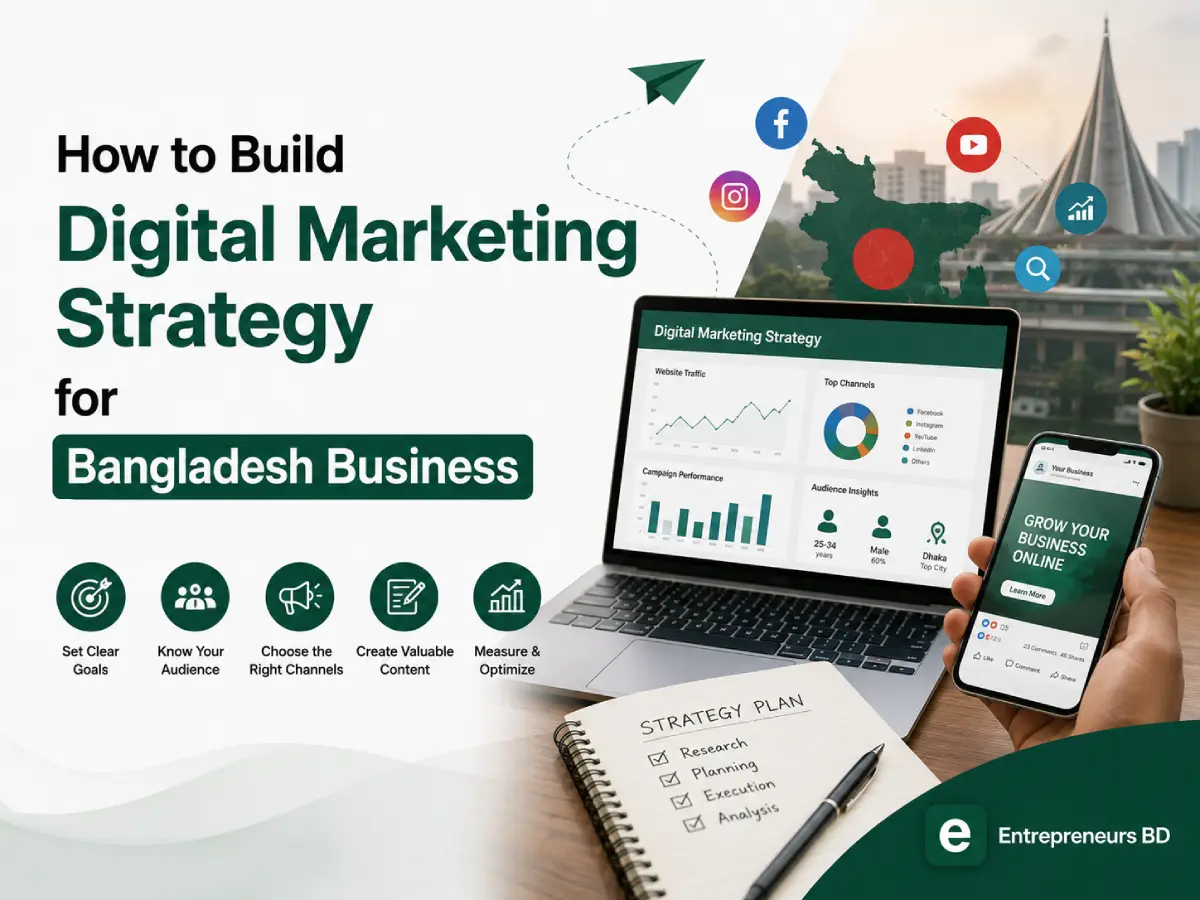
How to Build a Digital Marketing Strategy for a Bangladesh Business
A digital marketing strategy for a Bangladeshi business is a structured plan that defines your target audience, chooses the right channels (Facebook, Google, email, SEO), sets measurable goals, and allocates budget to reach customers online. Given Bangladesh's mobile-first internet culture and active Facebook user base, your strategy must prioritize mobile optimization and platform-specific content.
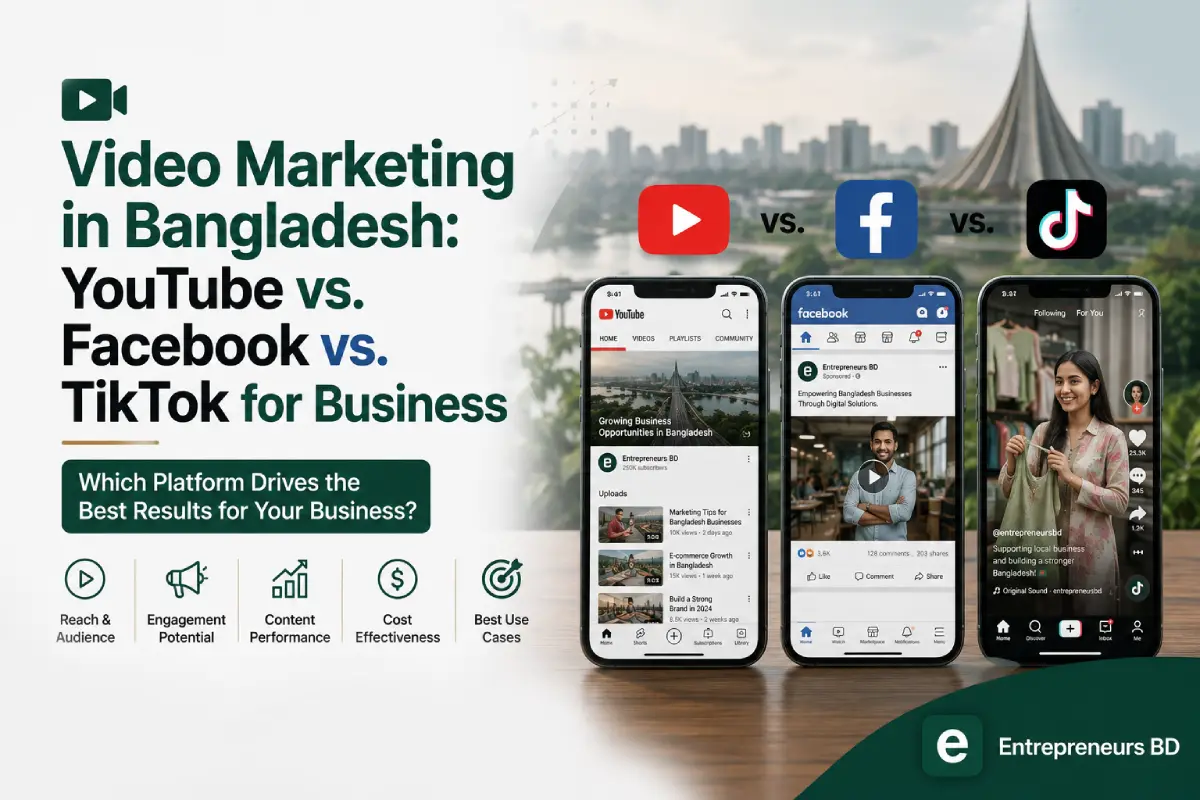
Video Marketing in Bangladesh: YouTube vs. Facebook vs. TikTok for Business
Facebook still reaches the most Bangladeshi users, making it the safest default for general brand and sales videos. YouTube builds long-term trust through search and detailed product demos. TikTok delivers the fastest reach among under-35 audiences for the lowest production cost. Most businesses need a mix, not just one channel.
Comments (0)
No comments yet. Be the first to share your thoughts!