Dropshipping in Bangladesh: Is It Viable and How to Get Started
Quick Answer: Dropshipping is viable in Bangladesh, but it requires navigating real structural barriers, payment gateway access, supplier reliability, and export regulations. With the right niche, supplier setup, and payment workaround, Bangladeshi entrepreneurs can run profitable dropshipping businesses targeting global customers.
Key Takeaways
Dropshipping to international markets is more viable than selling domestically, given Bangladesh's still-developing local e-commerce logistics
Payment gateway access (Stripe, PayPal) remains the biggest practical barrier for Bangladeshi dropshippers
Sourcing from AliExpress or CJ Dropshipping works, but supplier vetting is critical to protect your store's reputation
Local dropshipping within Bangladesh is possible but limited by inconsistent courier infrastructure outside Dhaka
Bangladesh Bank's export incentive framework covers e-commerce earnings, so remitting profits is legal and documented
Dropshipping gets pitched as a zero-inventory business that anyone can start from a laptop.
That part is true. But the real question Bangladeshi entrepreneurs ask is whether the model actually holds up here, given the payment access gaps, shipping realities, and supplier dependencies involved.
The short answer: it can work, but not without friction. Bangladesh sits in an interesting position.
Labor costs are low, digital adoption is growing fast, and a generation of young entrepreneurs understands global eCommerce tools.
What the model demands, Bangladesh can partly supply. Where it falls short, there are workarounds, and knowing which gaps have real solutions versus which are genuine dead ends saves a lot of wasted effort.
This article covers the honest viability picture, the structural barriers you need to plan around, and a clear path to getting started.
What Dropshipping Actually Involves
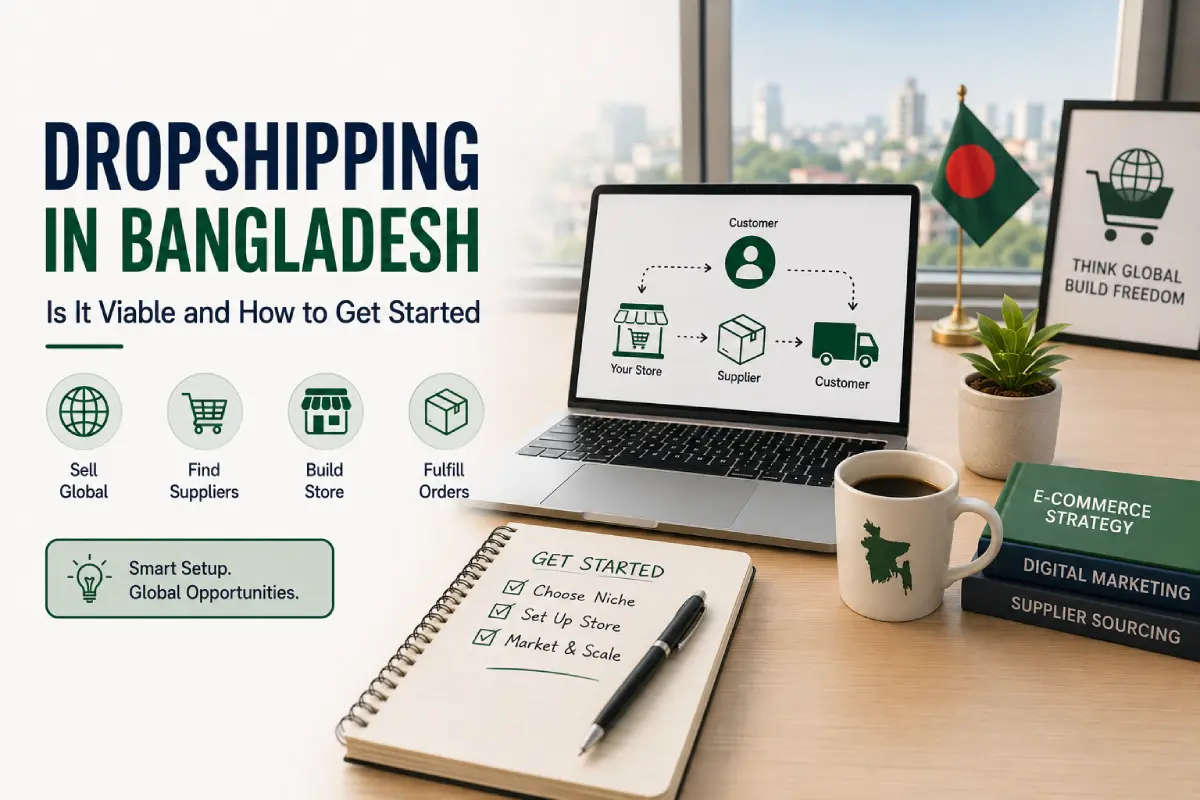
Dropshipping is a retail fulfillment model where the seller never holds inventory. When a customer places an order, the seller purchases the item from a third-party supplier, who ships directly to the customer. The seller profits from the margin between the retail price charged and the supplier's price.
The business model has three core components: a storefront (typically Shopify or WooCommerce), a supplier network (AliExpress, CJ Dropshipping, or private suppliers), and a payment processing setup that can receive international funds.
For a Bangladeshi operator running a store aimed at US or European customers, all three components are accessible, but each requires deliberate setup.
The Real Barriers in Bangladesh
Payment Gateways
This is the most discussed and real barrier. Stripe and PayPal, the two dominant payment processors for English-language dropshipping stores, do not officially support Bangladesh as a receiving country. You cannot open a Stripe or PayPal merchant account with a Bangladeshi national identity.
The documented workarounds Bangladeshi entrepreneurs use include:
Payoneer: Payoneer is fully operational in Bangladesh and integrates with Shopify's payment infrastructure. You receive funds in a Payoneer USD account and transfer to your Bangladeshi bank under Bangladesh Bank's export remittance rules.
Wise Business Account: Some operators use Wise to hold USD and route to local accounts, though compliance requirements have tightened in 2026.
Third-party Stripe accounts via registered entities abroad: Some Bangladeshi entrepreneurs register LLCs in the US or UK specifically to access Stripe. This is legal but involves cost and compliance overhead.
There is no shortcut that bypasses this structurally. Plan your payment stack before you build your store.
Shipping Complexity
If you are dropshipping globally with AliExpress or CJ Dropshipping suppliers, shipping happens supplier-to-customer and never touches Bangladesh. This model sidesteps local logistics entirely.
The complexity only emerges if you run a hybrid model (private labeling from Bangladeshi manufacturers and dropshipping abroad) or if you attempt domestic dropshipping, where courier reliability outside Dhaka is inconsistent.
Regulatory and Tax Clarity
The National Board of Revenue treats e-commerce export income as export earnings eligible for incentives under the existing export policy framework.
The Ministry of Commerce's export policy includes digital services and e-commerce in its scope. This means earnings remitted via official banking channels are both legal and potentially eligible for cash incentives.
There is no specific dropshipping regulation in Bangladesh. It falls under general e-commerce and import-export guidelines.
Staying compliant means using formal remittance channels, declaring income properly, and working with a local accountant familiar with digital business.
Where Dropshipping Works Best for Bangladeshis
The viable niches for Bangladesh-based dropshippers follow two main strategies:
Targeting global markets with English-language stores: This is the dominant model. You build a Shopify store targeting US, UK, or Australian customers, source from Chinese suppliers via AliExpress or CJ Dropshipping, and market through Facebook Ads, TikTok Shop, or organic SEO. Your Bangladesh location is irrelevant to customers.
Local dropshipping via Facebook Commerce and local platforms: A smaller but growing segment involves sourcing from Dhaka wholesale markets (Islambagh, Chawkbazar) or Chinese suppliers and fulfilling orders across Bangladesh via Pathao, Paperfly, or Steadfast. Margins are tighter, competition is intense, and logistics outside major cities remain challenging, but the barrier to entry is much lower.
How to Get Started: A Practical Path
Step 1: Choose Your Market and Niche
Decide whether you are targeting international or local customers. For international roles, English fluency and digital marketing skills matter more than location. For locals, Bangla language ability and local market knowledge are your edge.
Research product demand using Google Trends, Meta Ads Library, and TikTok to identify products with genuine pull before committing to a niche.
Step 2: Set Up Your Supplier Access
Register on AliExpress or CJ Dropshipping. For the international model, CJ Dropshipping has faster shipping lines and better branding support. Vet any supplier by ordering samples before running paid traffic to their products.
Step 3: Build Your Store
Shopify remains the most viable platform for international dropshipping. WooCommerce works for those who prefer to own their own infrastructure. Configure Dsers or AutoDS as your supplier automation layer. Set up your Payoneer account and connect it to your store's payment processing before going live.
Step 4: Register Your Business
For serious operators, register as a sole proprietorship or private limited company under the Registrar of Joint Stock Companies and Firms (RJSC). Business registration gives you legal standing to open merchant accounts, invoice clients, and access formal remittance channels. Operating informally limits your banking options and creates tax risk as you scale.
Step 5: Market and Optimize
Paid ads (Meta, TikTok) remain the fastest channel for testing product-market fit. SEO and content marketing are slower but compound over time. Monitor your customer acquisition cost against average order value weekly. Dropshipping margins are often thin (15–30%), so ad efficiency determines whether you are profitable.
Frequently Asked Questions
Is dropshipping legal in Bangladesh?
Can I use PayPal for dropshipping from Bangladesh?
How much does it cost to start dropshipping in Bangladesh?
Do I need a trade license to dropship in Bangladesh?
Which products sell best for Bangladesh-based dropshippers targeting global markets?
Can I dropship within Bangladesh using local suppliers?
The Honest Bottom Line
Dropshipping in Bangladesh is viable, not frictionless. The payment gateway barrier is the most significant structural issue, and it has practical solutions rather than perfect ones.
If you are willing to set up Payoneer properly, register your business formally, and invest real time in learning paid traffic or SEO, the model can generate consistent income.
The entrepreneurs who fail at this typically do so for one of two reasons: they underinvest in marketing after building a technically sound store, or they skip supplier vetting and end up with a reputation problem they cannot recover from.
Bangladesh's low operating costs, growing digital talent pool, and improving access to global tools make it a genuinely workable base for international dropshipping.
The work is real, the margins are real, and the barriers are real, but none of them are insurmountable.
Start with a registered business, a tested product, and a clean payment setup. Build from there.

Specializing in SaaS product marketing, SEO strategy, Content marketing, TikTok advertising, PPC, and digital growth.
View Full Profile & ContributionsRelated Articles

The Innovation of Tanvir A. Mishuk: From Fintech Pioneer to AI Entrepreneur
Tanvir A. Mishuk is a fintech entrepreneur recognised for advancing digital financial inclusion in Bangladesh through innovations like e-KYC and USSD based banking access. He has since founded App AI Pty Ltd, an artificial intelligence company based in Australia, applying lessons from financial technology to a new generation of AI driven solutions.
HealthTech in Bangladesh: Opportunities, Regulations, and Early-Stage Players
HealthTech in Bangladesh covers telemedicine, e-pharmacy, diagnostics logistics, and digital health records serving a population with limited doctor access outside major cities. No single unified health-tech law exists yet; founders answer to DGDA, BMDC, and DGHS depending on the product. Early movers like Praava Health and Arogga built durable models around trust and last-mile delivery, not app polish.
What is Social Entrepreneurship in Bangladesh 2026
Quick Answer: Social entrepreneurship in Bangladesh means building a self-sustaining business that solves a social problem, whether poverty, illiteracy, healthcare access, or climate vulnerability, without relying on charity. Bangladesh pioneered this model globally through Grameen Bank and BRAC, and the approach continues to grow across health, agriculture, and clean energy in 2026.
Comments (0)
No comments yet. Be the first to share your thoughts!